
THE TRUTH BENEATH THE STORY
Sabine Sabbah on Human Nature, Hidden Motives and the Art of Psychological Fiction

ABOUT SABINE SABBAH
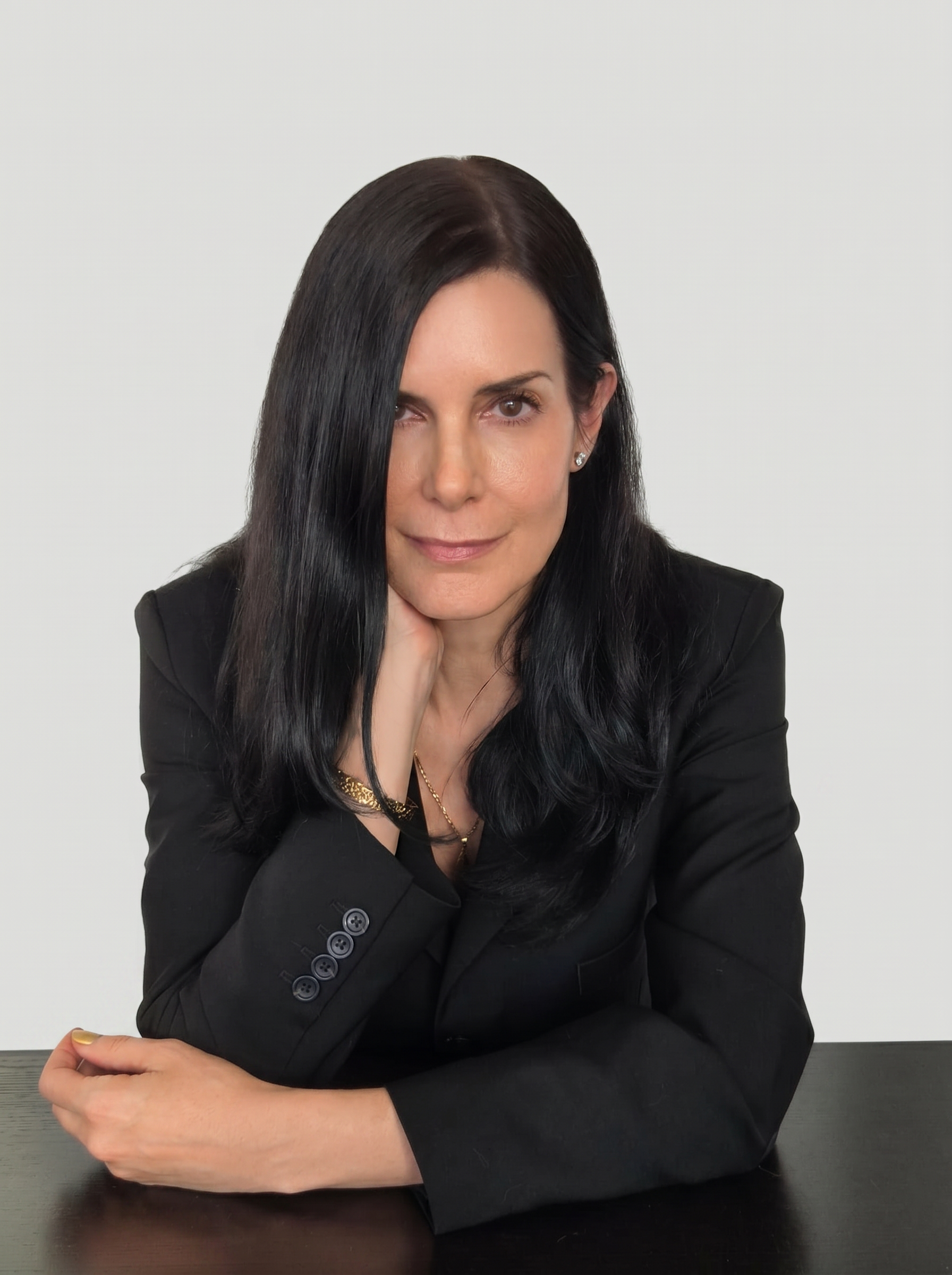
Originally from Munich, Sabine Sabbah is a German journalist, ghostwriter, and crime author who has lived in Dubai since 2005. Before turning to fiction, she served as Head of Department at Focus Money, one of Germany’s leading business weeklies, and later worked as a freelancer. Over the years, her assignments have given her the opportunity to portray personalities from many different walks of life. Having lived in several areas of Dubai, she has also witnessed firsthand how the city has developed into the metropolis it is today. Her knowledge of both its past and present has influenced the setting of her debut psychological crime thriller, “Tomorrow It’s You”. Sabine is married and a mother of three, and is currently working on her second psychological thriller.
INTRODUCTION
What makes people act against their own best interests? Why do secret motives dictate our relationships so powerfully? In this compelling conversation with Astra Global Ventures, Sabine Sabbah explores the mechanics of psychological fiction, the shadow side of human nature, and how writers can craft characters whose internal conflicts resonate deeply with readers.
FEATURED BOOK: TOMORROW IT’S YOU
The First English-Language Crime Novel Set in Dubai
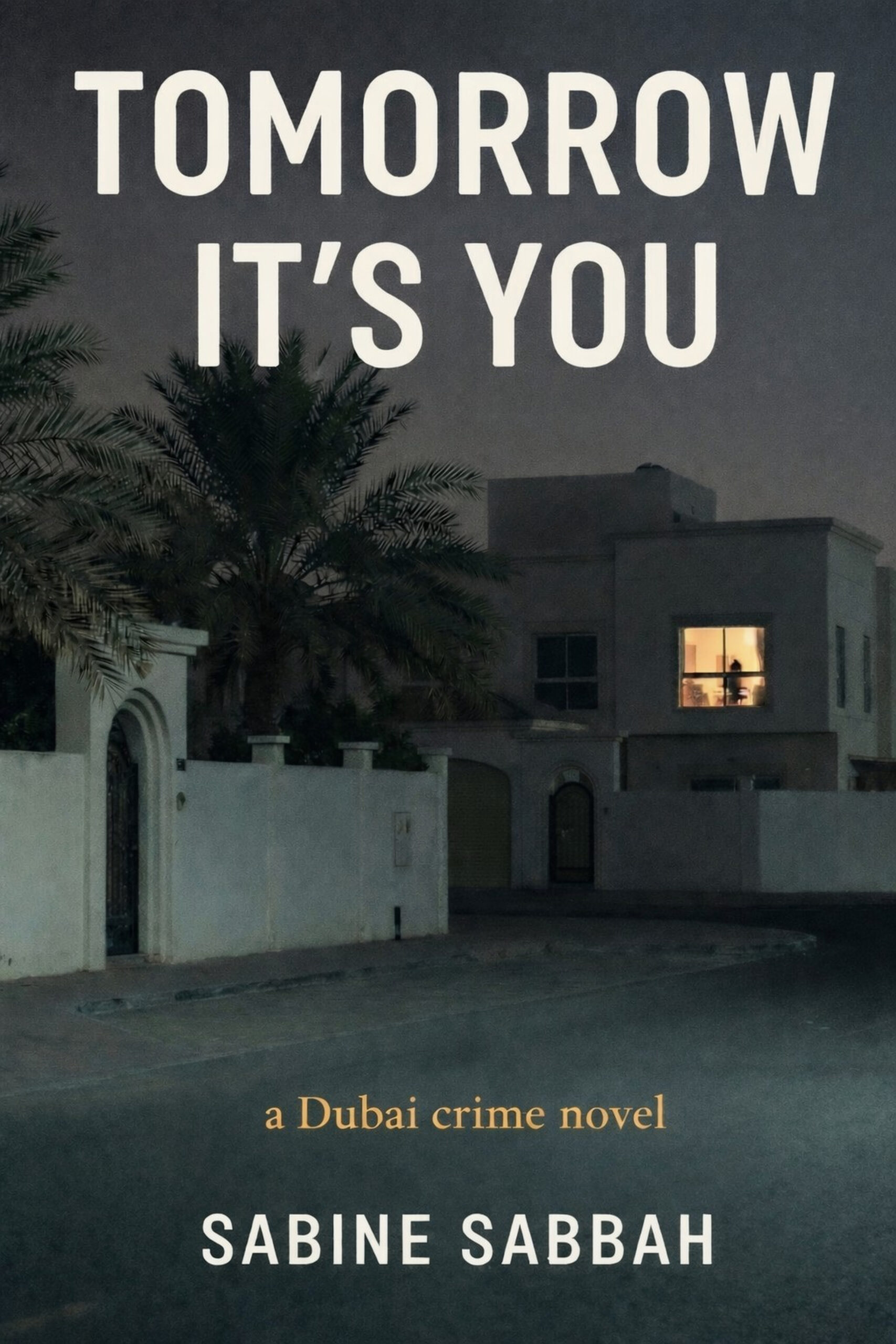
THE BOOK IS AVAILABLE AT:
- • Amazon
- • Kobo
- • Apple Books
- • Google Play Store
- • Booktopia
Sabine Sabbah: I think I have always been quite comfortable starting something I knew very little about and learning by doing. When I was an 18-year-old staff writer at a city magazine in Munich, I had to write about art exhibitions despite having no clue about art at the time. An experienced gallerist taught me that there is no right or wrong in how we perceive art: either it speaks to us or it doesn’t. This taught me not to be intimidated by unfamiliar territory. When I later started a corporate-gift business, I suddenly had to figure out everything from product development to sales and marketing. But many of the skills I had learnt as a journalist proved useful. Being able to listen and observe helped me recognize what a client really wanted and create something unique and personal for them. And now I find myself in a similar position with fiction. I might still be new to this world, but I am not starting from zero. The mindset of not giving up has certainly helped me push through with my book when things got difficult.
Sabine Sabbah: In my opinion, it ultimately comes down to whether someone has the courage to stay true to themselves. As an entertainment journalist at “Bunte”, I learned that some A-listers are genuinely boring or arrogant and have surprisingly little to say beyond being famous, while others somehow manage to preserve their curiosity and naturalness. One example was Werner Baldessarini, then CEO of Hugo Boss, whom I interviewed at the Pitti Uomo fashion fair. Baldessarini was a top manager known for being straightforward, down-to-earth and willing to think outside the box. I explained that I wanted to create a portrait of him that captured his personality and looked completely different from the usual CEO-standing-in-front-of-his-booth photograph. Without hesitation, he took off his shoes, rolled up the trousers of his expensive suit and climbed into one of the huge decorative glass containers filled with flowers. Five minutes later, he was back discussing fashion trends with other business insiders. That stayed with me because there was no gap between the public figure and the person I was interviewing. He was confident enough not to protect his status every second. Over the years, I found that how someone behaves when there is nothing to gain from the performance often tells you much more than the performance itself.
Sabine Sabbah: Probably by looking at entrepreneurs on the one hand and actors, authors or musicians on the other. Both worlds require enormous ambition, but I saw much more clearly in entertainment how far ambition can take you and where its limits are. Ambition is what makes you work harder, take risks and keep going when success is far from guaranteed. But also a certain amount of luck can make an enormous difference: being in the right place at the right time, meeting someone who opens a door or being part of a project that unexpectedly takes off. But I have also witnessed actresses who worked incredibly hard and seemingly did everything right, only for the show they were in to flop for reasons completely unrelated to them. Because there are so many things we can’t control, I believe truly successful people often have that extra amount of ambition that keeps them going.
Sabine Sabbah: I think what changed most was my understanding of the role emotions play in our decisions. They are always there, but we deal with them very differently depending on the situation. When you are building a business, for example, allowing emotions to dominate your decisions is not particularly helpful. At the same time, listening to a certain “gut feeling” can separate a good entrepreneur from a great one. Writing fiction made me look at this from the opposite direction. Instead of keeping emotions in check, I examine them and ask what fear, pride, jealousy or insecurity might make a character do next.
Sabine Sabbah: Being able to reinvent myself over and over again: that is success for me. At 50, I had to accept that in the world of fiction I am a nobody and that no one particularly cares about previous successes in completely different fields. And I decided to try anyway. My younger self might have been disappointed to hear that success today can be something as simple as receiving a message from a reader saying, “I stayed up until 2 a.m. because I couldn’t put your book down.” But from my current perspective, of course, success as a writer would, apart from that connection with readers, also mean being signed, and staying signed, by one of the Big Five publishers.
Sabine Sabbah: By not choosing questions according to what the person I am interviewing would like to hear or answer, but focusing on what the audience, or I myself, genuinely want to know. Those are often the more uncomfortable questions. The skill is asking them at the right moment, in the right way and with a great deal of “Fingerspitzengefühl”. There isn’t really a perfect English translation for “Fingerspitzengefühl”. It is a combination of tact, instinct and knowing exactly how far you can push at a particular moment.
Sabine Sabbah: I tend to notice the small details that don’t quite match the image someone is trying to convey. For example, how they treat a waiter or a taxi driver. More than once, I have listened to someone talk at length about their charitable endeavors and then watched them treat a server as though she were inferior. Small mannerisms can also reveal a lot: trembling hands, repeatedly touching the hair, little signs of insecurity. I actually find those rather sympathetic. It is nice to see that even celebrities are not 100 percent self-assured.
Sabine Sabbah: My ghostwriting has mainly been journalistic: writing or completing articles on behalf of someone who, for whatever reason, cannot write them themselves. The challenge is that the finished text has to sound like them, not like me. That requires a certain amount of empathy, but also restraint. My job is not to quietly replace their style with mine simply because I might naturally phrase something differently. I am planning to take that process much further one day and ghostwrite an autobiography for an interesting personality, particularly someone from the Gulf.
Sabine Sabbah: Rather the other way around. Most people present a certain version of themselves, consciously or unconsciously. I love looking behind that presentation and trying to discover what is underneath. So yes, reading between the lines is definitely more interesting to me than simply taking everything that is said at face value.
Sabine Sabbah: As a journalist, I deal with human behavior in order to get a good interview or portrait. As a novelist, I analyze human behavior so that I can create believable characters. A villain whose actions are, to some degree, understandable and who has likable or relatable facets to their personality is far more realistic, and to me far more frightening, than a character portrayed as 100 percent evil.
Sabine Sabbah: As a journalist, I inform. I reproduce, examine and explain other people’s ideas, experiences or achievements. No matter how creatively I approach an article, ultimately I am telling somebody else’s story and I am bound by what actually happened. Fiction turned that around for me. Suddenly I could take everything I had learned from years of observing human behavior and use it to create something of my own. I can invent the situation, decide how far to push it and then ask myself how believable human beings would react once I put them into it. That freedom was probably the biggest attraction.
Sabine Sabbah: Great question. While all the factual elements I describe as a novelist are thoroughly researched and cross-checked, in “Tomorrow It’s You” I encountered an unexpected problem. The only figure who is loosely based on someone who actually exists came across as almost comical in the earliest version of the manuscript. I had to tone down real character traits to make the person more believable in the book. Apart from obviously getting the facts right, I learned that even completely invented events and personalities have to feel plausible and follow an internal logic. Reality can get away with being unbelievable. Fiction usually can’t.
Sabine Sabbah: Most probably from journalism. Ask several witnesses to recount the same event and you can get completely different versions of what happened. I have encountered that phenomenon in many areas of life: the same situation can genuinely be understood very differently depending on who has experienced it. That fascinated me long before I began writing fiction because it raises an interesting question: if several people sincerely remember the same event differently, where exactly does “the truth” sit?
Sabine Sabbah: Usually, a problem or fear comes first, followed by a specific goal the character has to reach in order to solve that problem. But that is really only the starting point. I then need to understand what drives them, what they are afraid of losing, what they would never admit about themselves, how they relate to others and where their personal boundaries are. Only once I know those things, I can bring a character to life.
Sabine Sabbah: I actually believe that villains whom readers secretly find themselves making excuses for are the best ones. Think of Michael Corleone in “The Godfather”: a cultured young man who initially wants to stay outside the family business but is gradually drawn into violence, partly through his desire to protect his father and family. Or Dexter Morgan in “Dexter”: unquestionably a serial killer, but one whose victims are themselves killers. One of my favorite recent examples is Eddie Horniman in “The Gentlemen”. He starts outside the criminal world and is slowly pulled into increasingly serious criminal behavior. Because he is dealing with opponents who are worse than he is, it becomes surprisingly easy for the audience to shift their own moral boundaries.
Sabine Sabbah: I love books in which the past and present are told through nonlinear storylines. Gillian McAllister is one author whose work I particularly admire. Moving between different points in time can create a very subtle kind of tension because facts from the past are revealed from completely different angles and perspectives. In “Tomorrow It’s You”, the past is not simply there to explain the present. Every new piece of information changes the reader’s understanding of what is happening now. That was much more interesting to me than treating the earlier events as straightforward backstory.
Sabine Sabbah: Dostoevsky’s “Crime and Punishment” influenced one of the central ideas in “Tomorrow It’s You”: what happens when someone believes they have the moral authority to bring others to justice? I was fascinated by the thought that mistakes made in the past can create a kind of “imbalance” that, in one character’s mind, has to be corrected. That concept became an invisible thread running through the novel until, in the end, the seemingly independent pieces fall into place.
Sabine Sabbah: It allowed me to explore the same theme from many angles. The characters can perceive exactly the same situation in completely different ways, but time and circumstances also matter because they themselves change. A strictly chronological structure would have made it much harder to show those shifting perceptions without becoming repetitive. The reader therefore isn’t simply discovering what happened. They are repeatedly being challenged to reconsider what they thought they already understood.
Sabine Sabbah: Each character has a different, seemingly obvious goal. The female protagonist Maria wants to keep her family together and possibly save her marriage. Forensic Doctor Hassan wants to help Maria and outsmart the murderer. The other former neighbors want to survive without being held accountable for what they did in the past. Because their stories are interlaced, those goals sometimes overlap. That allows the reader to start wondering whether a character has an additional, hidden and perhaps much darker agenda.
Sabine Sabbah: Not really, because I had the main structure and motives mapped out beforehand. What I did find very difficult was revealing the murderer’s motives piece by piece: enough for them to gradually make sense, but never to the point of giving too much away. At the same time, I wanted to avoid holding everything back and then dumping an explanation on the reader at the end. For me, that balance is one of the hardest parts of writing a thriller. The final revelation should surprise the reader, but in retrospect it should also feel as though the clues had been lingering there all along.
Sabine Sabbah: To me, there is quite a philosophical thought behind the title. We see so many things in the media, good and bad, outrageous and unbelievable, but there is always a certain distance between what we read or watch and our own lives. Sometimes I find myself thinking: what if that were me, or someone I love, tomorrow? So yes, “Tomorrow It’s You” has a double meaning for me. Within the novel it is a threat, but beyond the plot it is also about how quickly something we consider somebody else’s reality can become our own.
Sabine Sabbah: Real-life fear is enjoyable only as long as we know that we can leave the situation. We experience some of the adrenaline and excitement associated with genuine danger without having to bear the actual consequences. I recently read a study about exactly this, “Playing With Fear: A Field Study in Recreational Horror”. The researchers studied visitors of a haunted house in Denmark and found that enjoyment appeared to peak at an intermediate level of fear. Too little could be boring; too much became unpleasant. There seems to be a sweet spot where we are frightened enough to experience excitement and uncertainty while still knowing, at some level, that we are safe.
Sabine Sabbah: I think part of it comes down to personal preference. Some people enjoy horror or splatter films with jump scares, blood and graphic physical violence. I am much more interested in what happens inside a character’s mind. Psychological suspense can make an ordinary conversation unsettling because the reader understands what may be hidden underneath it. To me, that can be much more frightening than simply witnessing something horrific. Hannibal Lecter in “The Silence of the Lambs” is an obvious example: much of what makes him so disturbing is not what we actually see him do, but what we know he is capable of.
Sabine Sabbah: Definitely shame and jealousy. Shame makes people construct a version of themselves in order to hide something. Jealousy can drive otherwise ordinary people to actions they did not even know they were capable of.
Sabine Sabbah: This again comes down to personal preference, but for me it is definitely the latter. That is why I love creating moral dilemmas. I want the reader to navigate the fine line between revenge, justice and personal justification almost like walking a tightrope.
Sabine Sabbah: To build as much tension as possible, I wanted the reader to have the feeling of knowing more than certain characters. That creates the urge to warn someone in the book or the fearful hope that they will finally “get it.” To achieve this, I introduced Rebecca’s diary as a source of information about the past, as well as throwbacks to some protagonists’ earlier lives. These offer the reader insight into their motivations without giving the same knowledge to the other characters.
Sabine Sabbah: I am from Munich, and as much as I love my hometown, it is not a particularly diverse city. Many people there grow up with relatively similar cultural reference points and social environments. Coming to Dubai changed that completely. Suddenly, I could sit in a meeting with people from five different nationalities and three different religions. I also learned fairly quickly that what you see is not necessarily what you get. People arrive here with very different backgrounds, expectations and versions of themselves, so it is always worth scratching beneath the surface.
Sabine Sabbah: Dubai is a genuine melting pot, with lots of nationalities living alongside one another rather than existing entirely in separate parts of the city. Because the novel spans sixteen years, it also allowed me to show Dubai around 2005, when the city felt very different and certain things could still happen under the radar that would be much harder to imagine today, with tighter regulation and law enforcement. The exotic-animal storyline is one example. I personally witnessed lion cubs being raised inside a compound villa. Today, something like that would attract very different attention, but at the time it was possible for things to happen behind villa walls without immediately coming to the attention of the authorities. That contrast between the Dubai of then and the Dubai of today became an important part of the story.
Sabine Sabbah: The opportunity to genuinely embrace both our differences and our similarities. My three children grew up in Dubai and have friends from literally all over the world. What fascinates me is how finely tuned their cultural radar has become. They pick up on tiny clues in someone’s choice of words, expressions or mannerisms and can recognize in seconds where someone grew up or which cultural background they come from. It is not about obvious appearances. It is an awareness of subtle differences that comes naturally when you grow up surrounded by many cultures. I think that is a remarkable skill to take into an international university or workplace later in life. The other aspect is undeniably the sense of security. Where else would someone reserve a table in a food court by leaving a phone or handbag on it while waiting in line?
Sabine Sabbah: I debated for a long time which language I should write “Tomorrow It’s You” in, but eventually decided that it had to be English because the novel is set in Dubai. I am currently writing a German version because simply translating the English text doesn’t work. The process has made me realize just how differently relationships are encoded in different languages. One simple example involves forensic doctor Hassan and Officer Al Shamsi. At the beginning, their relationship is quite formal and distant, partly because Hassan is considerably more senior. Over the course of the novel, they become much closer. In German, as in several other European languages, there is a formal and informal form of “you.” Hassan and Al Shamsi would certainly address each other formally at the beginning. For the German version, I actually had to create an additional moment in which that change in their relationship becomes explicit through the switch to the informal form of address.
Sabine Sabbah: I was naïve enough to think that writing the book would be the most difficult part. It really wasn’t. Working with an editor was humbling, although as a journalist I was already used to being edited, and feedback from beta readers was sometimes eye-opening. But trying to find a trustworthy agent and eventually a publisher almost broke me. Finishing a manuscript might be a creative achievement, but bringing a book into the world is also a business process. I don’t think I fully understood the difference between the two until I went through the entire process myself.
Sabine Sabbah: That was one of the most difficult parts of writing independently. I force myself to write a minimum of 1,000 words every day. On good days, I write much more. On bad days, I barely reach the 1,000-word mark, only to delete almost everything the next morning. But the discipline still matters. Even 1,000 bad words give me something to work with; an empty page doesn’t.
Sabine Sabbah: Because I love complicated structures, I have learned that I need to plan and outline as much as possible. Another technique I use is approaching the same scene from different points of view. It may sound like a waste of time, but it can be a real eye-opener. Sometimes I write the same scene three or four times before settling on the perspective that works best. The events may remain exactly the same, but the tension, meaning and even the reader’s sympathies can change completely depending on whose eyes we see them through.
Sabine Sabbah: I would love for my name one day to be associated with unputdownable crime fiction, and for readers to genuinely look forward to the next book. I want to give readers an escape from daily life and, quite simply, entertain them. And I have to admit there is another ambition. A couple of agents who ultimately declined “Tomorrow It’s You” told me they could see it working particularly well on screen. So yes, I would love to see the story made into a film or TV adaptation one day. Watching characters that so far have existed only in my head suddenly come to life on screen would be quite something.
HELP KEEP IDEAS ALIVE
Great ideas deserve to be heard, preserved, and passed forward.
Astra Global Ventures exists to bring thoughtful conversations, original perspectives, and meaningful stories into the world—and to preserve them for readers today and generations to come.
If this work has meant something to you, please consider supporting our independent publishing work. Your contribution helps us continue the research, editing, design, and publishing that bring meaningful voices and ideas to life.
Every contribution, whatever its size, helps us keep creating and sharing work that matters.
For international supporters, you can contribute securely through PayPal:

Scan the QR code or use the PayPal link below to support our independent publishing work.
Support Astra Global Ventures via PayPalThank you for helping meaningful ideas live beyond the moment.