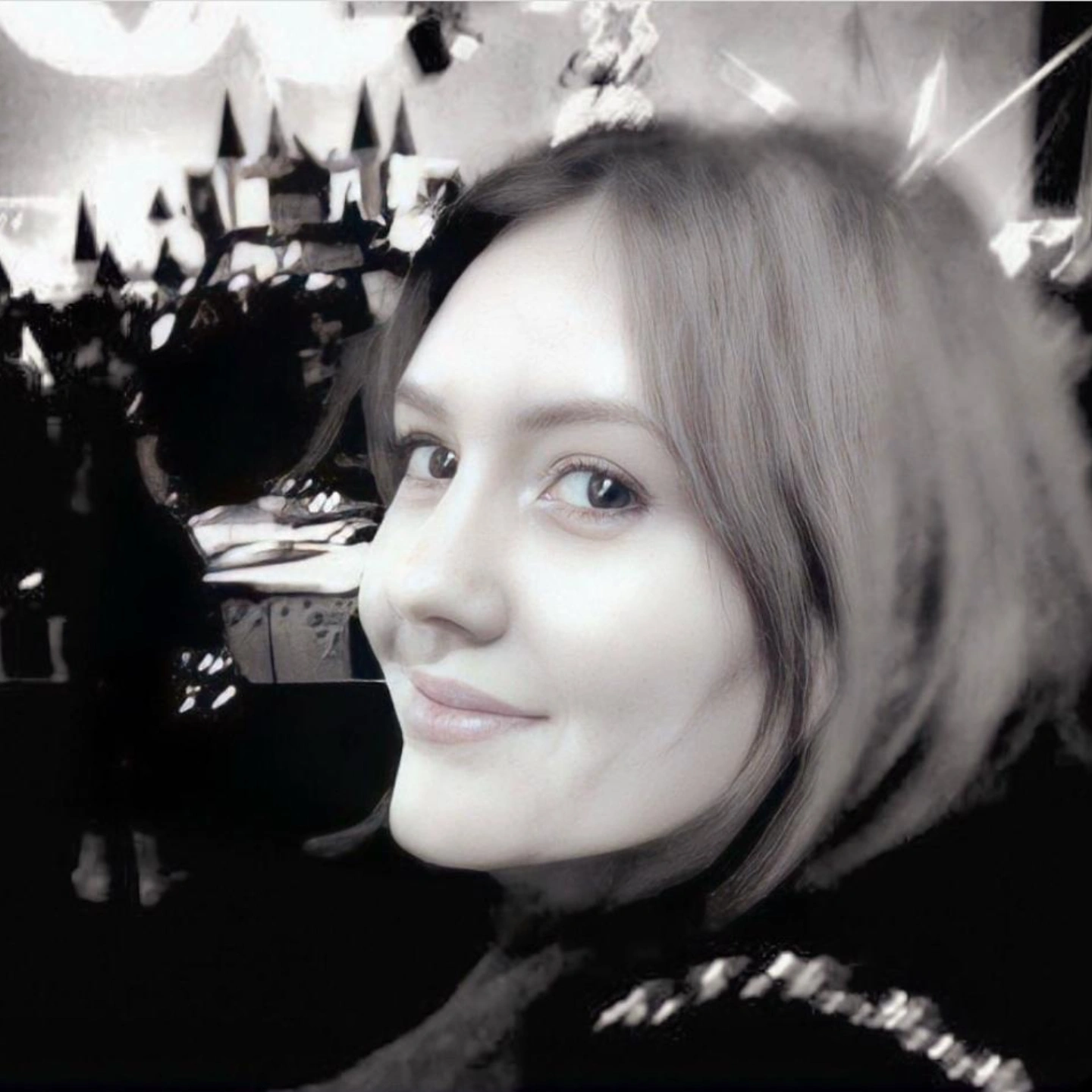
KATRINA HARTZLER (KATRINA SISOWATH)
Author · Researcher & Content Creator of the Serpent Civilisation · British Mythological Fantasy Writer
SHORT BIOGRAPHY
Katrina Hartzler is a writer and researcher of the ancient serpent civilization, with a focus on the serpent goddesses and priestesses. She has written articles for Ancient Origins and The Heretic Magazine, as well as appeared at author talks and on podcasts.
She grew up in South-East Asia and lived in Indonesia, Singapore, Malaysia, China, and Cambodia, which deeply influenced her study of Asian Languages and Literature at Zhong Shan University. She is currently writing The Serpent Woman, a nonfiction book that explores the myths found worldwide of the half-human, half-serpent beings, their influence on a global scale and their downfall.
FEATURED WORKS & BOOKS (Click to View)
▼
-
Ninkha Serpent Priestess (Published by KS Dragon Court) — Her debut fantasy novel in print, exploring rich mythological worlds.
-
Dragon Court Series — Follow-up series achieving commercial and critical success.
-
The Serpent Woman (Upcoming Non-Fiction) — Exploring global myths of half-human, half-serpent beings.
OFFICIAL LINKS & PODCASTS:
Website: www.katrinahartzler.com
LinkedIn Profile: View LinkedIn Profile
Spotify Podcast Show: Listen on Spotify
1. Your work brings together mythology, ancient civilizations, research and imaginative storytelling. What was the original fascination that drew you toward the ancient world, and when did that fascination become a serious intellectual and creative pursuit?
Katrina Hartzler: I was fortunate to grow up in South-East Asia, where mythology is very much a part of everyday life, not something children learn about in textbooks. Their rituals, dances, shadow puppetry and the ancient temples were all around me. My parents were also quite strict when it came to reading material (we didn’t watch TV) and so I read a lot of classical literature and books of Western Mythology. I think it’s a combination of the two that lead me to research Serpent Mythology as an adult and inspired me to start writing.
2. You describe yourself as an author, researcher and content creator of the serpent Civilization. How would you explain this area of work to a reader encountering your ideas for the first time?
Katrina Hartzler: The Serpent Civilization is found in myths and legends all over the World, in the form of Serpent Deities such as Quetzalcoatl who designed pyramids and taught humans agriculture, half-human, half-serpent couples Enki and Ninkharsag in Sumer and their Chinese counterparts, Fuxi and Nuwa who created humans. My research has evolved the more I’ve studied to focus on the women of the serpent civilization: Atargatis, Lara Kidul, Syrenka, Melusine, Medusa, Soma, Shahmaran and many others. My hypothesis, which will be examined in my book I’m currently writing is that at some point in history there was an advanced civilization that sent out women as emissaries to marry into new kingdoms who possessed knowledge of diplomacy, the healing arts and many were also skilled in combat, and that is the basis of the myths we find worldwide.
3. Your academic background includes the study of Mandarin Chinese at Zhong Shan University. How did studying an Asian language and culture influence the way you think about history, mythology and civilization?
Katrina Hartzler: I grew up in South-East Asia and lived in Indonesia, Singapore, Malaysia, China and Cambodia until my late twenties, so I have always enjoyed by being immersed in other cultures and learning about their rich, vibrant histories and mythologies. It may have had a bearing in my approach to research, as I was able to draw correlations between a myth told in one country and find its counterpart in another, showing that we have been connected for a much longer period of time than we are taught, particularly from a Euro-central perspective that teaches us about explorers and adventurers ‘discovering’ unknown parts of the World. This perspective has helped me as I continue to learn about serpent women and local legends, adding them to a rapidly expanding list.
4. Was there a particular book, discovery, historical account, mythological tradition or personal experience that fundamentally changed the direction of your research?
Katrina Hartzler: There are two books that come to mind: The Serpent Grail, by Gary Osbourne and Phillip Gardiner which delves into the ancient serpent civilization and their use of serpent venom and blood in their healing practices, enjoying a lengthened lifespan and state of enlightenment. The other is The British Edda, by L.A.Waddell, who had a very different view on the Serpent Cult, deeming them savages with a primitive belief system and disgusting rituals. Both have had an enormous impact on my own ever-developing writing and research, though I have chosen to concentrate on the women—the Goddesses and Priestesses who have been immortalized in art, religion and mythology.
5. When you begin exploring an unfamiliar ancient tradition, what questions do you ask before forming an interpretation?
Katrina Hartzler: What is the earliest version of the story or tradition? Where did it likely originate? Could there be a logical explanation (if it is fantastical or supernatural)? Did it change? If so, how and why? How is it presented now in modern culture and are there differing beliefs today that have affected how we view the people and the events (this is vital when examining themes such as sorcery, unfamiliar initiation rites and whether there was a change in perception of who the villain is).
6. How has your understanding of mythology changed since you began researching and writing about ancient civilizations?
Katrina Hartzler: That there is a kernel of truth to most mythology, even when it comes to fantastical tales of Gods, supernatural beings and other-worldly weaponry. I try to look at it from a logical point of view, as much as possible, and ask what might have originally happened, only to be embellished as time went on, attitudes changed and older traditions were adopted into newer cultures, with translations into new languages playing a role in how the stories developed and changed. Mythology is particularly vulnerable to those elements, and we see it time and time again, where a hero or heroine becomes a villain, and then a monster. Where a powerful sorceress becomes a witch, or a villain becomes a victim.
7. Ancient history is often reconstructed from fragments—texts, inscriptions, archaeological evidence, later interpretations and oral traditions. How do you decide which sources deserve your confidence?
Katrina Hartzler: When it comes to modern sources, I tend to view authors and researchers who are over-confident in their theories with some suspicion, as so much is still unknown about the past. Someone who is willing to look at and present all possibilities is a safer source of information (in my mind) than someone who presents their theory as established fact.
8. What is your research process when several ancient sources appear to tell different or contradictory versions of the same story?
Katrina Hartzler: If the original source is undetermined, then I tend to look at the viewpoint of each source—what is known about their beliefs, culture and ideology. I have to take into account the society in which each version of the story is being told as that affects how the story and its characters are presented.
9. How important are translation and language to your research, particularly when working with traditions that have passed through multiple languages and centuries of interpretation?
Katrina Hartzler: It is vitally important, but also very frustrating to know which to accept and use and which to set aside. For example, R.A. Boulay’s book ‘Flying Serpents and Dragons’ is a fantastic examination on the reptilian beings, particularly as he did incredible research on the ancient Hebrew texts and is able to demonstrate how the translators of the Bible into Latin, Greek and English amended certain parts or chose words that had a very different meaning. But his hypothesis is not exactly aligned with research carried out on Sumerian and Assyrian texts, which the Talmud is based on, so his interpretation is based on an earlier translation. With my own research, I have to take all of this into account, bearing in mind my own linguistic limitations.
10. Ancient myths are frequently treated either as literal historical records or dismissed entirely as fiction. Do you think there is a more productive middle ground between those two approaches?
Katrina Hartzler: Absolutely! If we look at the myth and try to dissect it with logic and reason, what are the possible explanations? For example (and I’ll be exploring this in greater detail in my non-fiction book The Serpent Woman), the nagas and serpent beings are described as beautiful, bedecked in precious metals and jewels, human on top and a serpent or fish on the bottom. We can take that literally and say it is evidence of cross-breeding performed by ancient aliens such as the Annunaki or we can dismiss it as fantasy, even though the same accounts of these beings are found Worldwide. But, if we look at it logically, what might the tail be and why is it so important to point out their jewelry? We know that emissaries were sent out from the Serpent Dynasties such as the Lords of Tikal in Guatemala to inter-marry new tribes and kingdoms, bringing them under the Serpent umbrella and these women were described in the same way. So let’s look at one of the earliest stories: Shamhat and Enkidu. She was a priestess of Innana, sent to tame a wild man who lived with the animals, was unable to speak, and was naked. She taught him how to speak, how to dress and how to behave in a civilized manner. If we take the tribespeople’s point of view, then what we must consider is that they were nomadic hunter-gatherers, used sharpened sticks and flint to hunt and were either naked or dressed in animal skins/grass skirts. That meant they had never seen gold fashioned into jewelry or bronze into swords. These women are all depicted wearing woven skirts from just below the navel to their feet. These same skirts are seen on temple carvings in India and in countries like Indonesia, Thailand and Cambodia, which have a rich serpent culture. A tribesman or woman who has never seen textile is going to look at that skirt and try to find an explanation for what it could be. As it tapers down at the ankles, it would appear the woman has no legs—only a tail. Could this be the explanation? They also had snakes as protectors and used them in rituals, so perhaps they encouraged the belief that they were half-serpent themselves.
11. How do you distinguish between historical evidence, mythology, later interpretation and your own creative speculation when developing an idea?
Katrina Hartzler: When it comes to fiction, that’s easy (maybe too easy) as these sources are all inspiration for a World that I have created. For articles and non-fiction, I like it when there is solid evidence—brick and mortar, if you will as the line between history and mythology is non-existent in some ancient texts—they were one and the same. If there is a serpent monument such as a mound or temple, then it’s easier to infer the rituals and practices performed by those who maintained it and the population who lived around it through historical accounts and legends.
12. What is one widely repeated belief about ancient civilizations that you believe deserves much more careful examination?
Katrina Hartzler: I think we need to be more careful when it comes to believing the more savage acts attributed to them as the accounts are often written by outsiders or those who were warring against them. Conquest is brutal and entire populations were enslaved or obliterated, their own records destroyed. The texts we base our beliefs on were written by those who won and so we must not forget personal or political prejudice in those accounts. Humanity has always justified war (even if it was nothing more than a land grab or to control a trade route) by painting the others as savages who carry out the most gruesome of acts, including child sacrifice. We all have the same traits no matter the time or culture in which we live and protecting those we love is part of our nature. I’m not saying child sacrifice never occurred, but not at the extent Phoenicians (for example) reportedly indulged in.
13. The serpent appears repeatedly across different cultures as a symbol associated with knowledge, transformation, danger, fertility, authority or the sacred. What makes the serpent such a powerful recurring figure in human mythology?
Katrina Hartzler: I don’t think any other animal, mythological or real, is as polarizing as the serpent, except the dragon, though the two are often used interchangeably as in the case of Jason and the Golden Fleece (the earlier stories and artworks show a serpent, and it was changed to a dragon later on, just as royal families claim descent from a serpent princess and yet the courts became Dragon Courts with Dragon Emperors, etc). The serpent has always been affiliated with medicine and wisdom, yet in some religions it was depicted as evil personified. Why such a disparity? Why are we told the Serpent in the Garden of Eden was evil and yet are admonished in a later text to be as ‘wise as serpents and harmless as doves’? Part of it, I think, is the mystery that surrounds the serpent. We associate lions with bravery, doves with gentleness, dogs with loyalty. The serpent is associated with wisdom, so why isn’t it automatically revered? Why do we hesitate to view it positively even though wisdom is what we strive to attain? Part of it could be due to the serpent civilization being renowned for their knowledge and yet not sharing all of it. They had occult knowledge that they kept from the general population and there was a lot of secrecy in their initiation ceremonies, rites and rituals. The allure of the unknown is a powerful force for us, and we tend to use our imagination to fill in the gaps, which is what happened to the serpent civilization. Negative impressions lead to fear, which then lead to hatred and destruction. So we have an animal that keeps to itself, we cannot play with it like we could a pet, it does not hunt us but will defend itself. Its venom kills and yet the ancients knew how to use it to heal as well. It sheds its skin and is ‘reborn’ while we see the changes in our body with each passing year. It is very much part of the natural world and yet it has abilities that seem supernatural. Perhaps its ability to retain its place in mythology is our inability to pigeon-hole it.
14. Your work explores the idea of a serpent Civilization. What does that concept mean within your own research and storytelling, and what sources have most influenced your understanding of it?
Katrina Hartzler: That there was an ancient civilization that most probably existed 11,000 years ago that was advanced by the standards of those days. They were agrarian and had intricate knowledge of astronomy, metallurgy, medicine and construction. The tales of serpent Gods like Quetzalcoatl in Mexico and Goddesses like Soma in Cambodia tell of a being that came ashore, so they were navigators and able to undertake long voyages. They brought knowledge and established settlements which turned the hunter-gatherers into farmers, so they viewed themselves as helping other humans develop and brought the new kingdoms under their umbrella. They were capable of fighting but did not undertake violent conquest. Eventually, there was a clash of cultures symbolized in myth and art as the Eagle/Garuda vs. the Serpent, man vs. dragon (often female, like Tiamat). The new culture was more militant, patriarchal and followed the solar calendar, rather than the lunar one, which the serpent civilization followed. When this occurred, the thirteenth astrological sign, Ophiuchus -the serpent- disappeared. Serpent temples were defaced and serpent dynasties destroyed, with their names struck off the monuments. I have been researching when and why this happened, and it is an ongoing project. The sources that have influenced me the most are the myths I grew up hearing about, followed by the books written over the past two centuries and the works of art that glorify the serpent women. What excites me the most is the archaeological evidence there is—the temples, labyrinths and monuments they left behind.
15. The Annunaki have become a major subject of modern popular culture, often surrounded by dramatically different interpretations. What do you think is most important for readers to understand about the original ancient traditions before engaging with modern interpretations?
Katrina Hartzler: That there are similarities that cannot be easily disregarded with other pantheons in India and China, for example. Whether one chooses to believe they were aliens or not, their role in our collective history cannot be overlooked, especially for those who have read the Bible. Sumer is the first known recorded city-state and the Annunaki were present there- as rulers or as Gods, but it is not the oldest settlement by far. New settlements, cities and underground constructions are being discovered every year. The difference is, we are yet to learn about the people who lived in them, their belief systems, religious practices and social hierarchy. Whereas, with the Annunaki, we have excellent records and so they remain the first known pantheon.
16. Where do you see the greatest gap between what ancient texts actually tell us and what modern culture claims they tell us?
Katrina Hartzler: The construction of the monoliths, the pyramids and temples such as Baalbek in Lebanon. Ancient texts tell us the Gods built them or taught the humans how to build, but the actual methods employed are still debated today. There are also conflicting opinions on what our ancestors meant when they used words such as ‘giants’ and so much is left to interpretation.
17. When researching subjects surrounded by speculation and competing theories, how do you guard against confirmation bias—the tendency to find evidence that supports what we already want to believe?
Katrina Hartzler: If I find myself too enthusiastic about an idea, I will try to discuss it in detail with a fellow researcher who has a different perspective on the subject, such as King Arthur. I am of the opinion that the original (or real) Arthur was not British and was never in Great Britain but belonged a much earlier time and very different place. There are many writers and researchers that I respect who think otherwise and have dedicated time and effort in finding his final resting place, Avalon and the round table. I enjoy hearing their points of view and the evidence they have as I learn a lot from them. Sometimes I realize that I have gotten carried away and there is no supporting evidence to a theory or that the evidence points to a very different direction. I also read books that have opposing views on a certain subject or person, as I try to keep as open a mind as I can.
18. Do you think ancient myths can preserve fragments of cultural memory even when they cannot be treated as straightforward historical documentation? Why or why not?
Katrina Hartzler: Yes, I am a firm believer in that as so much of our history was passed down from one generation to the next orally and though they may have altered with the passage of time and translations, the fact that myths are still remembered speaks to their cultural significance. Also, if we look at the advances we have made over the last century when it comes to Archaeology (thanks to LIDAR, Satellite imaging, etc), we are finding evidence of cities and civilizations that our ancestors thought were mere myth.
19. Your published work transforms ancient and mythological material into narrative worlds. How do you move from research notes and historical traditions to an actual story?
Katrina Hartzler: A lot of the time, it is by careful extrapolation of the different accounts and beliefs of the same Gods and Goddesses, to find the similar theme in each one, then turning it into a comprehensible story. Other times, it is pure luck. For example, when researching ancient Egypt, I found a book published in 1965 titled ‘Egyptian Mythology’ by Paul Hamlyn. I knew I wanted to write about Isis (though her earlier name of Aset) and in the chapter on her, he writes of her visiting Astarte in Phoenicia and blessing her newborn son in a passing of fire purification ritual (readers of the Bible will know what that is) that is meant to confer immortality on the baby. I have not read this anywhere else, but immediately felt that ‘zing’ moment, where a pivotal moment in my book has unfolded just from one chance paragraph. Isis/Aset meeting Astarte is also crucial, as Astarte is very much part of the Serpent Civilization.
20. What comes first for you when developing a book: the world, the mythology, the characters, the historical research or the central question?
Katrina Hartzler: The mythology is the most important factor for me as there are similar themes in each pantheon when it comes to the Serpent Deities. This has allowed me to create a list of possible characters, which I then whittle down into a list of those I want to write about in my books. I know before I start the book who the main characters are and their arc, though their motives tend to unfold and sometimes change as I am writing.
21. Your Serpent Cult works explore an elaborate mythological world. How do you maintain internal consistency when building a fictional universe influenced by multiple ancient traditions?
Katrina Hartzler: I researched as much as I could (I am still researching, reading and learning all the time—it is a endless rabbit hole) and built the World around what is known about them—practices, beliefs, rites, rituals, similarities in accounts, myths and persons found in different cultures. By being somewhat fastidious at the World-building stage, it has helped me to create the storylines, character arcs and plot points around it.
22. How do you decide when to remain faithful to an ancient tradition and when to deliberately reshape it for storytelling?
Katrina Hartzler: I look at localized stories and accounts and then juxtaposition them against the Serpent Civilization as a whole. I try to incorporate them as much as I can, but if I have to change an element in a particular tale or the deeds of a certain God or Goddess in order to advance a story, it will still always be true to the Worldwide mythology and ethos. I hope that is why readers respond well to it and contact me to say how alive the stories feel and even though it is fictional, it ‘could be real’.
23. What role do women, priestesses and powerful female figures play in the worlds you create, particularly in relation to ancient religious and mythological traditions?
Katrina Hartzler: They play pivotal roles as keepers of sacred knowledge and occult traditions, particularly in the use of serpent venom, blood and floral essences or oils in healing practices. The Serpent Civilization was matriarchal, and so knowledge was passed down from mother to daughter, one generation of priestesses to the next. They were advisors to Kings, avatars of Goddesses like Inanna, and tied to the health of the kingdom through acts such as Sacred Marriage Rites (or Heiros Gamos). In many traditions, there was a half-human, half-serpent couple who created us, so the female was just as important in our creation as the male. Many royal and aristocratic families (even to this day) also claim divinity due to a Naga or Serpent Princess who married their ancestor, bringing wealth and knowledge to the kingdom. Without these women, how would the royal families claim their divine right to rule? But, in many of the legends, these fabulous women suffered loss and betrayal at the hands of the humans they loved or civilized, so the stories I write explore that theme in greater detail. Was their betrayal and loss of power personal misfortune or was there a clash of ideology that resulted in these women being ousted and then eradicated?
24. What can fiction sometimes communicate about humanity, belief and civilization that a purely academic historical account cannot?
Katrina Hartzler: Stories or parables have always been a vital part of transmitting values and beliefs, which is why philosophers, gurus and figures like Jesus or Buddha used them. In the same manner, historical fiction that stays true to established events and the people involved can be a brilliant way for readers to learn about history. Fiction can make ancient worlds and events come alive in a way that a textbook cannot. Fiction is also a brilliant method of drawing people together—to be human is to face challenges, hardship, success, love and loss though we sometimes focus on the differences between us rather than the similarities. Just as babies and small children learn best through play, a semi-fictional book set in a different culture or time period can help those who deem History to be bland or boring (especially when still at school) look at the past with new eyes.
25. You have also worked as a freelance editor, copywriter and ghostwriter. How has editing other people’s writing changed the way you approach your own work?
Katrina Hartzler: I think editing or proofreading another’s work is one of the best ways to improve your own writing, even if it’s just as an exercise and not something one is paid to do. Reading for pleasure and editing are very different, though both are needed in becoming a better writer. It is by editing something written by someone else, I am able to identify my own weaknesses (it’s easier to spot a mistake in someone else’s work) and try to avoid repeating those mistakes.
26. What is the biggest difference between writing a story for yourself and writing something that you hope will remain meaningful to readers many years from now?
Katrina Hartzler: The first book I wrote was ‘for myself’. I wanted to see if I could actually write a book without giving up or losing interest. It got published and I received feedback, which I learned from. The subsequent books were written with the readers in mind and so when it came to plotting the outline or editing the first draft, I was able to look at it from their point of view, rather than merely feeling satisfaction that I had finished a manuscript.
27. After years of writing and publishing, what have you learned about the relationship between creative independence and the realities of the publishing industry?
Katrina Hartzler: It is actually a gripe of mine that certain tropes become popular thanks to one bestseller and then the bookstores are filled with stories that sound remarkably similar. The reality is that whatever is on trend is more likely to find a readership and is therefore easier for publishers to invest in. My personal library is filled with books written by authors such as Mervyn Peake, Lord Dunsanny, and Gustave Flaubert who created brilliant masterpieces with complex characters, rich mythology and beautiful, dense language.
28. The literary world has changed dramatically since you published your earlier books. What has become easier for independent authors, and what has unexpectedly become more difficult?
Katrina Hartzler: If an author is good at social media, then finding an audience and building a community of fans is much easier now. I have seen authors do really well on TikTok, utilizing TikTok shop and live feeds. Those whose books are picked up by readers with large followings can see instant success. Authors and publishers are no longer reliant on bestseller lists to reach readers. What has become more difficult is the amount of competition on social media, as well as the ease of self-publishing, which means there are more books in circulation.
29. You have participated in speaking engagements and the wider writing community. How does speaking directly with readers and other writers influence your research or creative work?
Katrina Hartzler: I learn so much from them, in terms of feedback on how to make my books better and also inspiration from those who are skilled at giving talks and holding the attention of an audience. I am quite shy by nature, so the thought of speaking in public makes me nervous, but it is something I am pushing myself to do.
30. What advice would you give an emerging writer who has a genuinely unusual idea but is struggling to find an audience for it?
Katrina Hartzler: To write it first and then stand by it, no matter how unusual it might be. I think the practice of advertising books by likening a manuscript to a well-known book is not always the best way to find and grow a loyal fanbase as comparisons will be made (not always positively). Get the rough draft finished and then try to find readers to give feedback before doing another round of edits. Once the book is polished, then play around with social media, attending book festivals and author events. It is a tough industry and a book that is unique might initially struggle to find a readership, but in the end, that might be its greatest strength.
31. Why do you think modern audiences remain so fascinated by lost civilizations, ancient mysteries and forgotten knowledge despite living in an age dominated by science and technology?
Katrina Hartzler: I think much of it has to do with us no longer accepting dogma, which has led us to question everything we have been taught in school. We know that history is written by those who succeeded in conquest or ideology and that much of what has been passed down was filtered or altered, after the destruction of opposing nations, histories, religions and belief systems. If we begin by questioning one thing, it soon leads to questioning another, and another. I think this is where we find ourselves now: looking at history, monuments and civilizations through a new lens and for the first time having the technology to put previously accepted theories to the test. I find it exciting whenever a lost civilization is rediscovered, though I hope that we are able to learn more about them than the buildings left behind.
32. Do you believe mythology still performs an important function in modern society, or has its role fundamentally changed?
Katrina Hartzler: It has changed in the role it plays in our lives, mainly as a result of writers such Joseph Campbell’s ‘The Hero’s Journey’, and Sir James Frazer’s ‘The Golden Bough’ who used the concepts of mythology but broke them down from the metaphysical to the physical. Frazer showed us how the stories have recurring underlying themes that tie us together sociologically, and Campbell’s hero is no longer someone else who fights supernatural monsters, but rather the path we must take to gain enlightenment and become a functioning adult. Disney took mythology and presented it in a new format, which introduced generations of children to the old fairy tales just as religion was beginning to lose its standing in the Western World, but on a superficial level and thus its function has also changed. Mythology and Religion were so deeply intertwined in the past that people approached it with awe and reverence. Now it is viewed as entertainment.
33. What can contemporary writers and researchers learn from the way ancient civilizations used storytelling to transmit values, identity and knowledge across generations?
Katrina Hartzler: That we love to be inspired and seek out the extraordinary and supernatural world as a method to cope with ordinary life, its routines and pressures, and our methods of seeking inspiration are not limited to the written or spoken word, but to meditation, music, drink and other methods. Ancient storytellers did not keep the tribes enthralled merely as a way to pass the time, but to enthrall, illuminate, as well as give gentle warnings to the listeners. Children learned what it meant to be a good person (brave, honest, honourable) through tales and even though technology has advanced and campfire stories have been replaced with television and the internet, their capacity to learn, absorb and be inspired have not. I think that in ancient times there was more awareness of the ‘power of the word’ and so each word, line and stanza was carefully chosen, which is why it took bards years or decades to become masters at their craft. Stories were not merely entertainment, and in today’s society we find that books and myths are competing with other diversions which entertain and stimulate the mind but have very little value when it comes to imparting knowledge and building character. I would say, though, in today’s more polarized political climate, some writers can sometimes allow their personal views to infiltrate their stories and characters to the point that readers are turned off, rather than interested. And that is a shame, in my opinion, as the stories are amazing. But no one likes to feel ‘preached’ to. This is not a modern issue, by any means, but I do think that as writers, we should be cognizant of our own views and be careful that they don’t turn an otherwise remarkable story into a lecture.
34. With artificial intelligence increasingly influencing literature, research and creative production, what do you think remains uniquely human about storytelling?
Katrina Hartzler: Probably human failing, which is part of our experience of living. Artificial intelligence can be programmed to write a story using prompts in terms of characters, tropes, world-building and even an author’s voice, but can it accurately portray humanity in all its mess and glory in a manner that touches us? Avid readers live vicariously through the stories that authors create and they are the sternest (though often fairest) judges of an author’s work. When an author’s voice changes or when a character does something unexpected or the plot begins to unravel in a way that seems unintentional, readers notice and will bring it to the author’s attention. To my knowledge, I haven’t read a book written by A.I. yet, but perhaps I should. I think I would find myself looking closely at what is missing, even if the characters, plot and world-building are perfectly executed. After all, it is fun to get inside an author’s mind and imagine what they were envisioning when they wrote their book—much of it slips out inadvertently in the form of character favouritism, plot twists that don’t quite make sense, personal wish fulfillment, biases and political or religious leanings that come through in the hierarchal structure of the societies in the book. Can A.I. replicate that accurately or will it stay true to the prompts that are based on what is popular at any given moment?
35. If a reader discovers your work twenty or fifty years from now, what would you most hope they understand about the questions you were trying to explore?
Katrina Hartzler: I would hope that in twenty or fifty years from now, more of the ancient civilizations will have been rediscovered, along with (and this a very personal wish-fulfillment), their knowledge, religious practices, medicinal arts and societal structures. I would love if, like in the case of the serpent labyrinths known as Babylons currently being excavated by the shores of the White Sea, that more of the intent behind their construction and the rituals that occurred in the subterranean World became public knowledge.
36. Finally, when you look back across your research, books, editing and creative journey, what is the question about humanity, civilization or the ancient world that you still have not answered—and perhaps never want to stop asking?
Katrina Hartzler: How much ancient knowledge has been lost that could be of use to us today? There is a desire to learn about technology, particularly in the fields of construction and engineering, but my focus is on the rituals people performed, their knowledge of plants, venom, even blood, and how they used them in their healing practices. We see sculptures and images of the God or Goddess holding a chalice with a serpent entwined around their forearm—which serpent? How was the venom used and what was it mixed with?
HELP KEEP IDEAS ALIVE
Great ideas deserve to be heard, preserved, and passed forward.
Astra Global Ventures exists to bring thoughtful conversations, original perspectives, and meaningful stories into the world—and to preserve them for readers today and generations to come.
If this work has meant something to you, please consider supporting our independent publishing work. Your contribution helps us continue the research, editing, design, and publishing that bring meaningful voices and ideas to life.
Every contribution, whatever its size, helps us keep creating and sharing work that matters.
SUPPORT INDEPENDENT PUBLISHING
For international supporters, you can contribute securely through PayPal:
Scan the QR code or use the PayPal link below to support our independent publishing work.
Support Astra Global Ventures via PayPal
Thank you for helping meaningful ideas live beyond the moment.