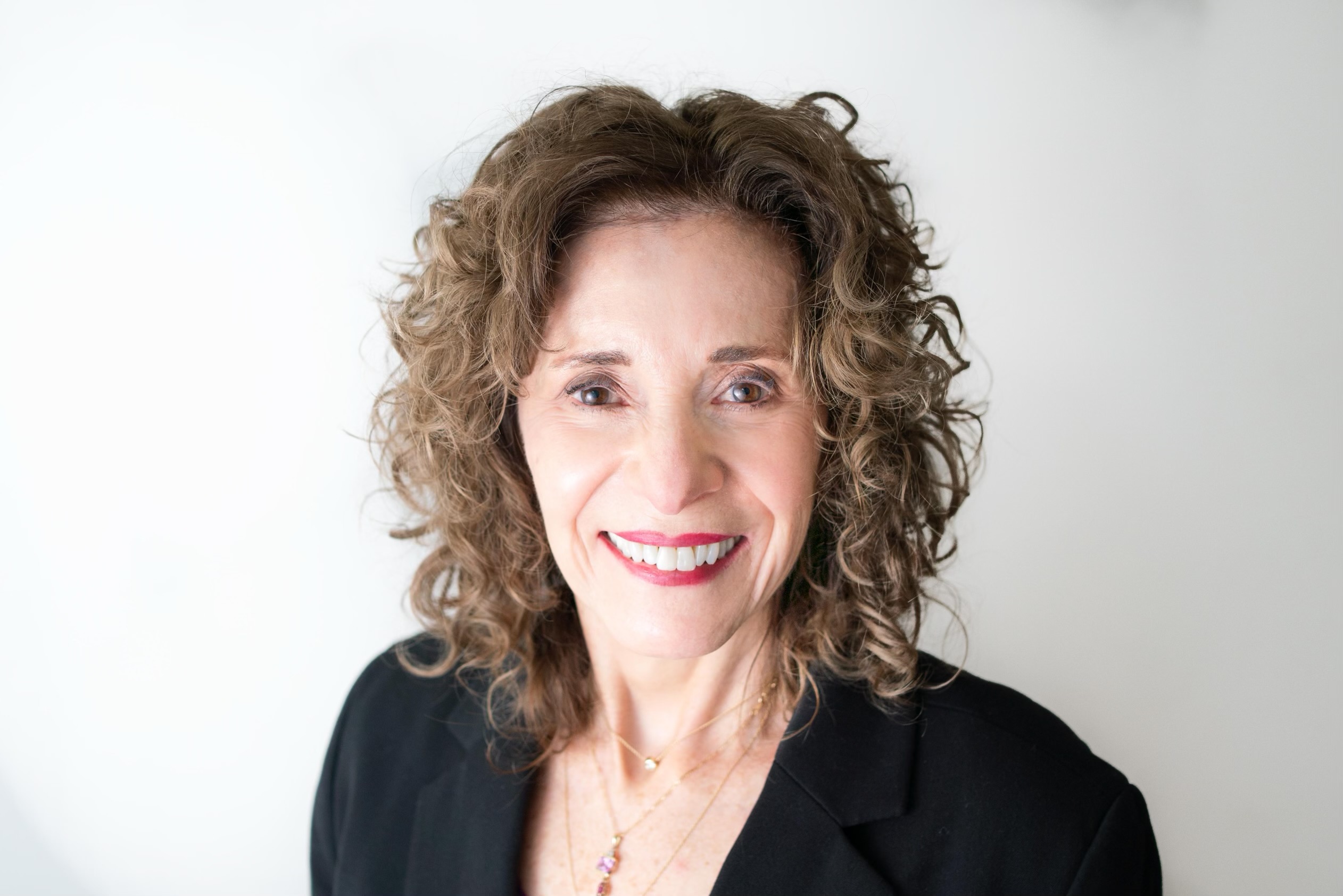
DR. JOANNE WILKOFF WILSON, PH.D.
Behavioral Child Psychologist · Author · Innovator in Child Mental Health
SHORT BIOGRAPHY
Joanne Wilkoff Wilson has worked as a licensed psychologist and expert in child and adolescent psychology for over three decades. She holds a Ph.D., M.Phil., and M.A. in Psychology from Columbia University, where she was awarded a full scholarship as a National Institute of Mental Health Doctoral Trainee. Her academic foundation is further anchored by degrees from New York University and the University of Pittsburgh, where she graduated cum laude.
Dr. Wilson’s pioneering work in the treatment of Oppositional Defiant Disorder (ODD) culminated in the creation of the FAST (Family Attachment Skills Training) program, a highly effective and efficient treatment model. Her clinical innovation led to the publication of her book, Breaking Up With ODD: A 7-Week Guide to Parent-Child Attachment and Cooperation Through Love and Consequences, published by Bloomsbury in 2024.
OFFICIAL LINKS & PLATFORMS:
Website & Free Downloads: www.tantrumsolution.com / www.tantrumcontrol.com
Book Purchase Link: Amazon Book Link
Contact Email: tantrumsolution@gmail.com
1. What first drew you toward children and made you want to understand what happens beneath their behavior?
Dr. Joanne Wilkoff Wilson: As an undergraduate, I used a textbook authored by Mussen, Conger, and Kagan titled Child Development and Personality. I seemed to be able to complete every sentence and anticipate conclusions. I recognized then that I had a deep understanding of children. Perhaps my inner child has always been available to me. Regardless, I knew then that I wanted to pursue a career in child psychology. My earliest career experience was teaching a special education class in inner-city Brooklyn, NY. At that time, this allowed me to receive free tuition at NYU to pursue a master’s degree in psychology. Teaching those children was one of the most rewarding experiences of my career. It also illuminated my innate ability to diagnose underlying conditions. Shandra was hard of hearing; Monique was autistic; Charles was neurologically impaired. I systematically referred each child out to local hospitals for assessment, and my diagnoses were confirmed each time. This validation further solidified my career choice. Now, at the end of my career and having written Breaking Up With ODD, many of the innovations that I brought to bear upon PMT (Parent Management Training) do not yet have scientific evidence; however, I am certain, by virtue of the unprecedented success of FAST (Family Attachment Skills Training) that someday research, development and application will prove FAST’s efficacy and end this behavioral disorder for good.
2. Your career has moved through school psychology, clinical practice, behavioral psychology, and work with families. Which experience most changed the way you see a child in distress?
Dr. Joanne Wilkoff Wilson: All of my career experiences, coupled with my education, informed my interpretations of why any child was in distress. Behavioral psychology’s focus on the importance of antecedent conditions and functional consequences was particularly suited to analyzing ODD behavior.
3. Was there a moment in your clinical work when you realized that a difficult behavior could be a signal of something deeper?
Dr. Joanne Wilkoff Wilson: There was a moment in my clinical office when a mother, in tears, confirmed the cause of ODD and propelled FAST (Family Attachment Skills Training) to the successful treatment package that it is. As described in Breaking Up With ODD, a mother tearfully described various “Damien stories”: One day she placed a plate of hot food before Damien at the dinner table. His stepdad had been sitting at the table, watching. Damien stiffened his little four-year-old arm and cocked it back, like a catapult. He swept the plate of food off the table, yelling, “I’m not eating that bleep-bleep food!” The plate of food flew across the room. It hit the wall, and pieces of the shattered plate and food splattered all over the kitchen. How do you think Mom reacted? Yep, in her words, “she went ballistic.” She yelled, screamed, and cried. She pulled her hair out. She temporarily lost her mind. (Stepdad watched all of this as though it were in slow motion.) Each time I would tell this story of a group of parents and children in a FAST treatment group, I would ask the children the same question: “And what do you think Damien was doing while watching his mother cry and scream hysterically?” At least two children in the group would always call out, “He was laughing!” That moment gave proof of FAST’s core teaching that parents’ negative energy is a reward for disruptive behavior and therefore a prime example of the fact that ODD is a learned disorder.
4. After so many years with children and parents, what still surprises you about human behavior?
Dr. Joanne Wilkoff Wilson: Some individuals, even after reportedly “normal”, loving childhoods, resort to momentary horrific violence. The person often describes “blacking out.” I am certain that there is a scientific explanation. I just am not aware of what it is.
5. When a parent says, “My child is defiant,” what is the question you wish they would ask before anything else?
Dr. Joanne Wilkoff Wilson: I wish they would ask why.
6. Where do you see the boundary between ordinary childhood opposition and a pattern that deserves professional attention?
Dr. Joanne Wilkoff Wilson: Age is the first boundary. A professional would never diagnose a two- or three-year-old as ODD. Professionals diagnose ODD based upon age, frequency, duration, and reported intensity of the behavior.
7. How can we talk about Oppositional Defiant Disorder without allowing a diagnosis to become the child’s identity?
Dr. Joanne Wilkoff Wilson: ODD children are not born with ODD. They learn it. They are born with a difficult temperament. Sixty percent of the time, this dysregulated emotion and behavior are due to ADHD. The remainder of ODD children have other pre-existing conditions, e.g., autism, depression, anxiety. My FAST program repeatedly explains that these are “uncomfortable” children who, because of the inherent disruptiveness of their behavior, repeatedly elicit a negative response from the environment. This repeated contiguity of behavior and negative environmental response teaches the child that disruption, disrespect, and disobedience predict adult attention. After all, none of these children earn praise or attention for playing quietly. Adults yelling, arguing back, making disparaging remarks, and blaming serve as a reward for their behavior. The child concludes: “This is my role in this family or classroom. This defines my relationship with my caregiver or teacher.” And the disruptive behavior is repeated despite adults taking things away, sending the child to time-out, or even spanking. The child and adult become stuck in this upside-down reward-and-repeat pattern, and ODD is learned. Any learned behavior can always be considered to be temporary. Any learned disruptive behavior can, and has, been replaced (after parent management training like FAST) with adaptive, cooperative behavior.
8. What might adults miss when they focus on stopping a behavior before asking what the behavior is communicating?
Dr. Joanne Wilkoff Wilson: Our culture focuses on stopping behavior with yelling, correction, criticism, angry lectures, spanking, time-out, etc. This is not the fault of the supervising adult. Not until FAST has it been clearly demonstrated to adults that this negative response, this negative energy, as I term it, serves as a reward for misbehavior.
9. You place strong emphasis on parent-child attachment. What happens to behavior when a child begins to feel more connected to the parent?
Dr. Joanne Wilkoff Wilson: The initial two years of my parent management training package modeled Alan Kazdin’s Parent Management Training and Russell Barkley’s approach to parenting the defiant child. At that time, like Kazdin and Barkley, there was no effort to provide opportunities for attachment. Treatment outcomes were virtually the same as those reported by Kazdin and Barkley, though achieved in a shorter time period. Approximately sixty-seven percent (67%) of the children were no longer rated as ODD by their parents. Then Attachment Theory came into play. I immediately became familiar with the tenets and incorporated attachment activities into the treatment plan. That and nine other innovations contributed to treatment outcomes that were and remain unprecedented. Eighty percent (80%) of the children treated were no longer rated as ODD by their parents. The importance of attachment speaks for itself.
10. What does repeated conflict do to the emotional relationship between a parent and child over time?
Dr. Joanne Wilkoff Wilson: Gerald Patterson answered that question back in the 1960’s. Repeated conflict results in a coercive relationship.
11. Your work brings together love and consequences. Why do you believe children need both, and what happens when one is present without the other?
Dr. Joanne Wilkoff Wilson: All children need unconditional love. That is not just my belief. It has been decidedly proven in the field of child psychology. ODD children have trouble receiving it. Restoring love in ODD children through positive attention, play, and affection is a necessary component of FAST treatment. All humans learn from the consequences of their behavior. Without this learning, socialization and/or, I dare say, civilization cannot evolve forward. Not all consequences are effective at stopping unwanted behavior. Consequences that work are consequences that are not followed by repeated offenses. A good consequence teaches the child alternative behaviors. It is a simple formula derived from Learning Theory.
12. Can a relationship damaged by years of anger and conflict be rebuilt? If so, where should a family begin?
Dr. Joanne Wilkoff Wilson: I treated and was instrumental in helping parents transform the lives of children ages 5 to 14. Their relationships were healed. The 14-year-olds, both boys and girls, emerged from over a decade of coercion. Unfortunately, older teenagers have not only been stuck in coercion longer but are also naturally propelled to separate and gain independence from their parents. They are developmentally unmotivated to devote energy to their parent-child relationship. Given that conflict is dyadic behavior, reinforcement contingencies, belief systems, and consequences need to change. After a certain age, it becomes harder to make those shifts. About 30% of children with Oppositional Defiant Disorder eventually develop Conduct Disorder (CD). CD is pre-criminal and criminal behavior. CD is extremely hard to treat successfully. That is why treatment for ODD is so important.
13. What was happening in your clinical work when the idea for Family Attachment Skills Training – FAST began to take shape?
Dr. Joanne Wilkoff Wilson: My group treatment program for ODD evolved both from familiarizing myself with current research perspectives and organically occurring events. As mentioned earlier, I became aware that disturbed attachment was a transactional factor in the development of ODD. In response, I introduced the Family Attachment games borrowed from Project Adventure into the sessions. The games required problem-solving, cooperation, and communication. The in-session touching, laughing, joy, and love that are derived from play carried over. Now, my book instructs parents to engage their children in the same playtime. Novel treatment ideas evolved organically in some instances. The day that I announced that I would only listen to “good news” about the children was one of those moments. I instinctively gathered public applause for the child. Upon receiving applause, the children would sit up straighter and smile. The child’s ego was enticed to accept the deep desire to earn positive feedback by flooding their brain’s reward center with it. The reward power of applause was immediately observable. Applause became the catalyst for inventing the role-play game “Good Choice/Bad Choice,” which had powerful implications for learning appropriate responses for both parents and children. That role-play and a formal “good news” time session are both incorporated into the at-home guidebook.
14. Which part of FAST came directly from something you repeatedly observed in real families?
Dr. Joanne Wilkoff Wilson: Parents constantly displayed the need to publicly disparage their child. Parents become locked into instances of ODD behavior that upset them. One of my core endeavors in group treatment and later in my guidebook was to shift parental focus toward the positive and expose their child to positive, defining qualities.
15. FAST combines attachment activities, play, praise, affection, monitoring, and consequences. What was the thinking behind bringing these elements into one treatment model?
Dr. Joanne Wilkoff Wilson: Praise and monitoring were always part of Parent Management Training. Though Kazdin’s PMT speaks to affection and the need to touch while praising, there were no curated moments for parents and children to do so. FAST’s Family Attachment Activities provided moments that I knew were necessary. Asking parents to monitor their children has always eluded psychologists working with this population. These parents, for the most part, are worn out by this child and life in general. I helped parents overcome the tendency to quietly enjoy moments of quiet by giving them a tool so rewarding that it would build a monitoring habit, heal their child’s broken sense of self, and help to eradicate ODD behavior. I have always been enamored by Albert Bandura’s Social Learning Theory. The “Become a Praise Hawk” activity explains how social learning works. Once cell phones and cell video cameras became ubiquitous, I asked parents to secretly video their child doing something appropriate. Later, parents are asked to show the video to their child while praising them and essentially saying, “Do more of that.” I asked parents to elicit family applause after seeing the same video. I tried to show the videos in the public group setting and obtain public applause for the child, but I lacked the technology to do so. I believe that my “Praise Hawk” activity is a contribution to the field of psychology that can help many families. That is why I pray that Breaking Up With ODD becomes recognized.
16. If you had to explain the heart of FAST to a parent in one simple sentence, what would you say?
Dr. Joanne Wilkoff Wilson: FAST is a chance to heal your relationship with your child and teach your child how to properly socialize within the family and the world by using both love and consequences that work.
17. Why can play sometimes reach a child in a way that correction, explanation, or repeated instructions cannot?
Dr. Joanne Wilkoff Wilson: Play is the language of childhood.
18. What does genuine praise do for a child who has become accustomed to hearing what they are doing wrong?
Dr. Joanne Wilkoff Wilson: Initially, after months or years of receiving negative attention, praise does not compute. The behavior may worsen before improving, which indicates that ODD is learned. This is called an “extinction burst.”
19. You developed the Tantrum Solution alongside your work on ODD. What do you believe is happening beneath a serious tantrum?
Dr. Joanne Wilkoff Wilson: During a “serious tantrum,” the brain, the motherboard of the mind, is melting down. Synapses are going haywire. Reasoning and self-calm are impossible once the meltdown circuit is tripped. Parents are instructed not to talk to or touch a child in the meltdown phase. As indicated in the Tantrum Solution, available for free download on my website at www.tantrumsolution.com, I observed that many children with a history of meltdowns were able to control themselves in school. This told me that the child was exerting cortical control over the proclivity to tantrum so as to avoid embarrassment. My Solution is based upon this conjecture.
20. When a child is already overwhelmed, what is the most important thing a parent should understand before responding?
Dr. Joanne Wilkoff Wilson: The difficulty for parents is recognizing when a child is overwhelmed. There are books devoted to this answer. A good one for parents to read is The Whole-Brain Child, written by Siegel and Bryson.
21. Your 2025 book, Breaking Up With ODD, turns the FAST approach into a seven-week guide. Why did you feel this work was ready to reach a much wider audience?
Dr. Joanne Wilkoff Wilson: I felt that the work was necessary to reach a wider audience because FAST works, and nothing else, to this day, works this well or this quickly.
22. The book presents a practical approach to parent management. Which idea do you believe families understand least – and why?
Dr. Joanne Wilkoff Wilson: Parents do not understand their role in the learning process that contributes to the development of ODD. Professionals have avoided and continue to avoid that explanation. The fear, I think, has always been that the explanation will be interpreted as blame and the parent will disengage from the treatment. Breaking Up With ODD explains how the ODD child gets their algorithm for adult attention upside down. The parents’ unwitting role is explained succinctly and without blame.
23. Why was it important to place attachment and cooperation alongside behavior management rather than treating them as separate concerns?
Dr. Joanne Wilkoff Wilson: It just seemed obvious that helping parents to heal attachment and show love again is a necessary component of successful treatment. Behavior management is only one aspect of the solution.
24. If a parent reads the entire book but changes only one thing at home, what change would you most hope to see?
Dr. Joanne Wilkoff Wilson: FAST will not work unless all of the components of behavior change are instituted: (1) A parent needs to habitually “disconnect” from bad behavior and one’s own negative responses, (2) Parents need to learn how to praise. It is a necessary skill and one that is essential in changing the energy balance and their child’s resultant behavior; (3) Learning how to implement Positive Practice (issuing consequences that teach alternative behavior) gives the child the pathway forward and (4) Building the habit to look for opportunities to engage in play and show affection restores the parent-child relationship.
25. Your materials describe strong outcomes from FAST. How did you define and measure meaningful clinical improvement in your work?
Dr. Joanne Wilkoff Wilson: My background in Educational Psychology required that I always pre-measure and post-test treatment outcomes. At the time of treatment development, an assessment tool called the ODDRS (Oppositional Defiant Disorder Rating Scale) existed. The scale required parents to rate their child’s behavior regarding the frequency and intensity of the eight defining characteristics of the disorder: (tantrums, argues, defies, annoys, blames, becomes easily annoyed, easily angry, spiteful). I obtained a pre-treatment and post-treatment score for each of the 23 to 30 children who attended the group with their parents. At the three-year mark, when all of the innovations were in operation, I saved the rating forms from an entire year of treating groups. The evidence for FAST’s effectiveness is based upon a sample of 106 children whose parents participated in the treatment and rated their child as having ODD prior to the start of the program. At the end of seven weekly treatment sessions, 80 percent of those children were rated as no longer having the disorder. These results were repeated year after year, sometimes with up to 88 percent of the children returning to normalcy, for the next eight years. As the ODDRS is no longer used in research, I devised the FAST ODD Rating Form. These forms are not meant to be used for definitive diagnosis. They are simple tools that allow a parent to understand the disorder and the positive effects of proper treatment.
26. What did you learn from those families that you believe a simple before-and-after score cannot fully capture?
Dr. Joanne Wilkoff Wilson: Families consistently reported that their children improved in school after treatment. That told me that FAST was instrumental in healing the self-esteem of the children treated.
27. What would you most like an independent researcher to test about FAST?
Dr. Joanne Wilkoff Wilson: I saw three age groups in treatment (5 to 7), (8 to 10), (11 to 14) in one evening in an outpatient clinic. I was unable to randomize assignment to groups as the youngest children needed to be included in the earliest group. I also overlooked having a control group. I could have used the waiting-list families as the controls, but I was unfortunately more focused on treatment than on strict experimental guidelines. This was a real shortcoming later because FAST could not be considered “evidence-based” by strict definition. I had contacted Alan Kazdin, who I thought was still running his parent management training program at Yale. I offered him the FAST treatment manual and program. However, he had just retired from Yale, and the opportunity for wider testing had been lost. It is my fervent hope that the entire program’s efficacy be tested. Beyond that, individual innovations such as The Tantrum Solution, Become a Praise Hawk, The Good News Bad News Game, and the issuance of Good News and the tremendous reward value of public applause could be assessed independently.
28. Where do you see FAST fitting within the wider evidence base for parent-management approaches to ODD, and where do you believe it offers something genuinely different?
Dr. Joanne Wilkoff Wilson: FAST is a special, novel approach to eliminating Oppositional Defiant Disorder. I hope that FAST contributes to the understanding that the importance of healing attachment between parent and ODD child is paramount in its treatment. Despite ample evidence, this necessity has yet to be considered. As mentioned earlier, several of the innovations could make significant contributions to the treatment effort.
29. Many parents of children with serious behavioral difficulties quietly feel that they have failed. What would you want them to hear from someone who has spent decades working with families?
Dr. Joanne Wilkoff Wilson: All parents of ODD children feel defeated because every parenting effort fails to stop the defiance, disruption, and disrespect. I usually say the following: “There is an old saying that when a child is born, their birth doesn’t come with a handbook. This is not only true, but everything you remember from being parented, or subsequently learned about parenting, does not apply to these children. ODD children get parented differently, and you didn’t know that.”
30. How can a clinician help parents change their own responses without making them feel blamed for their child’s difficulties?
Dr. Joanne Wilkoff Wilson: All that any clinician needs to do is join with their parental pain and point out that lack of knowledge is a very real explanation for why they have missed the mark.
31. What would you say to a parent who tells you, “I have tried everything”?
Dr. Joanne Wilkoff Wilson: I am certain that you have tried everything. But you have to admit that everything you have tried has not worked because the ODD behavior is repeated despite your best efforts. Once a parent recognizes that they have to let go of their habitual and culturally learned responses to bad behavior, the door opens up for new learning.
32. Is there a moment in treatment when a family can tell that they are no longer simply managing behavior, but beginning to rebuild their relationship?
Dr. Joanne Wilkoff Wilson: I can only tell you when the moment becomes apparent to me. After the third week of treatment, parents have an easier time and have more content to report when they announce good news about their child.
33. Children are growing up in a world of smartphones, social media, constant stimulation, and changing family pressures. What do you think today’s adults most misunderstand about children’s behavior?
Dr. Joanne Wilkoff Wilson: Unfortunately, technology has become a modern-day babysitter and substitute for parenting, keeping children amused and quiet. I believe that real interactive playtime is essential to proper child development. I pray that more attention is paid to this need for the future of childhood.
34. What should parents protect most carefully in a child’s daily life if they want to build connection, emotional regulation, and cooperation?
Dr. Joanne Wilkoff Wilson: Parents need to protect a child’s need to be both seen and heard.
35. What should schools, parents, and mental-health professionals do differently so that a struggling child is not defined by the label “difficult”?
Dr. Joanne Wilkoff Wilson: Labels focus on the child, placing blame on individual children. Solutions would focus on the environment and the adjustments necessary to make the child more comfortable and functional.
36. If you could change one idea about parenting that is widely accepted today, what would you change?
Dr. Joanne Wilkoff Wilson: Today’s children depend on planned, organized activities or technological stimulation to avoid boredom. Children need to learn to spend their time using their own imagination.
37. After a lifetime of working with children and families, what have your patients taught you that no degree or textbook could have taught you?
Dr. Joanne Wilkoff Wilson: Giving love and receiving love are the great healing factors.
38. Which belief about children has changed the most for you since the beginning of your career?
Dr. Joanne Wilkoff Wilson: In my mind and experience, children’s needs have remained the same. Cultural interests dictate changes in how those needs are met, at times with little success.
39. What do you hope the next generation of child psychologists will understand about children that previous generations sometimes missed?
Dr. Joanne Wilkoff Wilson: I don’t believe that today’s psychologists have missed much. Psychologists are scholars. Because the field is constantly expanding, professionals are in constant pursuit of new information. Sadly, that information, based on research, depends on funding for universities, hospitals, and psychologists in the field. The funding, especially over the past ten years, has been cut. It is my fervent hope that the next generation of leaders not only recognize the population’s mental health needs but also secure funding for them.
40. When someone discovers your work many years from now, what do you hope they will understand about the possibility of change?
Dr. Joanne Wilkoff Wilson: Breaking Up With ODD gives testament to the possibility of change.
HELP KEEP IDEAS ALIVE
Great ideas deserve to be heard, preserved, and passed forward.
Astra Global Ventures exists to bring thoughtful conversations, original perspectives, and meaningful stories into the world—and to preserve them for readers today and generations to come.
If this work has meant something to you, please consider supporting our independent publishing work. Your contribution helps us continue the research, editing, design, and publishing that bring meaningful voices and ideas to life.
Every contribution, whatever its size, helps us keep creating and sharing work that matters.
SUPPORT INDEPENDENT PUBLISHING
For international supporters, you can contribute securely through PayPal:
Scan the QR code or use the PayPal link below to support our independent publishing work.
Support Astra Global Ventures via PayPal
Testimony to helping meaningful ideas live beyond the moment.