OLIMPIA STAVARACHE
Independent Film Director · Screenwriter · Producer · Writer · Painter
SHORT BIO
Olimpia Stavarache is a Romanian independent film director, screenwriter and producer whose creative work moves between cinema, literature, painting and emerging digital forms of artistic expression.
Born in Bucharest in 1976, she entered filmmaking at the age of thirty-three, following an earlier academic background in journalism, mass media and geopolitics. Her approach to cinema is deeply rooted in observation, atmosphere, human emotion and the relationship between the visible and the unseen.
Her filmography includes “Rahela” (2009), for which she received a Special Mention; the documentary “A Legendary Champion, Marin Mustata” (2010), which received an award from Lumiere Artists and the National Centre of Cinematography; and “The Game” (2012), her degree film, selected in the Professionals section of the Constanţa National Film Festival and presented in connection with the Havana Film Festival.
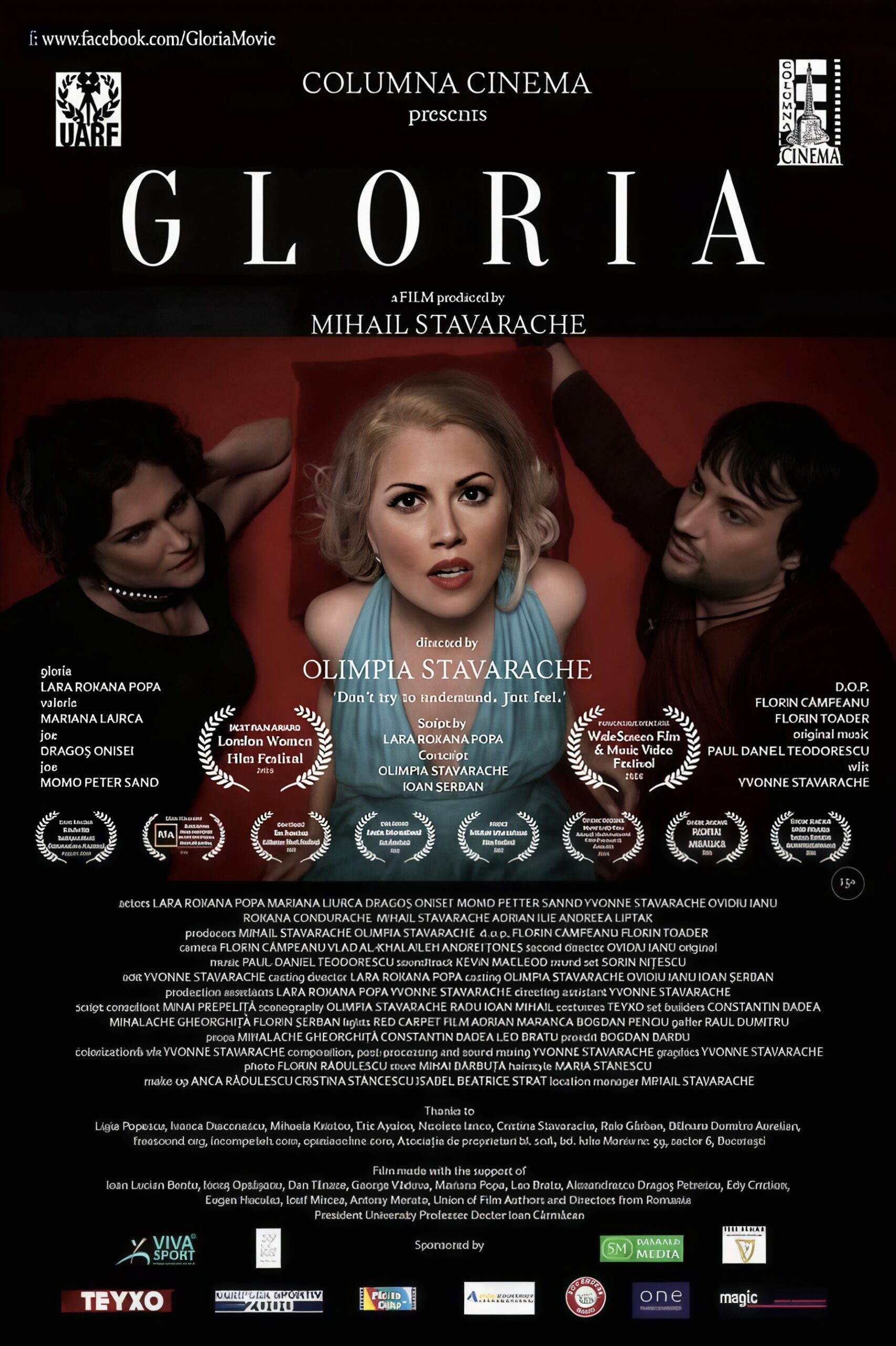
Her film “GLORIA” received international recognition, including the Best Film Award at the London Women Film Festival, alongside selections, nominations and recognition at festivals in Europe, the United States and Asia.
SELECTED RECOGNITION — GLORIA
- Best Film Award — London Women Film Festival, London, UK
- Nominee — Golden Nugget International Film Festival, London, UK
- Semi-finalist — Nashville Independent Filmmakers Festival, Tennessee, USA
- Semi-finalist — Robinson Film Awards International Film Festival, Rome, Italy
- Semi-finalist — San Francisco Arthouse Short Festival, California, USA
- Semi-finalist — Austin International Art Festival, Texas, USA
- Nomination — Indobali International Film Festival, Bali, Indonesia
- Official Selection — World Indie Film Awards, Italy
- Official Selection — Angaelica Festival, Pasadena, California, USA
- Official Selection — Lift-Off Filmmaker Sessions, London, UK
LITERATURE
“Steam”, co-signed with Ioan Carmazan and published in “The Book of Scripts” (University Publishing House), 2019. The literary launch was hosted by the National Museum of Romanian Literature.
CURRENT CREATIVE WORK
Olimpia Stavarache is currently completing “Casa din Volbura” while continuing her work in painting, writing and experimental AI-based artistic creation.
OFFICIAL LINKS:
IMDb: https://www.imdb.com/name/nm4423332/
Linkedin: https://www.linkedin.com/in/olimpia-stavarache-81a574190/
1. You have built a creative life across filmmaking, screenwriting, producing, writing, painting, and new forms of digital creativity. When you look back, where do you feel your journey truly began?
Olimpia Stavarache: I think it began before I had a name for it. I grew up between two forces: my father, a professional athlete, who taught me discipline and endurance, and my mother, who recognized very early that I was drawn to art. I painted obsessively, covering our walls with drawings, many of them abstract, long before I knew the word. She also taught me to look at films differently. After the credits, the real conversations began: about characters, gestures, silence, and everything hiding beneath the image. Books opened the same door. Looking back, cinema was already there, quietly assembling itself in painting, theatre, books, films, even in sport. Perhaps that is where it truly began: with the instinct to look beyond what is visible.
2. Your first academic experience was outside filmmaking. How did that background influence the way you later approached art and cinema?
Olimpia Stavarache: My first academic experience gave me the opportunity to study complex subjects such as journalism, mass media, and geopolitics. It allowed me to observe how reality is constructed, communicated, and sometimes carefully cosmetized. I learned to read both the spoken language and the unspoken one: the gestures, the nuances, the spaces between words. It also taught me something valuable as an artist: to look at art from the perspective of both its creator and its critic.
3. You began filmmaking relatively late. What made you decide to enter cinema at that point in your life?
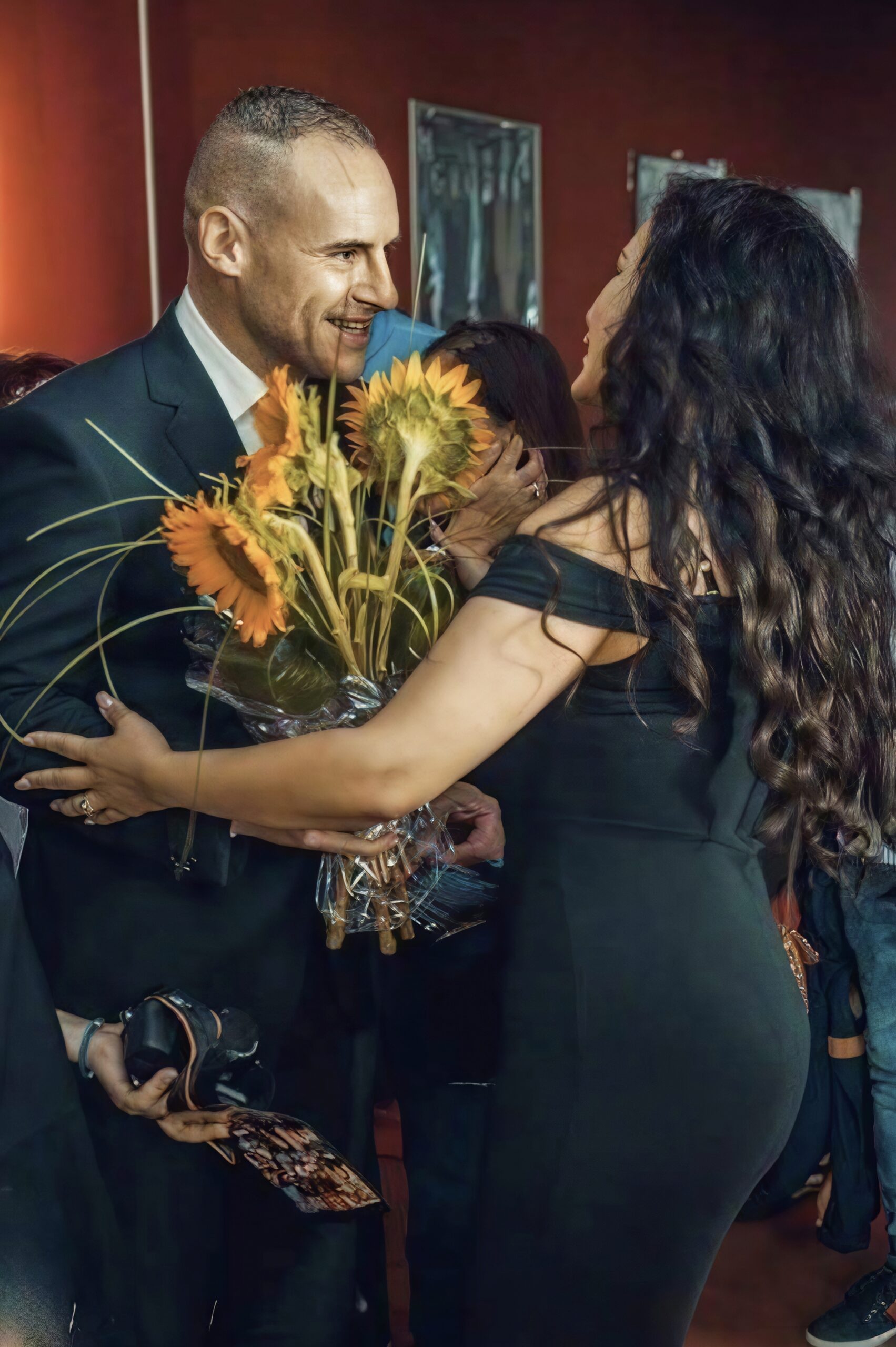
Olimpia Stavarache: It happened relatively late, when I was thirty-three. After my father died, I went through a kind of catharsis. I understood that life had to be lived with passion, and that we should do what we feel most deeply called to do. The thought of learning how to make films came almost as an absolute calling. I already had a family, so it was a surprise to everyone. Fortunately, my husband supported me, and my family was beside me throughout that journey. My daughter, Yvonne, in particular, became deeply involved in my creative path, and today we are working together on the post-production of my film “Casa din Volbură”. Looking back, I think I simply reached a point where not answering that calling would have been harder than following it.
4. Your early film “Rahela” brought you a special mention while you were at the beginning of your filmmaking journey. What did making that film teach you about yourself as a filmmaker?
Olimpia Stavarache: “Rahela” was my first film school assignment, and somehow, without knowing it, that little exercise projected me directly onto the cinema screen at Union. I took it seriously, although I had no idea the school would send it to a festival. I remember the late Geo Saizescu asking me who had made the film. I had instinctively borrowed something from the visual language of Romanian cinema of the seventies and eighties, and apparently it made an impression on my professors. But the real lesson was larger than directing. With my first film, I discovered screenwriting, production, casting, locations, costumes and, above all, how to take responsibility for an entire set. I discovered that filmmaking was not one profession. It was an entire universe.
5. You have often worked as a writer, director, and producer at the same time. What have you learned from being responsible for so many parts of a film?
Olimpia Stavarache: I learned to see the whole picture from the very heart of things. It taught me to move naturally from the small picture to the big one, without losing sight of either. That ability to shift perspective has become essential to the way I create.
6. Independent filmmaking can require a great deal of patience and persistence. What has been the most difficult part of building your own path in cinema?
Olimpia Stavarache: The lack of budget is probably the greatest disadvantage. It creates obstacles that have nothing to do with the quality of the idea. But it comes with something equally valuable: freedom. I can create what I want, about whatever I want. So yes, independence can be painful. But I would rather struggle with freedom than succeed without it.
7. When a film takes years of work or faces unexpected difficulties, what helps you keep believing in the project?
Olimpia Stavarache: The truth is, sometimes nothing helps me believe in it anymore. I simply finish it through tenacity and perseverance. At that point, it is no longer about inspiration. It is about character.
8. You have described filmmaking as something driven by passion. What does that passion look like when you are actually working on a film?
Olimpia Stavarache: My passion has to transfer to the team. Otherwise, it becomes useless. If I see what I imagined, or something even better, in a take, I know I have succeeded. Sometimes an actor does not quite understand the exact emotional state I am looking for. It rarely happens because I rehearse extensively, but when it does, I do not always explain it again. I go onto the set and try to feel the atmosphere myself. I make sure we are feeling the same thing. And then, somehow, the scene becomes perfect.
9. Your film “The Game” was your degree film, but it went on to be selected in the professional section of the Constanţa National Film Festival and was later presented in connection with the Havana Film Festival. What did that experience change in the way you understood cinema?
Olimpia Stavarache: Looking back, I still feel that “The Game” did not receive the exposure it deserved, and perhaps I deserved more support at that point. I had already demonstrated my commitment through my films, and later even through being appointed head of a production company. But this is also something I learned about the world: work and performance are not always the only criteria by which people are supported or favored. The fact that “The Game” participated in the festival alongside a film by the late Sergiu Nicolaescu was, for me, a great honor. To see my work presented in the same festival context as the work of such an important Romanian filmmaker remains a meaningful memory. It was perhaps a difficult lesson, but an important one. Cinema taught me that talent matters, work matters, persistence matters, but the world has other mechanisms too.
10. “The Game” deals with young people, identity, relationships, and a world that seems to be changing around them. What drew you to these themes?
Olimpia Stavarache: At the time, I honestly believed that you could change the world with a film. I still believe it, although I now understand that the film also needs a powerful machinery of communication around it. I wanted young people to think more deeply, to question themselves and the world around them. Years later, having also worked as a teacher, I discovered a generation of young people capable of extraordinary depth. I cannot claim that my film caused that change, of course, but perhaps many filmmakers of that generation were asking similar questions. Sometimes art does not change the world immediately. Sometimes it simply plants a question.
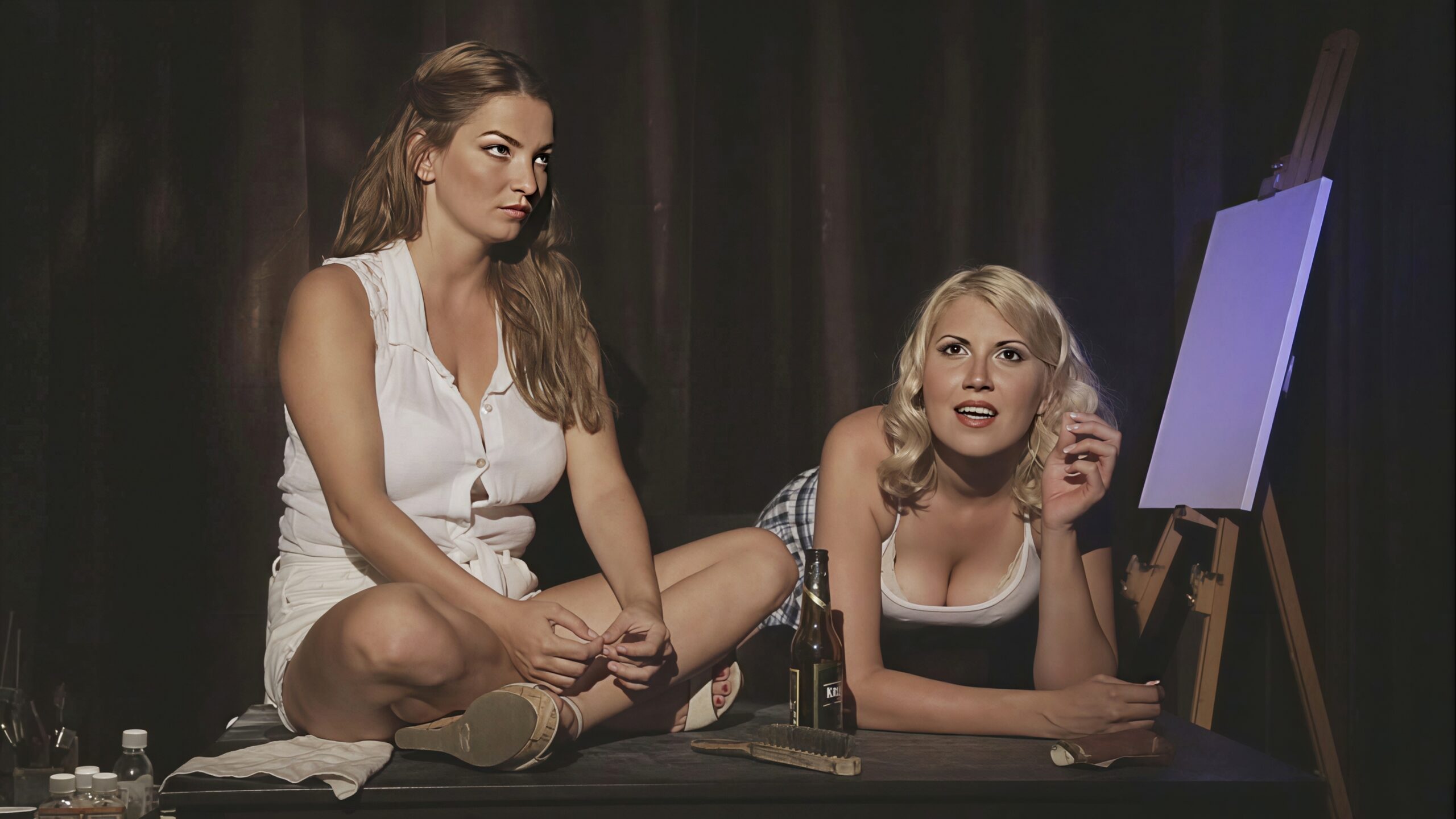
11. “Gloria” carries the powerful line, “Don’t try to understand. Just feel.” What does that idea mean to you as a filmmaker?
Olimpia Stavarache: Wow. I suddenly realize I was trying to do exactly the same thing. Do not try to understand. It is too early for you. But at least try to feel what is wrong with the world. In “Gloria”, a professor gives a terrible lesson to a talented, passionate student who can be easily pushed off her path through manipulation and subtle forms of power. For me, the line is not an invitation to stop thinking. It is an invitation to feel before it is too late.
12. “Gloria” has received international recognition, including a Best Film award at the London Women Film Festival and selections or recognition at festivals in different countries. What did that international response mean to you personally?
Olimpia Stavarache: First of all, I feel deeply grateful. Every selection, every recognition, and especially every award means that the film reached someone, somewhere, and that is an extraordinary gift for a filmmaker. But, personally, “Gloria” arrived at a very important moment in my journey. I am still working on “Casa din Volbura”, which has been a much longer and more complicated journey. Somewhere in the darker corners of that process, I needed to know that I was still on the right path. Then “Gloria” came along and reminded me. Its international recognition gave me back the confidence to continue, without rushing “Casa din Volbura”. I believe that film may ultimately be the work that represents me best. “Gloria”, however, was a film that received what it deserved. And sometimes, after everything you go through to make a film, that is more than recognition. It is reassurance.
13. When people from different countries watch a film rooted in your own creative and cultural perspective, what do you hope they feel or take away from it?
Olimpia Stavarache: Yes. I hope people recognize how similar we are. We do not need wars in order to understand one another. We need food, art, and a little willingness to listen. We need so little to be happy. Perhaps cinema can remind us of that.
14. When you begin a new story, what usually comes first for you: a character, an emotion, an image, a question, or a complete idea?
Olimpia Stavarache: An idea comes first. Then images begin to appear, showing me how I might bring that idea into the light. The characters gradually construct themselves, with a significant degree of freedom. And eventually, something rather strange happens: the characters begin to dictate the story to me. At the beginning, I give a story to its heroes. By the end, they show me the logic of the story. My freedom becomes smaller as the story becomes more alive.
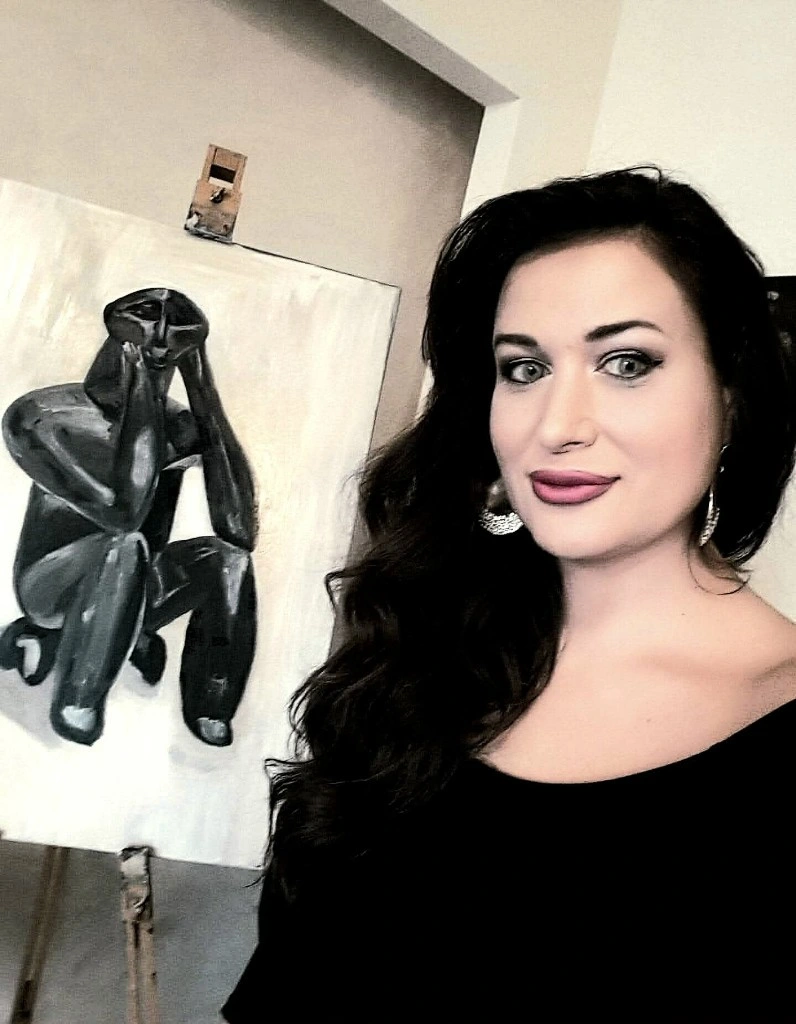
15. What makes a character feel real and alive to you? Is it their actions, their contradictions, their past, or something more difficult to explain?
Olimpia Stavarache: For me, it begins with atmosphere. I can feel it even while I am writing. Sometimes I get up, count the steps, simulate gestures, move through the space. That is how I enter the story and become empathetic with it. Then comes logic. Once I feel the atmosphere and understand its internal logic, I rarely feel that I can go completely wrong. On set, I introduce smells, objects, textures, small anchors in reality. Sometimes the story becomes almost tangible. I do not know if I can always explain that magic on screen, but on the set there are moments when you can almost see a sparkle in the air. That is when I know we have found the right atmosphere.
16. Across your films and other creative work, what human questions or emotions do you find yourself returning to again and again?
Olimpia Stavarache: Feeling. If science is about the mind and religion is about faith, art is about feeling. We are not born simply to die. We are born to feel. Science has not yet given us immortality, but art preserves something of us and carries it forward. It is almost a map of human feeling, showing us that people have always felt deeply. That is our root. If we lose it, we may become something else. For some, feeling may seem outdated or even inconvenient. In art, however, it is both ammunition and destination.
17. Do you believe a film should mainly entertain, make people think, make them feel, or sometimes simply leave them with a question?
Olimpia Stavarache: All of them, and perhaps something more that even I cannot always name. Sometimes I sense it. Sometimes I think I understand it. Sometimes I have absolutely no idea. Laughs. When I make a film, I simulate reality. Perhaps this allows me to perceive nuances that escape other people. But how could I always decode those nuances and then explain them? You cannot ask a stone to feel, a plant to walk and speak, or an animal to manufacture tools. In the same way, perhaps we cannot ask human beings to decode the world with an organ they do not yet possess. Maybe AI will help us with that one day. Who knows. But even that will depend on whether we are wise enough to use it with measure.
18. Your work also explores Romanian identity, traditions, and collective memory. What part of Romanian culture do you feel cinema still needs to explore more deeply?
Olimpia Stavarache: Romania has so much mystery and sacred material that we could almost exhaust the spectator with it. From Zamolxis to Mircea Eliade and Lucian Blaga, from Constantin Brâncuși and George Enescu to Nicolae Tonitza, Corneliu Baba, Nicolae Grigorescu and Ion Tuculescu, we have an enormous universe of symbols, ideas and images. Internationally, we are often represented through Dracula. But we also have fairies, dragons, Ileana Cosânzeana, strange creatures, old men and women, maidens and young men, princes, Aghionoaie, the Mother of the Forest and the Fairy of the Woods, winged horses and magical birds. And yet there is one extraordinary story that still remains largely untouched by cinema: “Youth Without Age and Life Without Death”. We have often ignored our own culture, as if we had no time for it. But it is universal. Perhaps we simply need to remember that our deepest roots can also speak to the entire world.
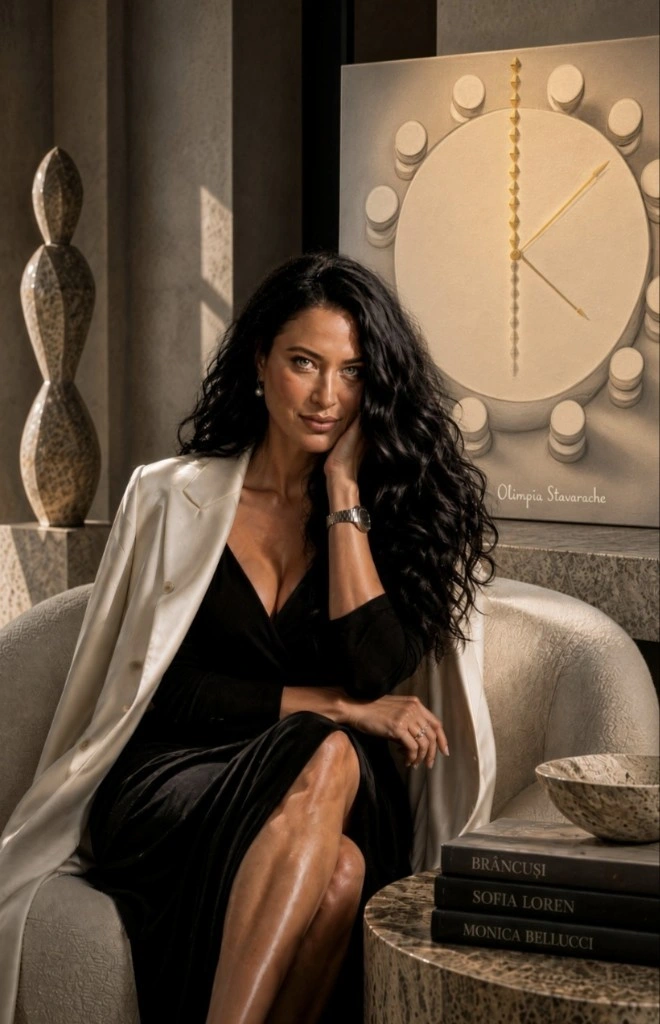
19. When you bring tradition into a contemporary story, how do you decide what should be preserved and what can be reimagined?
Olimpia Stavarache: I think this is fertile ground for reinterpretation, experimentation and contemporary art. It happens naturally when you give yourself enough freedom to step outside the prison of convention and fashion, and when you stop being afraid of being considered outdated. But you also have to remain vigilant, because tradition can easily become mannerism or cultural cliché. There has to be a balance. I never bring something into a story simply because it belongs to tradition. It has to belong to the story. And yet, if you cut the roots, what happens to the plant?
20. Do you think independent cinema gives artists more freedom to explore culture, memory, identity, and subjects that may be difficult to approach through mainstream filmmaking?
Olimpia Stavarache: Yes. Freedom is precisely why I chose to remain independent. It allows me to explore what I want, to take risks, and to tell stories that might not easily fit within the logic of mainstream cinema. It may be more difficult, but I would rather struggle with freedom than succeed without it.
21. Your creative work has also entered literature, including “Steam,” published as part of “The Book of Scripts.” What does writing give you that filmmaking cannot?
Olimpia Stavarache: Literature gives me an even greater degree of freedom. For someone with a vivid imagination, reality can be extremely restrictive. Film, from action to cut, is ultimately the art of bringing the constraints of reality into a frame. When I write, there are no actors, no locations, no budget, no weather, no logistics. I can simply let the imagination go wherever it wants. When I write, I do not have to worry about anything. Laughs.
22. When you write a story that may become a film, do you already see the images, sounds, and scenes in your mind, or do you discover the visual language later?
Olimpia Stavarache: I see and feel everything. Sometimes I even feel as though I am watching the story create itself in front of me. The images, the sounds, the atmosphere, even the gestures are already there. I consider a fertile imagination a divine gift, and I am deeply grateful for it. Imagination is a window through which we can see worlds of extraordinary beauty. But through the same window, the darkest nightmares can emerge. And perhaps this is one of the greatest powers we possess as human beings, one we are not yet fully aware of.
23. You move between film, writing, painting, theatre, and other forms of creative expression. Do you see these as separate arts, or as different languages for expressing the same inner world?
Olimpia Stavarache: I see them as different subjects in an absolute school of art. If such a school existed, I would want a painter to be able to get a ten in painting and perhaps a five in writing, yet become a better artist precisely because writing taught the painting something it could not have discovered on its own. The disciplines should interfere with one another. They should contradict, contaminate and illuminate each other. Perhaps the purpose is not to master every language, but to become more articulate in the one language that is truly yours. For me, they are not separate worlds. They are fragments of the same inner universe, trying, sometimes beautifully and sometimes absurdly, to translate itself.
24. You have described writing and painting as “Good Karma.” What does creating something yourself give back to you emotionally?
Olimpia Stavarache: “Good Karma” was born from a simple realization: what we repeat relentlessly eventually becomes a prayer. I want to believe in a providential destiny. But that also means responsibility. You cannot put something harmful into the world and expect something good in return. You can, of course. But we do not always decide what we receive. What we can decide is what we choose to give. And perhaps that is where Good Karma truly begins.
25. You have a love for plants, animals, sport, reading, dancing, theatre, writing, and painting. How do these different interests find their way into your creative life?
Olimpia Stavarache: Sometimes they complete one another. Sometimes they compete with one another. And sometimes they sabotage one another. Laughs. But that, too, teaches me something: responsibility, and the law of priorities. Each passion has its own function. Dance restores fluidity after the rigidity of film editing. Sport gives me vitality and strength, and, quite practically, helps me keep my arm raised for hours when I paint. Animals remind me of innocence when I begin to doubt that it still exists in the world. Reading feeds the mind. Theatre feeds presence. Painting slows perception down. Film gathers all of these things and turns them into movement. Perhaps you can draw a map of a person’s character by looking at what they love. But you can also discover their strategy for survival. Mine happens to be made of many different forms of life.
26. Can an ordinary moment, a walk, a landscape, a human interaction, a piece of music, or a simple feeling, become the starting point for one of your stories?
Olimpia Stavarache: Always. Everything begins with something simple, moves toward complexity, and eventually becomes simple again. Life is a circle. There is nowhere else to draw inspiration from. Even imagination has its roots in memory, in something we have seen, heard, felt or experienced. So perhaps vision is not as extraordinary as we like to believe. What may be extraordinary is simply learning how to notice.
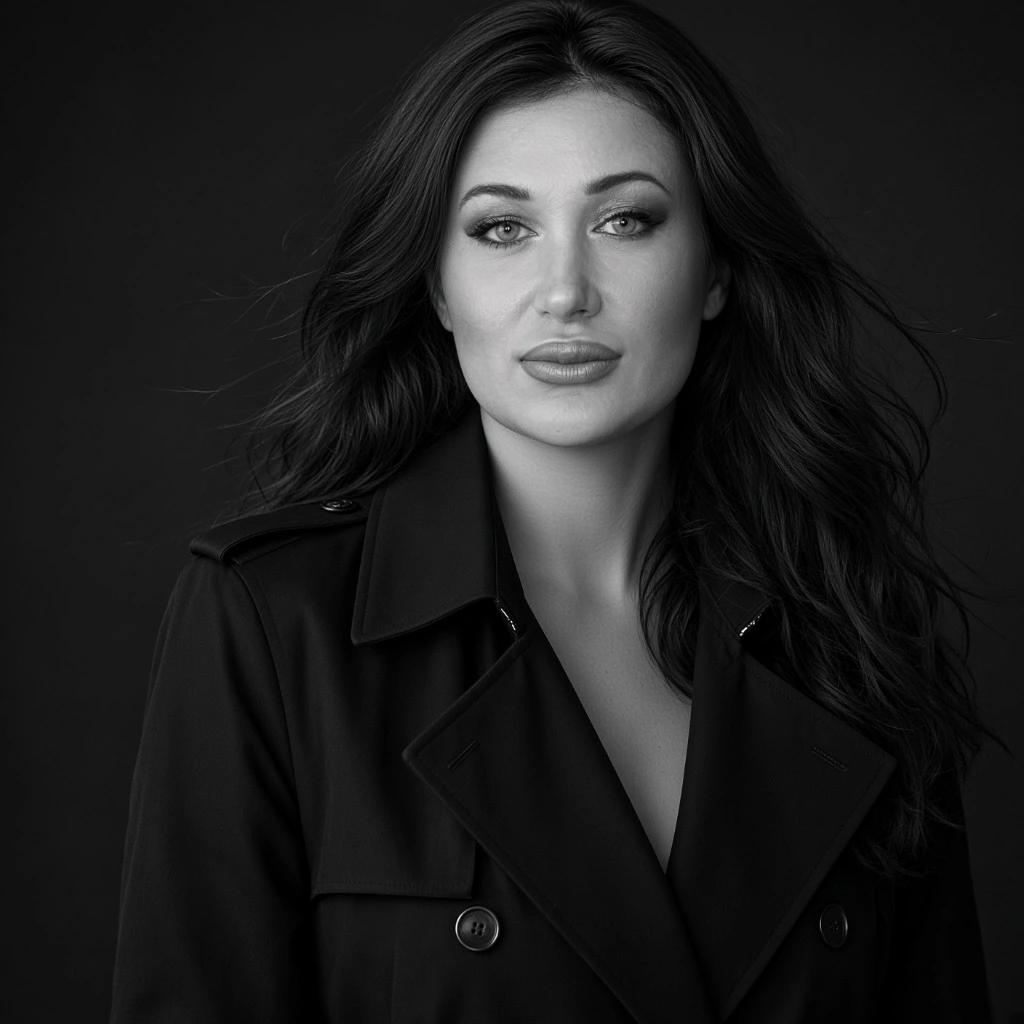
27. Creative work often involves close collaboration with people you trust, including family. What is special about creating art with people who know you both personally and professionally?
Olimpia Stavarache: You are known more completely. With your light and your shadows, your fears, your absences, your doubts, and, eventually, your victories. It is a blessing, even when, occasionally, it feels like a punishment. Laughs. There is also a certain efficiency to it. Over time, you educate your family while you work. And perhaps that is the greatest advantage: you are not only making art together, you are growing together. They see the person behind the artist, and the artist behind the person. There is nowhere to hide, and perhaps that is precisely what makes the collaboration so honest.
28. You have spoken about the happiness of being on a film set, especially when a perfect take finally comes together. What do you feel in that moment when everything suddenly works?
Olimpia Stavarache: Gratitude. I feel grateful to be there, to be part of that precise moment when everything suddenly comes together. I feel small and enormous at the same time. I feel completely alive, intensely present. It is a strange kind of happiness: the satisfaction of having done something well, the simple pleasure of life, and a kind of intimate joy, all arriving at once. Laughs. It is almost like getting a great grade, eating the best pizza, and falling in love, all in the same moment. And for a few seconds, nothing else exists.
29. You are now exploring AI and other new creative tools alongside your work as a filmmaker and artist. What excites you most about AI as an artistic tool, and what do you believe it can never replace in a human artist?
Olimpia Stavarache: Wow. Perhaps you should ask AI that question. Laughs. I think learning to work with AI is almost unavoidable. The world is changing, and we have to move with it. I am still discovering how it can help us without replacing us completely, as many people fear. I am not afraid of it. To me, AI is an Olympic toy, an exceptional tool, and, at the same time, human imagination multiplied almost infinitely. It is the future revealing itself little by little in the present, perhaps so that we are not left behind. What comes next will depend on us, but especially on the generations that follow. The question is: do we want to be their roots, or their obstacle?
30. Cinema is changing quickly through AI, new production tools, streaming, and global collaboration. Looking ten years ahead, what do you hope will remain unchanged about the art of filmmaking?
Olimpia Stavarache: I hope people will still create independently. At the moment, many artists seem more interested in protecting their own artistic ego than in discovering what AI might actually allow them to create. At the other extreme, much of the AI content I see has already fallen into repetitive micro dramas. I expected something stranger, more radical, more imaginative. So I decided to experiment from the inside. I create small pieces of art with AI, I have explored micro dramas, and I am learning what this new language can do. But I am also continuing to paint and to finish my traditional cinematic projects. For now, AI remains an experiment, not a replacement for the rest of my creative life. And what will happen in ten years? Honestly, how could I possibly know? Ten years ago, if someone had told me that I would have an icon on a screen that I could enter and, within seconds, receive an instant synthesis of almost everything ever written about a subject, I might have thought they were describing science fiction. And here is another example. I recently started playing chess again after twenty years. I actually managed to checkmate Magnus Carlsen, well, not Magnus himself, but a bot in a chess application that plays at his level. Laughs. The funny thing is that, if someone had told me this ten years ago, I would have believed much sooner that I might one day become an international chess champion than that I would be sitting at home, playing against a little icon on a screen that simulates one of the greatest chess players alive. And perhaps that tells us something important about the future: we can only imagine tomorrow using the vocabulary of today. Which is probably why we are so often wrong.
31. You have “Casa din Volbura” among your upcoming creative work while continuing to explore film, writing, painting, and new technologies. If we meet again several years from now, what would you most like to have created, and what kind of artist do you hope to have become?
Olimpia Stavarache: More than anything, I hope we will still be human beings with our souls intact. I hope we learn to protect our energy well enough not to trade something deeply valuable and authentic for something that only gives us a momentary sense of satisfaction. Perhaps that is only a hope. So, most likely, I will continue creating first of all for myself, and for the person I want to remain and become. And if enough of us manage to do that, perhaps we will create something whole enough to help humanity survive. We have so many beautiful things worth living for, working for, and creating for. And perhaps that is what I would most like to have created: not simply films or paintings or books, but something that leaves a little more humanity behind than I found. Thank you for giving me the opportunity to answer such a remarkable set of questions.
HELP KEEP IDEAS ALIVE
Great ideas deserve to be heard, preserved, and passed forward.
Astra Global Ventures exists to bring thoughtful conversations, original perspectives, and meaningful stories into the world—and to preserve them for readers today and generations to come.
If this work has meant something to you, please consider supporting our independent publishing work. Your contribution helps us continue the research, editing, design, and publishing that bring meaningful voices and ideas to life.
Every contribution, whatever its size, helps us keep creating and sharing work that matters.
SUPPORT INDEPENDENT PUBLISHING
For international supporters, you can contribute securely through PayPal:
Scan the QR code or use the PayPal link below to support our independent publishing work.
Support Astra Global Ventures via PayPal
Thank you for helping meaningful ideas live beyond the moment.