About the Guest
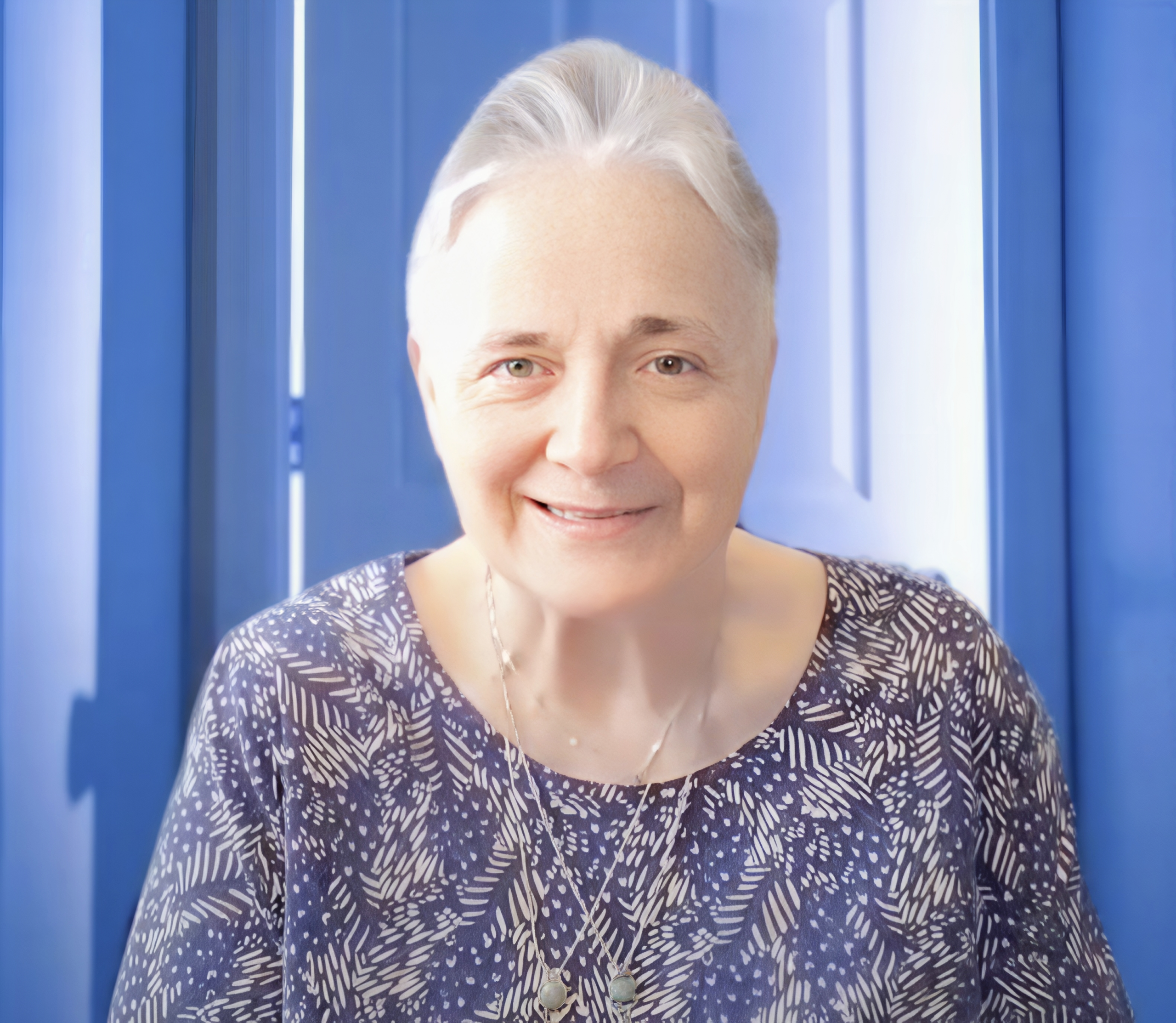
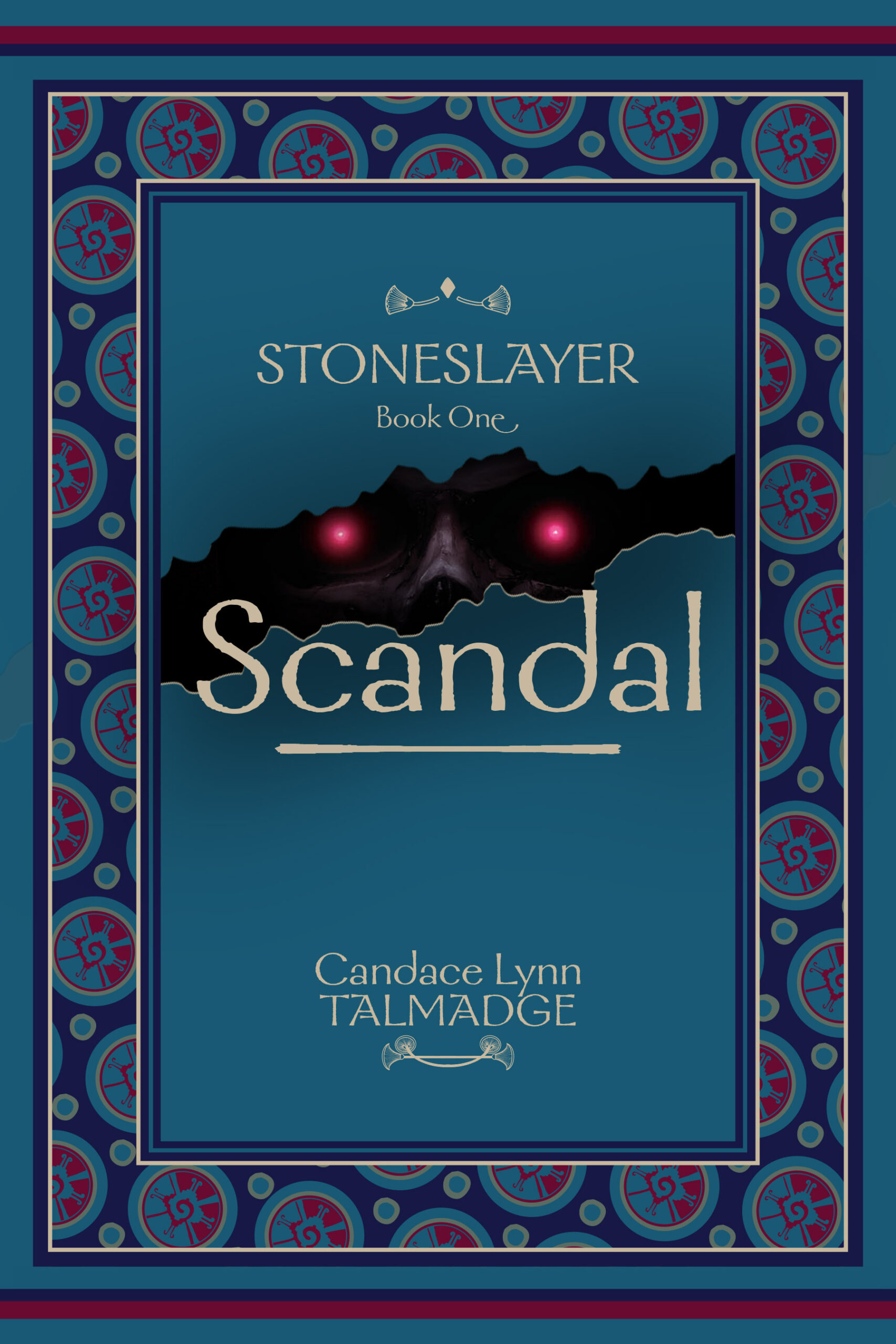
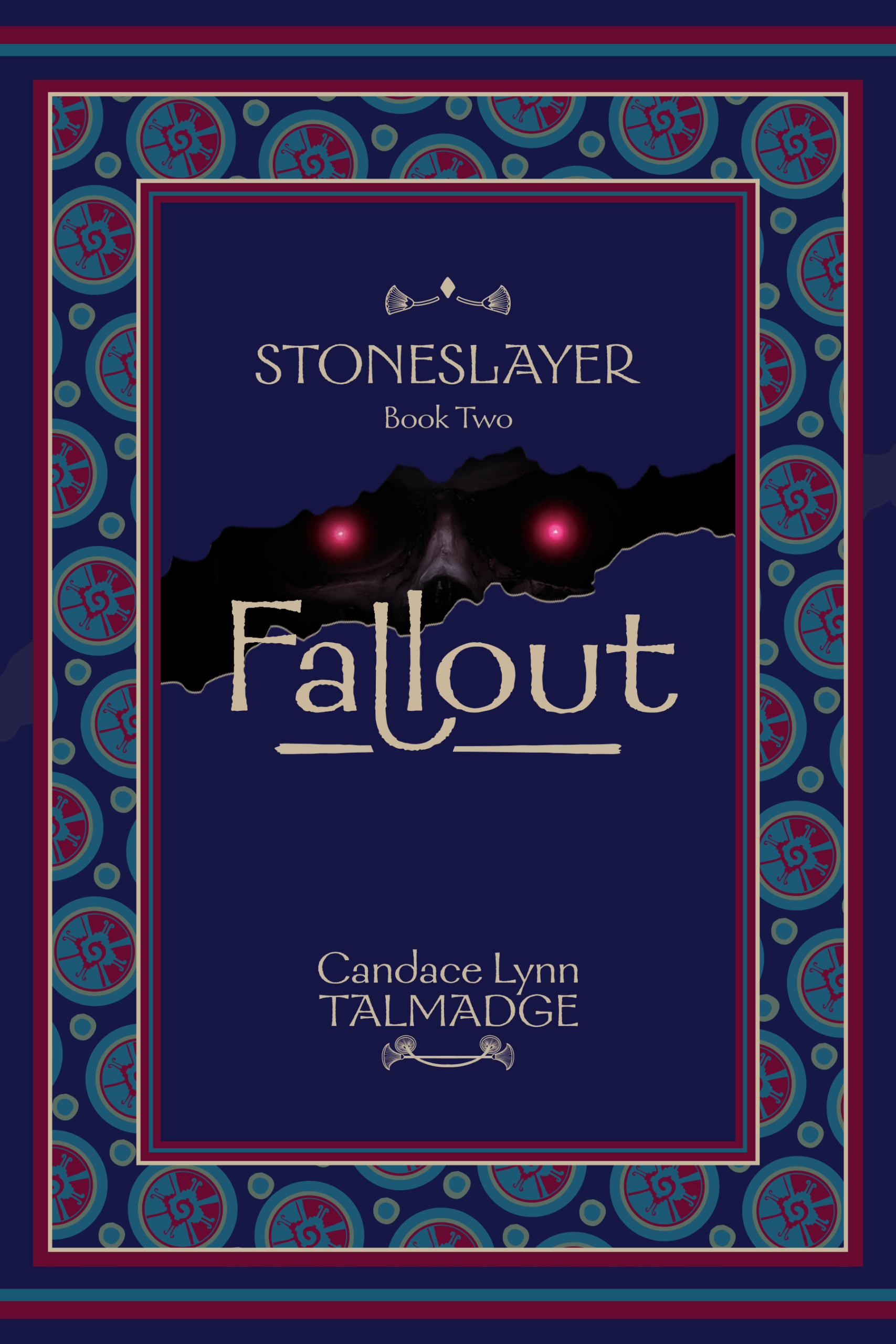
Candace Lynn Talmadge is a USA-based author of dark high fantasy and nonfiction on spirituality and emotional healing. She is best known for the Stoneslayer series—a dark high fantasy saga of political intrigue, demonic warfare, and spiritual awakening inspired by Candace Lynn’s past-life memories. Her professional journey spans journalism, content writing, and fiction.
Website: candacelynntalmadge.com
Part I: Personal Journey and Creative Beginnings
1. Every writer has a defining moment that changes everything. Looking back, what first inspired you to become a storyteller, and how has that original spark evolved throughout your writing career?
Candace Lynn Talmadge: When I was very young, I spent many hours with my maternal grandmother. She told me tale after tale about growing up dirt poor in late 19th century-early 20th century Arkansas. I got my love of stories from her. I first read The Lord of the Rings when I was 12, and was captivated like millions of other people. Not much later, the mother of my best friend handed me a Taylor Caldwell novel and said, “You can write one of these.” That was encouragement I sorely needed. But I didn’t want to write yet another dungeons-dragons-elves fantasy. Tolkien had already launched many literary imitators. So, I spent decades thinking about this parade of characters who marched into my thoughts and daydreams and refused to leave. I realized their story was important and needed telling. I didn’t yet realize it was my story, too — from other physical lifetimes.
2. Your professional journey spans journalism, content writing, and fiction. How have these different experiences shaped your voice as an author?
Candace Lynn Talmadge: Journalism was great training to write fast and well because your editor needed your article 30 minutes ago. No waiting on inspiration to strike when you write to a deadline. I often wrote to several daily deadlines. My journalism background also steered me to prose that is taut and streamlined for my fiction. No long descriptive passages in my fiction. I offer a few verbal brushstrokes and let my readers fill in the setting as per their imaginations. Nothing aggravates me more as a reader than to have an author start an action sequence—characters running for their lives or a battle commencing—and then fill paragraphs and even pages with narrative description that is only tangential to the events taking place. It just disrupts the story flow for me.
3. After decades of writing, what continues to inspire you to sit down and create something new?
Candace Lynn Talmadge: It’s not really inspiration. It’s more like obsession. The story of Azgard’s downfall grabbed hold of me when I was in my early teens and won’t let go until I get it in print. And maybe not even then.
4. What are some of the most valuable life lessons that only a long and consistent writing journey could have taught you?
Candace Lynn Talmadge: Don’t give up and take all criticism with a hefty grain of salt. Sometimes critics have worthwhile suggestions. I made big changes based on some of those comments. Like renaming the series to Stoneslayer. Other times their remarks say more about them than about your writing. Use your gut to figure out the difference and ignore any detractors.
5. When you reflect on your younger self—the aspiring writer just beginning the journey—what advice would you give her today?
Candace Lynn Talmadge: Writing is a lonely road. If you want to travel that road, then make sure what you write is important to you. Because if what you put down on the page means little to you, why should anyone else care enough about it to read it?
Part II: The Art of Storytelling
6. Great stories often reveal deeper truths about humanity. What do you believe transforms a good story into one that readers never forget?
Candace Lynn Talmadge: Unforgettable stories blend elements similar to readers’ own experiences with something they may not have gone through in a way that hits them in the heart and gut. Writing rooted in the intellect or the abstract never affects readers as profoundly as prose that reaches out and grabs their hearts. That is because we live out of our hearts, not our minds.
7. Your work blends imagination with emotional depth. How do you create fictional worlds that still feel authentic and emotionally real?
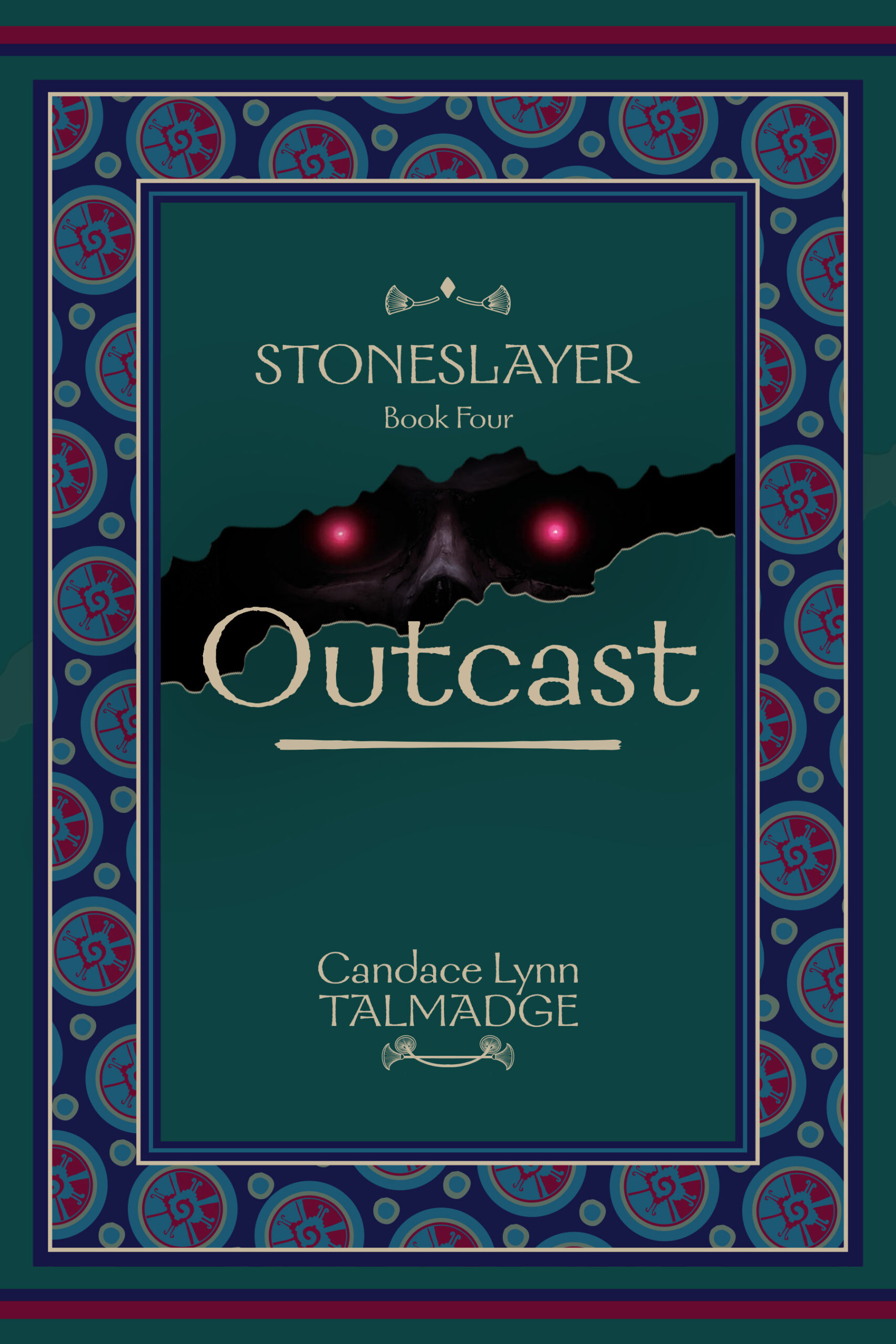
Candace Lynn Talmadge: By sharing emotions that I once lived and felt. Stoneslayer is a fictionalized autobiography based on four of my past lives. It feels real now because it felt entirely real in those lives. I could not whip up such a world purely out of whole cloth, without some grounding in my reality, even if that reality was another time and place. Tolkien once remarked that he didn’t create or invent Middle-earth. He was just telling the story. Ditto for me. I didn’t create/invent Azgard. I am just chronicling the last years of its existence as I and others in my family and among my friends lived it.
8. Which comes first in your creative process: the characters, the world, or the central idea?
Candace Lynn Talmadge: Characters, without question. The plot arises out of character flaws and quirks. An author needs to get to know her characters so that when she unfolds the plot, she knows which one(s) of them are driving events and how all the characters will react to what is taking place. Movies too often are built around a central idea (the high concept) or an imagined world. This usually results in characters with little depth or nuance and stale plotlines. Character counts first, last, and always in fiction. And in so-called real life, too.
9. How do you balance mystery, emotion, suspense, and philosophical themes without allowing one to overpower the others?
Candace Lynn Talmadge: I have no idea how I do that or even if I manage to do that. I just write the story as I can recall it, and whether that satisfies the balance is something readers decide for themselves.
10. Many readers form deep emotional connections with fictional characters. What do you believe makes a character genuinely unforgettable?
Candace Lynn Talmadge: If their author has a deep emotional attachment to her characters, it is far more likely that readers will form one, too. I care about every single character in Stoneslayer, even the demon itself. That is the start. Then it’s on the author to depict characters who are much like flesh-and-blood people. They have a mix of traits. Some traits make them great. Some traits are annoying. And some traits make the character a real stinker. The assassin Ibrihim Akkad, for example, made me laugh out loud when he talks about the pretensions of the Temple of Kronos. He’s got a wicked sense of humor. (He is also a psychopath with no morals or empathy.) No one is perfect and readers want characters who are flawed and therefore more real and relatable.
11. How do you know when a story is truly complete rather than simply finished?
Candace Lynn Talmadge: I subscribe to the theory that since we are immortal spirits living in a temporary material reality, no story is ever truly complete. Only tales within the story come to an end, but then other tales arise and take their place. It’s called history, although Stoneslayer is far more of a herstory.
12. Are there any writing rituals, habits, or creative disciplines that have remained constant throughout your career?
Candace Lynn Talmadge: One. Coffee. I cannot write one blessed word without holy java hitting my gullet. Also, I tend to do my best writing of any kind in the morning, although there have been instances of writing at other times when the prose was just pouring out of me and there was no stopping it.
Part III: The Stoneslayer Series
13. The Stoneslayer series has been a significant part of your creative life for many years. What first inspired this extraordinary world?
Candace Lynn Talmadge: My characters. One in particular. She was tall, slim, black haired, blue-eyed, and mouthy. After I read The Lord of the Rings for the first time, this young woman pushed her way into my waking awareness and from then on, I was captivated. I spent decades trying to figure out who she was, the world she lived in, and why she was so royally pissed. In 1978, my parents bought me, their Tolkien-obsessed youngest child, a copy of the just published Silmarillion. In it, the author called the downfall of Numenor the Atalante. Ding! Ding! Ding! Ding! A lightbulb went off and I finally got it. Numenor, my favorite part of LOTR, was a Christianized version of the legend of Atlantis. I now had a focus for my research and I dove into all manner of arcane topics, like Atlantis and psychic abilities. Meanwhile, I thought long and hard about my mouthy character and the characters around her. I got her first name, Helen, but was mistaken for a long time about her last name, which involved a major plot element that I did not realize until not long before July of 1998, when I began writing the series in earnest.
14. How has the series evolved alongside your own personal growth as both a writer and an individual?
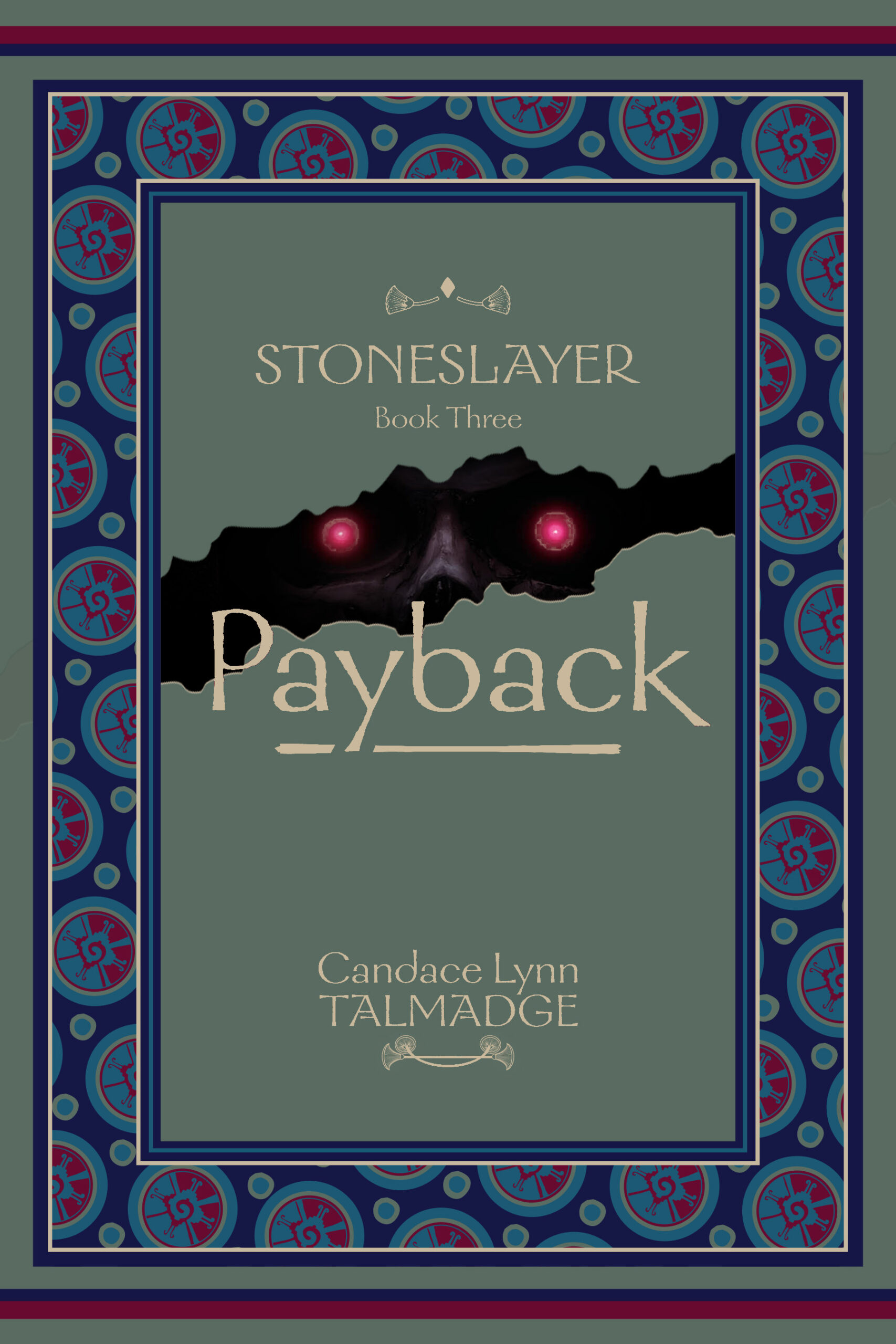
Candace Lynn Talmadge: I made two attempts to begin writing Helen’s story, in 1982 and 1985. The next year, I met Jana Lynn Simons, who would become my life partner and then wife, and began exploring the psychic (soul) senses and healing/spirituality in which those soul senses play a profound role. At times, I felt I was getting further away from writing my story, but it was the long way around to the same goal. After Jana’s death in 2020, writing the series has helped me resolve my grief and shock at her passing and kept me anchored in the deep emotional and spiritual healing that Jana first helped me with decades earlier. The series grows as I grow in self-awareness and healing resolution. I grow because I am continuing to write the series, which brings up deep, ancient emotional and spiritual wounds and issues that I then resolve. It is an iterative, self-reinforcing progress.
15. Without revealing major spoilers, what deeper themes do you hope readers discover beneath the fantasy elements?
Candace Lynn Talmadge: Legitimate power and vulnerability. Acceptance of others who differ from you in looks or beliefs. Inherent spirituality instead of dogmas and creeds. Decency and depravity. Those are overarching themes in Stoneslayer.
16. What has been the greatest creative challenge in building such a rich and enduring fictional universe?
Candace Lynn Talmadge: My challenge has never been what to put into the story. It is what to leave out. I have so much information about Azgard and the peoples who lived on that lost island that I could write multiple series from different perspectives. I know writers who have been tempted by their own rich world (or universe) building to veer off into side stories. That may work for them, but I want and need to keep my focus solely on the events leading to Azgard’s downfall and annihilation.
17. Were there moments during the development of the series when the story surprised even you?
Candace Lynn Talmadge: There have been many such moments. I love them. They happen because I just keep at it and as the events unfold, characters pop up for the first time or reappear in the story. It keeps me on my toes.
18. Which character has challenged you the most to write, and what made that journey so meaningful?
Candace Lynn Talmadge: The demon, the Stoneslayer. I do not care for horror or the macabre and did not set out to write dark fantasy. But it was there, lurking in the background, and to tell a complete story I had to include the demon. I refuse to do deep POV into a demon, so I show its depravity through the actions of the characters who follow it. I always feel like I need a shower after writing pages featuring the demon or its devotees. For that, I do an energy cleansing.
19. If readers could take only one lasting lesson from the Stoneslayer series, what would you hope it would be?
Candace Lynn Talmadge: Do not give up. Do not lose hope or give in to despair. You may certainly feel hopeless or despairing from time to time. I know I do. I am trying to heal from two rounds of myelitis. This is an inflammation of the cells that cover the spinal cord nerves. Myelitis left me unable to walk without a walker. Most people who get it never walk again, so I am fortunate, even though I sometimes don’t feel that way. Ultimately, I refuse to give in, and keep on writing and healing, healing and writing.
Part IV: Spirituality, Healing and the Paranormal
20. Spirituality and paranormal themes appear naturally throughout your work. What first drew you toward exploring these subjects?
Candace Lynn Talmadge: I had an instantly prophetic dream at age 12. One Friday night, I dreamt that my mother and I went to visit one of my mother’s friends who was in hospital dying of cancer. Mom and I had done that several times. In my dream, when we reached the nurses’ station, one of them said, “I’m sorry. You can’t visit Mrs. Smith. (Not her actual name.) She died at three this morning.” I awoke and since it was Saturday, it was my job to set the table for breakfast. I was in the kitchen when the phone rang. Not long afterward my mother walked into the kitchen, her eyes red-rimmed. “Mrs. Smith died at three this morning.” I gulped and said nothing. There was nothing for me to say. That experience clued me into the wider realities. Things are not always rational or logical, despite what science maintains. I began some quiet research and came upon the writings about Edgar Cayce, the long-distance healer. I struggled to start writing Stoneslayer (not what I called it then) back in the early and mid-1980s. I realized some of my characters could use their psychic senses like Cayce obviously did. I decided I had to know more about what they were and how to use them before I could write about them convincingly. Less than a year later I attended a talk by Pete A. Sanders Jr., who founded an organization called Free Soul. Pete talked about four (not the usual three) psychic senses. He also arranged to have people teach the Free Soul course locally. Taking the Free Soul class was how I met my late wife.
21. How do your personal experiences influence your creative imagination without limiting your stories to autobiography?
Candace Lynn Talmadge: My stories are autobiography. But that does not mean they are limited. And I decided not to write in the first-person narrative (except for the Preface and Afterword in each book) because the story is too wide ranging for any one character’s perspective.
22. Many readers approach paranormal topics with curiosity, while others remain skeptical. How do you encourage thoughtful and open-minded conversations about these subjects?
Candace Lynn Talmadge: We use the term paranormal only because our generally accepted definition of normal is way too limited. It’s not my job to convince others that the so-called paranormal exists. They have every right not to believe in it, just as I have every right to believe in it, based on my experiences. If others want to say the paranormal is a bunch of bunk, I would ask them some questions. What is normal? How do you define it? My experiences tell me the multiverse is subjective, not objective. But our so-called modern world writes off subjectivity as biased/bad only because people try to impose their subjectivity on others. I would never think to order others to live by my subjective rules and beliefs, and insist on the same freedom from everyone else’s subjective rules and beliefs. It’s called free will, and it is a God-given right for all.
23. In your perspective, what is the relationship between spirituality, personal healing, and storytelling?
Candace Lynn Talmadge: My late wife and I co-authored an entire book about this topic. It only scratched the surface. In brief, there is no true healing without involving the spirit and the soul senses. We need them to change the stories we tell ourselves about ourselves at the emotional (subconscious) level of our being. When those stories no longer serve us, we get usually physical messages in the form of dis-ease or mental issues. The physical body reflects what is transpiring at the deeper levels of our being. Mostly we dull the pain or cut out the cancer and just tell ourselves shit happens. We do not really know to ask why it happens. And we certainly do not know how to heal it even if we get a why. That is because we ignore the emotional body, which is where all physical disease originates.
24. How do you responsibly distinguish personal experience, creative imagination, and interpretation when writing about extraordinary phenomena?
Candace Lynn Talmadge: I don’t make that distinction because, again, the multiverse is subjective, not objective. The notion of a somehow objective third-party observer is far more of a myth than the idea of a unicorn. I just write about so-called paranormal skills or events and let my readers make of them what they will. I do not have the power or the right to convince them one way or the other.
25. Have your own beliefs changed over the years as a result of your writing, research, and life experiences?
Candace Lynn Talmadge: They have changed as I have healed and grown in self-understanding. Even over the past few months, my soul-deep healing has left me calmer and more confident in myself and connected to my Creator. In my book, that’s a big win and the only win that really counts because you can’t take the material stuff with you.
26. What misconceptions do people most commonly have about authors who explore spiritual or paranormal themes?
Candace Lynn Talmadge: Since I haven’t asked them or done any surveys, I have no idea what, if any, misconceptions others may have about someone like me. I’m just trying to tell a story with my novels. If the events seem weird or strange, it’s because they were. I lived it, so I know.
Part V: Writing, Publishing and Creative Life
27. The publishing industry has transformed dramatically over the years. Which changes have created the greatest opportunities for independent authors?
Candace Lynn Talmadge: The invention of the Indigo press that allows for print-on-demand physical books and the rise of e-books. These developments enable any author to bypass traditional publishing gatekeepers, the literary agents and editors at book publishers.
28. Looking back, what publishing decisions proved to be the most valuable for your long-term career?
Candace Lynn Talmadge: I am not sure I have ever made a valuable publishing decision. I keep making choices that don’t turn out the way I would prefer or hope. The whole thing remains a mystery to me. Maybe someday many people will read and enjoy the story. Maybe it will remain obscure. I just keep writing and publishing each novel in the Stoneslayer series in its turn.
29. How do you balance the artistic side of writing with the practical realities of publishing and reaching readers?
Candace Lynn Talmadge: I don’t. I get professional help with book editing and production. Reaching readers and turning them into Stoneslayer fans remains a complete mystery to me so that’s my continuing education.
30. What qualities do you believe every aspiring author should develop beyond writing talent itself?
Candace Lynn Talmadge: Discipline and persistence. Discipline to sit down and write even when you’d rather be anywhere else. Persistence to keep going even when there doesn’t seem to be much outer reward. Until they grow an audience, authors don’t generally have anyone just champing at the bit for their first or next book. The Stoneslayer story is important to me so I keep writing it. Make sure your story is important to you.
31. If someone dreams of writing their first novel but lacks confidence, what would you encourage them to do first?
Candace Lynn Talmadge: Just sit down and write. It doesn’t have to be perfect as long as you make a start. Maybe join a writer’s group, but I never found much use for them. Ask yourself if you believe in what you want to write or are trying to catch a publishing wave. By the time your “wave” book is ready to print, that wave will be replaced by another one. Just find a story that resonates with you and write that.
Part VI: Reflection and Legacy
32. Among everything you have written, which work feels closest to your heart, and why?
Candace Lynn Talmadge: All my books, fiction and nonfiction, are close to my heart. That is why I wrote them or continue to write them. I care about each of my works and what it contributes to the world and hope others find value in them, too.
33. How would you like readers to remember your contribution to literature many years from now?
Candace Lynn Talmadge: I don’t think of myself as making a contribution to literature. I am just trying to tell a story. If anyone remembers it at all I will be satisfied.
34. What ideas or creative adventures continue to excite you as you look toward the future?
Candace Lynn Talmadge: If I manage to complete the estimated 24 novels in the Stoneslayer series, I want to write a novel about a woman prosecuted for helping pregnant women decide whether to keep or end their pregnancies via the healing circle. It would be set in a state that bans abortions that I lived in for 34 years. Then I would consider penning an autobiography that is not fictionalized. But mostly I just want to finish Stoneslayer and maybe take a trip to a tropical island somewhere. Oddly enough, there is life beyond writing. Strange, I know.
35. If you could spend an evening in conversation with any writer, philosopher, or historical figure, who would it be, and what would you most want to ask?
Candace Lynn Talmadge: Mahatma Gandhi, who once said, “Be the change you wish to see in the world.” Most people, especially in my country, the United States, cannot distinguish between being and doing. Many decades ago, when my spirit guides first told me, doing is not being, I was flummoxed. I am slowly learning what they meant by that. I would ask Gandhi to explain the difference between being and doing. I would also ask him for much more detailed guidance on how one goes about being/becoming the change one wishes to see in this world. Knowing this is far more important to our collective wellbeing than it may seem at first.
36. Finally, if there is a thought, message, or reflection we have not explored—but you feel it deserves a place in this conversation—we would be honored to hear it.
Candace Lynn Talmadge: Never give up. There is always hope because there is always Divine love, and that unconditional love is freely available to everyone and anyone.
HELP KEEP IDEAS ALIVE
Great ideas deserve to be heard, preserved, and passed forward.
Astra Global Ventures exists to bring thoughtful conversations, original perspectives, and meaningful stories into the world—and to preserve them for readers today and generations to come.
If this work has meant something to you, please consider supporting our independent publishing work. Your contribution helps us continue the research, editing, design, and publishing that bring meaningful voices and ideas to life.
Every contribution, whatever its size, helps us keep creating and sharing work that matters.
SUPPORT INDEPENDENT PUBLISHING
For international supporters, you can contribute securely through PayPal:
Scan the QR code or use the PayPal link below to support our independent publishing work.
Support Astra Global Ventures via PayPal
Thank you for helping meaningful ideas live beyond the moment.