About the Guest
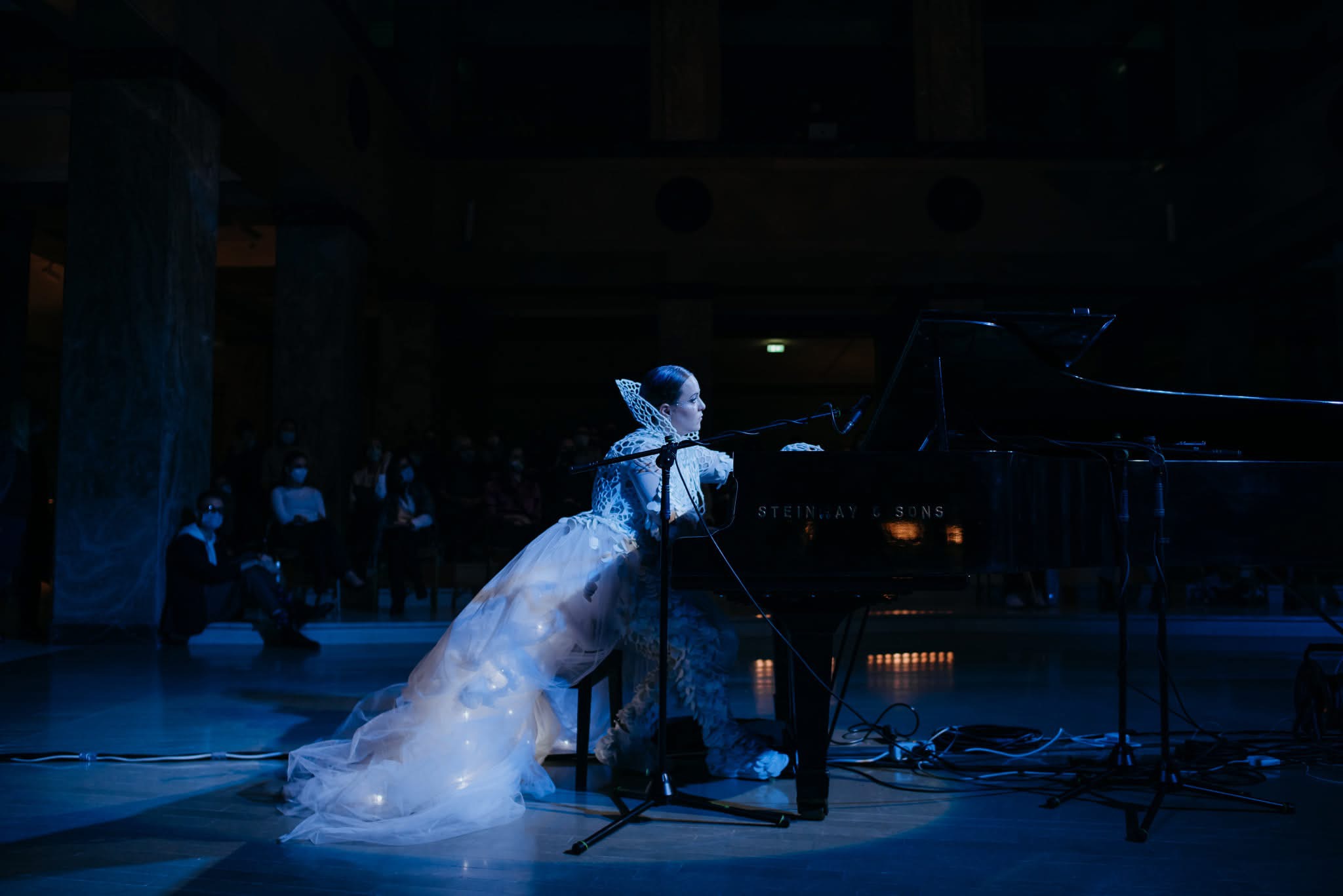
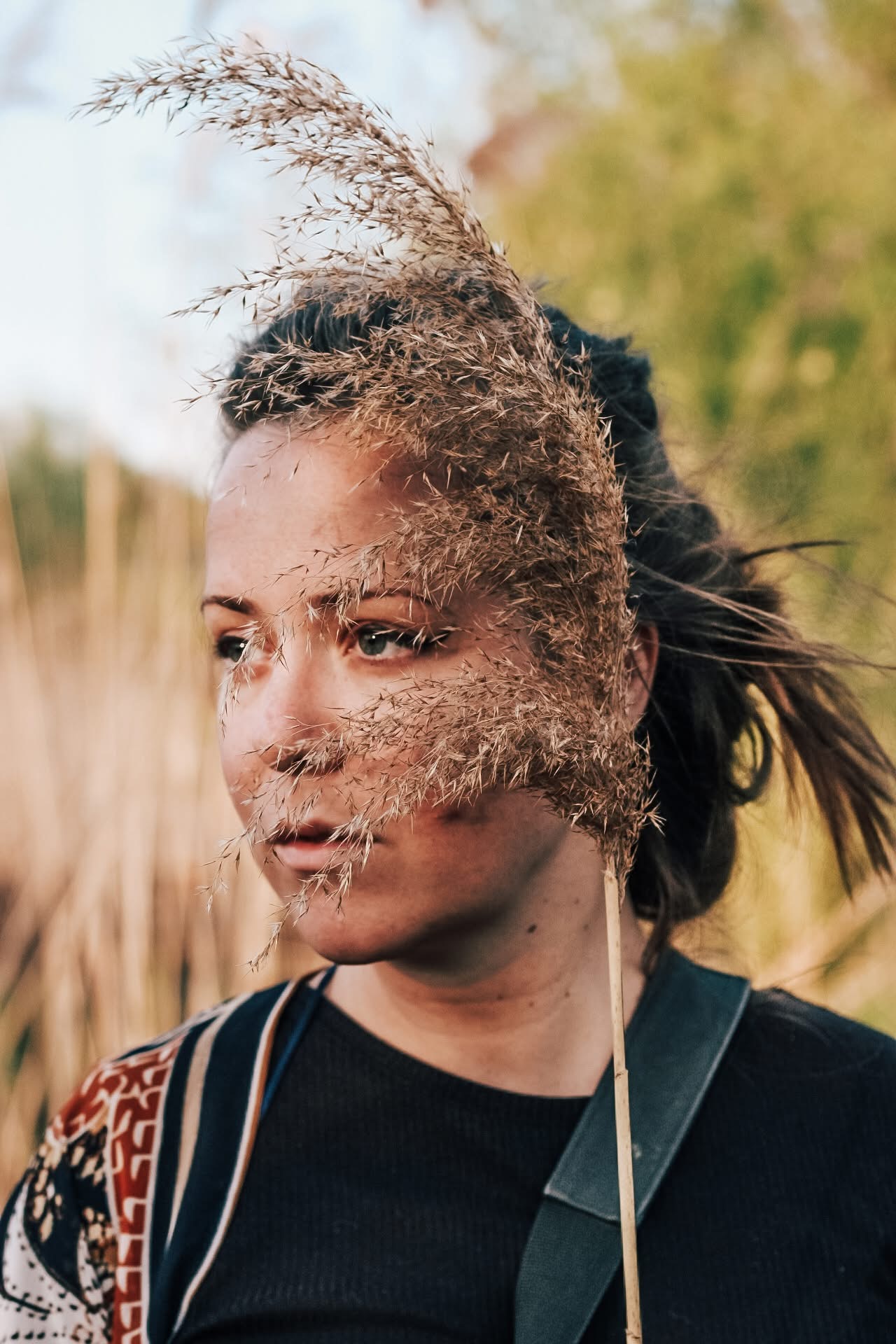
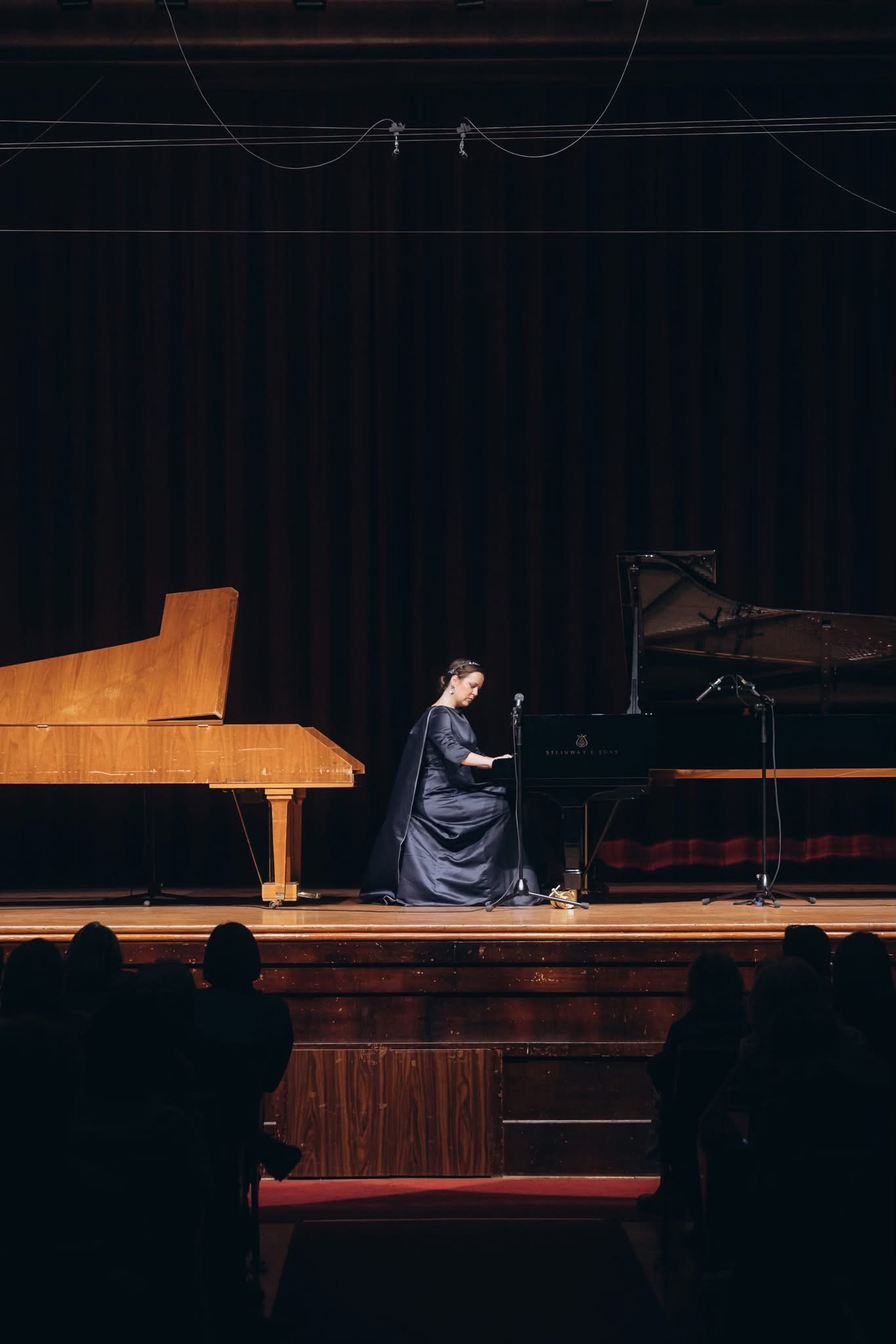
Katarina Ranković is a pianist, composer, performance artist and piano professor whose work moves between music, theatre, performance and visual language. Her artistic practice is rooted in the piano, but rarely stays within the traditional boundaries of the concert stage. She is particularly interested in the relationship between sound, the body, space and presence, often bringing together acoustic music with theatrical and interdisciplinary forms.
Her doctoral project, Amplituda, explores the meeting point of medicine, music and theatre, using Holter recordings of cardiac activity as a source for rhythmic and musical material. Through this work, she investigates the body as both performer and composer, transforming biological rhythm into an acoustic and theatrical experience.
I. The Artist Behind the Titles
1. When you put aside the titles — pianist, composer, performance artist and professor — what is the deeper thread that connects everything you do?
Katarina Rankovic: I think the deeper thread is curiosity — and perhaps a slight refusal to behave properly within categories. I have never been very interested in keeping music in its assigned room. A piano can be an instrument, of course, but it can also become a character, a body, a stage, even a costume. Theatre taught me to think dramaturgically, performance taught me to think physically, fashion taught me to think visually, and teaching constantly reminds me that art is, above all, a relationship between people. So whether I am playing, composing, performing, or teaching, I am essentially doing the same thing: I am looking for a way to make an idea become tangible. Sometimes it becomes sound, sometimes a gesture, sometimes silence, sometimes a very strange outfit. I suppose I am less interested in being one thing than in seeing how many lives an artistic idea can have. And I like the moment when the borders start misbehaving.
2. Was there a particular moment when you realised that music alone was not enough to express everything you wanted to say as an artist?
Katarina Rankovic: I don’t think there was one dramatic moment when I suddenly declared, “Music is not enough.” That would be far too theatrical — and I already have a theatre for that. It was more like a gradual restlessness. I began to feel that sometimes the sound I was making was only one part of the sentence. I wanted to know what happened before the first note, what the body was saying while the note was sounding, what the space was doing, what the audience was seeing, even what a person was wearing when they entered that space. For me, music eventually became less of a closed language and more of a doorway. Theatre opened another door, performance another, fashion another. None of them replaced music; they simply revealed things that music alone couldn’t make visible. And perhaps that is what I am still searching for: not a bigger vocabulary, but a more complete sentence.
3. How has your understanding of being an artist changed from the beginning of your professional journey to where you are now?
Katarina Rankovic: When I was younger, I thought being an artist was about becoming very good at something. Now I think it is much more about becoming very honest about what you are trying to say — and brave enough to say it before you fully understand it yourself. At the beginning, I was very attached to the idea of mastery: the right note, the right interpretation, the right technique. And, of course, I still love precision. I am a pianist; my nervous system has been trained to care about a suspiciously small distance between two notes. But with time, I became less interested in perfection and more interested in presence. I started asking different questions: What does this piece need? What does this space need? What does the audience need to feel? And sometimes, what can I leave unresolved? I also learned that an artist doesn’t necessarily have to have answers. Sometimes your job is simply to ask a more interesting question — and have the courage to stay inside it for a while. So perhaps I have moved from trying to control the work to learning how to listen to it. And that, surprisingly, has given me much more freedom.
4. You move naturally between music, performance, theatre and audiovisual work. Do you experience these as separate disciplines, or as different languages for the same creative impulse?
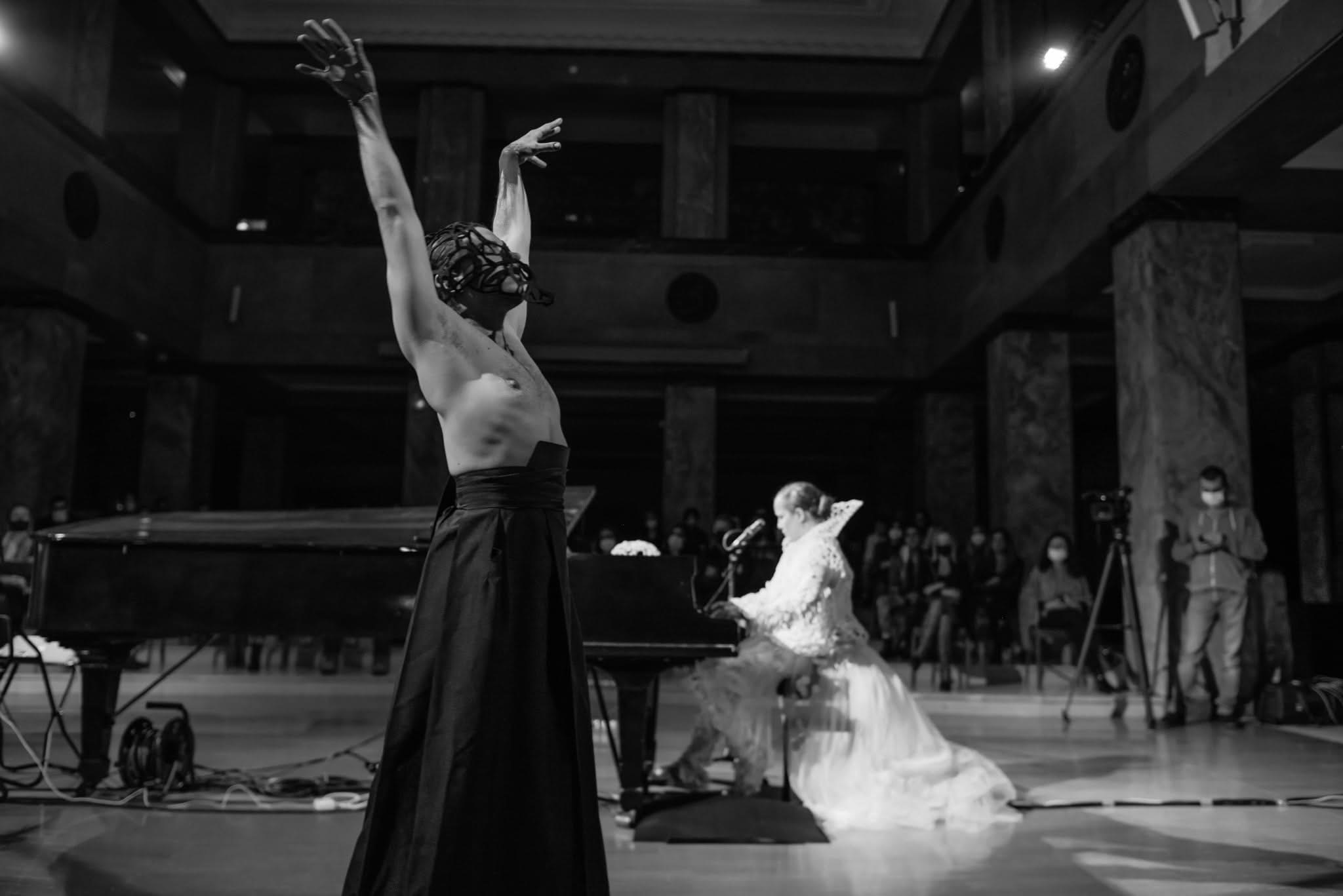
Katarina Rankovic: I experience them as different dialects of the same language. Music gives me time and structure. Theatre gives me narrative and tension. Performance brings the body into the conversation, while audiovisual work allows light, image and sound to start arguing with each other — which I usually find productive. I don’t really see the borders between them as very solid. A gesture can have rhythm; an image can have harmony; silence can have dramaturgy. Even fashion, for me, belongs somewhere in that conversation. The way a person enters a space, the way fabric moves, the way a body occupies a stage — all of it can become part of the composition. Perhaps that is why I move between these worlds so naturally. I am not particularly interested in collecting disciplines. I am interested in what happens when they collide. For me, the most exciting work usually begins exactly there — in the slightly dangerous territory where nobody is quite sure anymore whether they are listening to music, watching theatre, or looking at a performance. That’s usually a good sign.
5. What usually comes first when a new idea appears for you: a sound, an image, a movement, a story, a feeling, or something else?
Katarina Rankovic: It rarely arrives politely. Sometimes it is a sound — a particular interval, a texture, a rhythm that suddenly feels like it belongs to something I haven’t made yet. Sometimes it is an image: a colour, a silhouette, a body in a certain light, a strange little visual detail that refuses to leave me alone. And sometimes it is simply a feeling I cannot name. Those are usually the most interesting ones. I think I work quite instinctively. I don’t always begin with an idea; sometimes I begin with a disturbance. Something feels slightly out of place, or unexpectedly beautiful, or simply too strange to ignore. Then I start following it. The medium comes later. I don’t decide, “This should be a piano piece,” or “This should be a performance.” I let the idea misbehave for a while and see what it wants to become. Perhaps that is also why my work keeps crossing disciplines. I don’t want to force an idea into a medium just because the medium is familiar to me. I would rather follow it until it tells me what language it needs.
6. Looking back, which experience most changed the way you see yourself as an artist?
Katarina Rankovic: Looking back, I think it was never one single experience, but a collection of encounters — with people, places, and moments that quietly rearranged the way I see the world. Working with certain artists and people I deeply admire has probably changed me more than any particular project. There is something incredibly humbling about being close to someone who is truly original — someone who makes you realise that you can be much braver with your own imagination. I have learned as much from their way of thinking, their discipline, their generosity, and sometimes even their stubbornness, as I have from the work itself. And then there are the journeys. Travelling has always been important to me because it disrupts your habits. You enter another city, hear another language, see another body of architecture, another way of dressing, eating, moving, living — and suddenly the things you thought were fixed become wonderfully questionable. I think those experiences taught me that being an artist is also a way of being permeable. You have to allow people and places to leave traces on you without losing your own shape. So when I look back, I don’t think of one turning point. I think of a map made of encounters — people who inspired me, places that changed my perspective, and experiences that made my artistic world a little larger each time. And perhaps that is still what inspires me most: the feeling that there is always another person to meet, another place to see, another idea waiting to disturb everything I thought I knew.
II. The Piano, Composition & Listening
7. What does the piano mean to you today — not only as an instrument, but as a language through which you think and communicate?
Katarina Rankovic: The piano is probably the closest thing I have to a native language. I have spent so much of my life with it that I don’t always experience it as an instrument anymore. It is a way of thinking. Sometimes I sit at the piano without knowing exactly what I am looking for, and somehow my hands understand the question before my mind does. What I love about the piano is its contradiction. It is incredibly physical — wood, metal, weight, resistance — and yet it can carry something completely intangible. A thought, a memory, a tension, a silence. You can touch it and still somehow disappear into it. As a performer, it gives me a way to communicate without explaining. As a composer, it gives me a laboratory. And as a teacher, it becomes a bridge between what a student feels and what they are capable of expressing. But I don’t think my relationship with the piano is about control anymore. When I was younger, I wanted to make the instrument obey me. Now I am much more interested in listening to what it gives back. After all these years, the piano still manages to surprise me. I think that is why I stay.
8. How different are Katarina the pianist and Katarina the composer when you are actually working?
Katarina Rankovic: I don’t really experience them as two different Katarinas. They are more like two sides of the same conversation. When I play, I am constantly thinking like a composer — about structure, colour, silence, tension, what should happen next and, perhaps most importantly, what doesn’t need to happen. And when I compose, I cannot escape the pianist in me. I think through the body, through touch, through breath, through the physical reality of an instrument. One feeds the other. Performing gives me a very intimate understanding of sound — how it lives in a room, how a gesture changes a phrase, how much emotion can exist between two notes. Composing then allows me to take that knowledge and turn it into something of my own. So I wouldn’t want to separate them. The pianist gives the composer a body, and the composer gives the pianist a voice. And somewhere between the two, there is the real me — usually making a mess of the distinction and being quite happy about it.
9. What have years of performing taught you about listening?
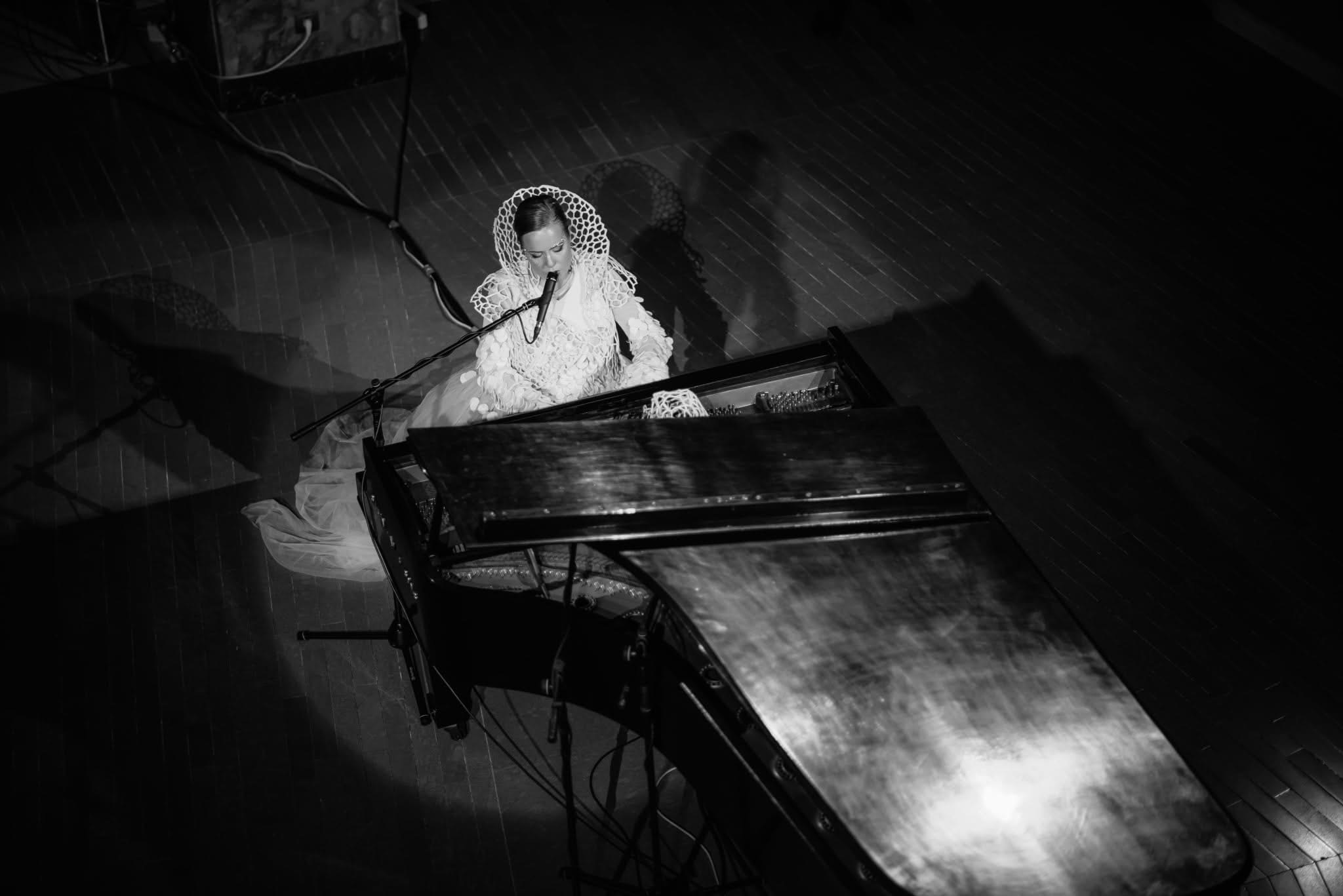
Katarina Rankovic: Performing taught me that listening is much more than hearing. When I was younger, I listened for mistakes — mine, other people’s, the tiny things that could be corrected or controlled. With time, I became much more interested in what happens beyond correctness. You start listening to the room, to the silence after a phrase, to the breath of the audience, to the other performers, and even to the instrument itself. Sometimes the most important musical decision is not something you play, but something you allow to happen. It also taught me that listening requires a certain kind of humility. You have to be willing to abandon what you planned if the moment asks for something else. I think that is true outside music too. The more I perform, teach, travel, and collaborate with different people, the more I understand that listening is a form of attention — and attention is one of the most generous things we can give. Perhaps the strange paradox is that the more I learned to listen, the less I felt the need to fill every silence. And for a pianist, that is quite an achievement.
10. How important are silence, space and pauses in your work?
Katarina Rankovic: They are essential. In fact, I sometimes think silence is the most underestimated part of music. I have become increasingly interested in what happens when you don’t immediately fill a space. A pause can create more tension than a loud sound; an empty stage can sometimes say more than a crowded one. Space gives an idea somewhere to breathe. As a pianist, I learned very early that a note doesn’t end when you stop playing it. There is a small, invisible life after the sound — the resonance, the expectation, the silence that follows. I find that incredibly beautiful. The same is true in theatre, performance and even fashion. A body needs space around it. A gesture needs time. An image needs somewhere for the eye to rest. So I don’t see silence as an absence. I see it as material. Sometimes I think my work is really a conversation between what I put into the world and what I have the discipline to leave out. And, honestly, learning what not to say has taken me much longer than learning what to say.
11. When you interpret another composer’s music, where do you believe interpretation ends and personal expression begins?
Katarina Rankovic: When I play another composer’s music, I have a responsibility to listen carefully to what is already there: the score, the structure, the historical context, the architecture of the piece. But a score is not a fossil. It needs a living body to become sound. The moment I touch the keys, my own history inevitably enters the music — my temperament, my memories, my way of breathing, even the things I am going through that day. I can never completely remove myself, nor would I want to. For me, interpretation is not about imposing myself on the composer. It is more like entering into a very intimate conversation with someone who isn’t in the room. You listen, you disagree occasionally, you negotiate, and eventually you find a way to speak together. Perhaps personal expression begins exactly where the score stops telling you what to feel. And that space — between what is written and what is alive — is where I find the most freedom.
12. Can technical perfection ever become an obstacle to artistic expression? If so, how do you protect the human element in your work?
Katarina Rankovic: Absolutely. Technical perfection is a wonderful servant and a terrible master. Technique gives you freedom — it allows you to make an idea precise, to control colour, dynamics, timing, touch. But if you become obsessed with getting everything perfectly right, there is a danger that the music becomes beautifully dressed and completely lifeless. I think the human element lives in the things that cannot be measured: breath, vulnerability, risk, intuition, even a little bit of imperfection. Sometimes a phrase needs to breathe differently from the way you planned it. Sometimes a note needs to arrive slightly late because the emotion hasn’t arrived yet. That doesn’t mean I believe in being careless. Quite the opposite. I think you work incredibly hard on technique so that, when the moment comes, you can forget about it. The real goal is not to show that you can play everything perfectly. It is to make someone forget that they are watching a pianist playing the piano. At its best, technique disappears — and something human remains.
III. Theatre, Performance & Amplituda
13. What did working with theatre teach you that the traditional concert environment could not?
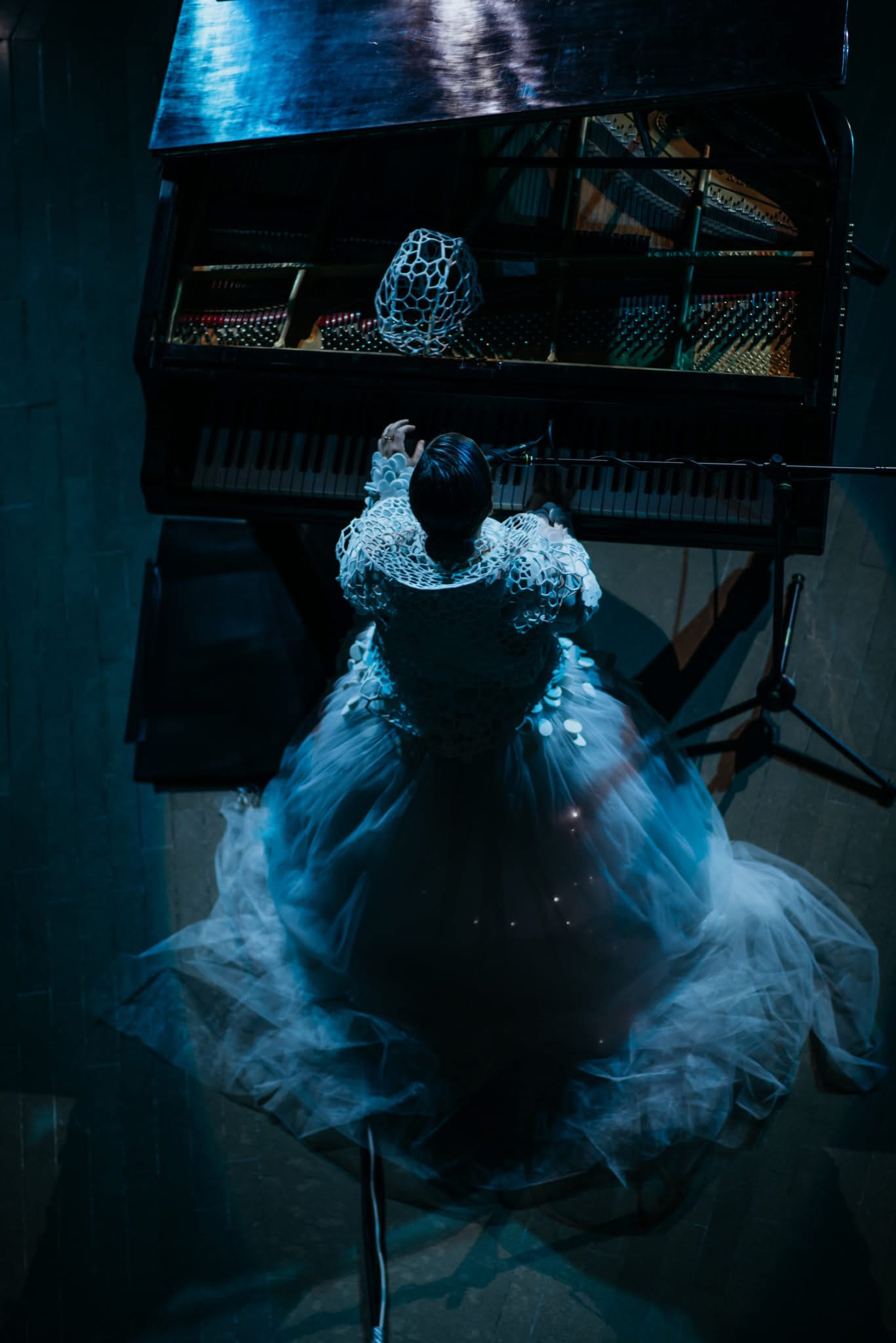
Katarina Rankovic: Theatre taught me that music does not exist in isolation. In a concert hall, the audience often comes primarily to listen. Theatre taught me to think about everything that surrounds the sound — the body, the light, the space, the movement, the silence, the gaze, even the moment before anything happens. It also changed my understanding of time. In theatre, a sound is never just a sound; it can be a memory, a warning, a transition, a character, a pulse. You become much more aware of dramaturgy — of why something happens now and not ten seconds later. My doctoral project, Amplituda, grew very much from that way of thinking. I became interested in the relationship between the body’s biological rhythm and musical rhythm, using Holter recordings as a starting point and translating that material into acoustic music and a theatrical performance. The medical became musical, and the musical became theatrical. That experience made me realise that the stage can function almost like a living organism. Everything affects everything else. And perhaps that is what theatre gave me most: the courage to stop thinking of music as something that happens only through the ears. Sometimes music begins in the body, passes through the space, and only then reaches the ear.
14. When composing for theatre, how do you respond to the actor, movement, stage and narrative rather than treating music as something independent?
Katarina Rankovic: When I compose for theatre, I try not to think of the music as something placed on top of the performance. I think of it as another body on stage. The actor, the movement, the light, the space and the music are constantly affecting one another. Sometimes the actor gives me the rhythm. Sometimes a movement tells me where the music should breathe. Sometimes the stage itself becomes the score — a change of light, an empty space, a body standing still for too long. I am also very interested in the idea that music can listen to the actor, rather than simply accompany them. A scene may need music to resist what is happening, not explain it. If someone is moving quickly, perhaps the music needs to remain almost still. If the stage is silent, perhaps one small acoustic sound can suddenly become enormous. That is why I don’t like the word “background” very much. In theatre, music can be a character, a nervous system, a memory, or even an invisible architecture holding the scene together. My work on Amplituda made this particular clear to me: once rhythm comes from something as intimate as the human body, the boundary between music, movement and theatre becomes wonderfully unstable. I suppose I compose for theatre the same way I work with people: I listen first, and then I respond.
15. Can music completely change the meaning of a scene without changing a single word of dialogue?
Katarina Rankovic: Absolutely. Music can completely change the emotional truth of a scene without changing a single word. The same sentence can become a confession, a threat, a memory, or even a joke depending on what is happening underneath it. Music has this slightly dangerous ability to tell the audience how to feel — although I prefer when it doesn’t behave quite that obediently. For me, the most interesting thing is often the contradiction. If the actor is smiling and the music is quietly unsettling, suddenly the smile means something else. If the scene is tragic but the music refuses to become sentimental, the audience has to find its own way into the emotion. Music can reveal what the character cannot say. It can expose a tension between the body and the words, between what is performed and what is actually felt. In that sense, music in theatre is almost like a second layer of dialogue — except it speaks directly to something less rational. And sometimes one note, placed at exactly the wrong — or right — moment can completely betray a character. I love that kind of betrayal.
16. What first led you toward “Amplituda”, and what question or feeling was at the heart of its creation?
Katarina Rankovic: Amplituda began with something very simple and, at the same time, almost impossible to ignore: the rhythm of the human body. I became fascinated by the idea that our bodies are already composing all the time. The heart beats, accelerates, hesitates, changes its rhythm according to fear, excitement, exhaustion, anticipation. We carry a piece of music inside us before we ever make a sound. The question at the heart of Amplituda was: what happens if we listen to that music? I used Holter recordings as one of the starting points, taking the heart’s biological rhythm and translating it into acoustic musical material. From there, it gradually became something larger than a musical composition. I wanted to create a theatrical world in which medicine, sound, the body and performance could exist as one organism. What interested me was not simply reproducing a heartbeat. It was the idea of translating something invisible and deeply personal into something that could be heard, seen and experienced collectively. In a way, Amplituda is about the strange intimacy of being alive. The heart is completely individual, yet its rhythm is also something we all understand instinctively. So the project began with a biological signal, but it became a question about humanity: how much of ourselves can we reveal through rhythm before rhythm becomes a kind of portrait? And perhaps that is why I called it Amplituda — because between one extreme and another, between sound and silence, control and unpredictability, there is this wonderfully fragile thing we call being alive.
17. What does “Amplituda” mean to you beyond being the title of a work?
Katarina Rankovic: For me, Amplituda is much more than the title of a work. It is almost a way of thinking. Amplitude suggests movement between extremes — sound and silence, tension and release, control and surrender, the visible and the invisible. It describes how something changes in intensity, but also how we experience life itself. We are never at one constant volume. That idea became very personal to me while creating the work. The Holter gave me an intimate record of the body’s rhythm, something that is happening whether we are conscious of it or not. I found something deeply poetic in that: the body is constantly performing, even when we are doing nothing. So Amplituda became a meeting point between the measurable and the emotional. Medicine gives us data, music gives us form, theatre gives us a body and a space — but somewhere between them, something human appears that cannot really be measured. I think that is what the word means to me now: the distance between what we can control and what we cannot. And perhaps every artist lives somewhere in that distance — constantly moving between extremes, trying to find the right volume.
18. What were you trying to explore through “Amplituda” that could not have been explored through a conventional concert or theatre piece?
Katarina Rankovic: I wanted to explore something that sits beneath performance itself: the body as an invisible composer. A conventional concert begins with a musical score, and a conventional theatre piece begins with a dramatic structure. Amplituda began somewhere much more intimate — with a physiological process that was already happening inside a human being. The Holter recording gave me the raw rhythm of the heart, and I wanted to ask what would happen if that private, medical information became acoustic music, movement and theatre. What interested me was the tension between something measurable and something deeply emotional. A heartbeat can be recorded as data, but we don’t experience our own heartbeat as data. We experience it as fear, excitement, desire, exhaustion, anticipation — as life. I don’t think a conventional concert or theatre piece could have given me that exact starting point, because Amplituda was not simply about representing the body. It was built from the body. I wanted the audience to feel that the rhythm they were hearing was connected to something alive — something that could accelerate, hesitate, become unstable. So the work became a kind of meeting between medicine and imagination. The Holter provided the evidence; music transformed it; theatre gave it a body. And perhaps the most interesting question was whether something as clinical as a medical recording could become intimate, poetic and even theatrical. For me, Amplituda was an attempt to make the invisible audible — and then to let it become human.
19. Did anything unexpected happen during the creation of “Amplituda” that changed your original idea of the work?
Katarina Rankovic: Yes — and I think that is one of the most beautiful things about the creative process. You begin with an idea, and then the work politely starts disagreeing with you. With Amplituda, I initially approached the Holter data almost scientifically. I was interested in the heart as a source of rhythm and in the possibility of translating that biological information into acoustic music. But as I worked with it, I realised that the data was not as objective as it appeared. Behind every line, every acceleration, every irregularity, there was a human body — and therefore a human story. That changed the way I thought about the piece. I became less interested in simply translating the heartbeat and more interested in what it meant to give that rhythm a body on stage. The music began to interact with movement, presence, silence and theatrical time. The medical material stopped being merely a source and became almost a dramaturgical character. The unexpected part was that the more I tried to control the material, the more it reminded me that the body itself doesn’t obey a score. And I think I eventually understood that this was the real heart of Amplituda: not reproducing a biological rhythm perfectly, but allowing its unpredictability to enter the artistic process. The work taught me something I still carry with you — sometimes the most important part of a composition is the thing that refuses to behave as planned.
20. If someone experienced “Amplituda” without knowing anything about you beforehand, what would you hope they would feel, notice or question afterwards?
Katarina Rankovic: I wouldn’t necessarily want them to leave with a clear explanation. I would rather they leave with a small disturbance — the good kind. I would hope they notice their own body afterwards. Their breathing. Their pulse. Perhaps the strange fact that they were sitting in a theatre, watching and listening to something, while their own heart was quietly performing its private concert. I would also like them to question where music actually begins. Is it in the instrument? In the performer? In the score? Or can it begin somewhere much deeper — in a biological rhythm that existed long before we decided to call something “music”? And if they happen to think about the relationship between medicine and art, that would be wonderful too. Medicine usually tries to measure the body; art often tries to understand what cannot be measured. Amplituda lives somewhere between those two impulses. But more than anything, I would hope they feel something rather than understand something. Maybe they leave slightly more aware of their own rhythm, and slightly less certain that the boundaries between science, music, theatre and the body are as solid as we like to pretend. If a work stays in your head, that’s nice. If it follows you into your body, that’s much more interesting.
IV. The Art of Crossing Boundaries
21. What makes an interdisciplinary artwork genuinely coherent rather than simply a combination of different art forms?
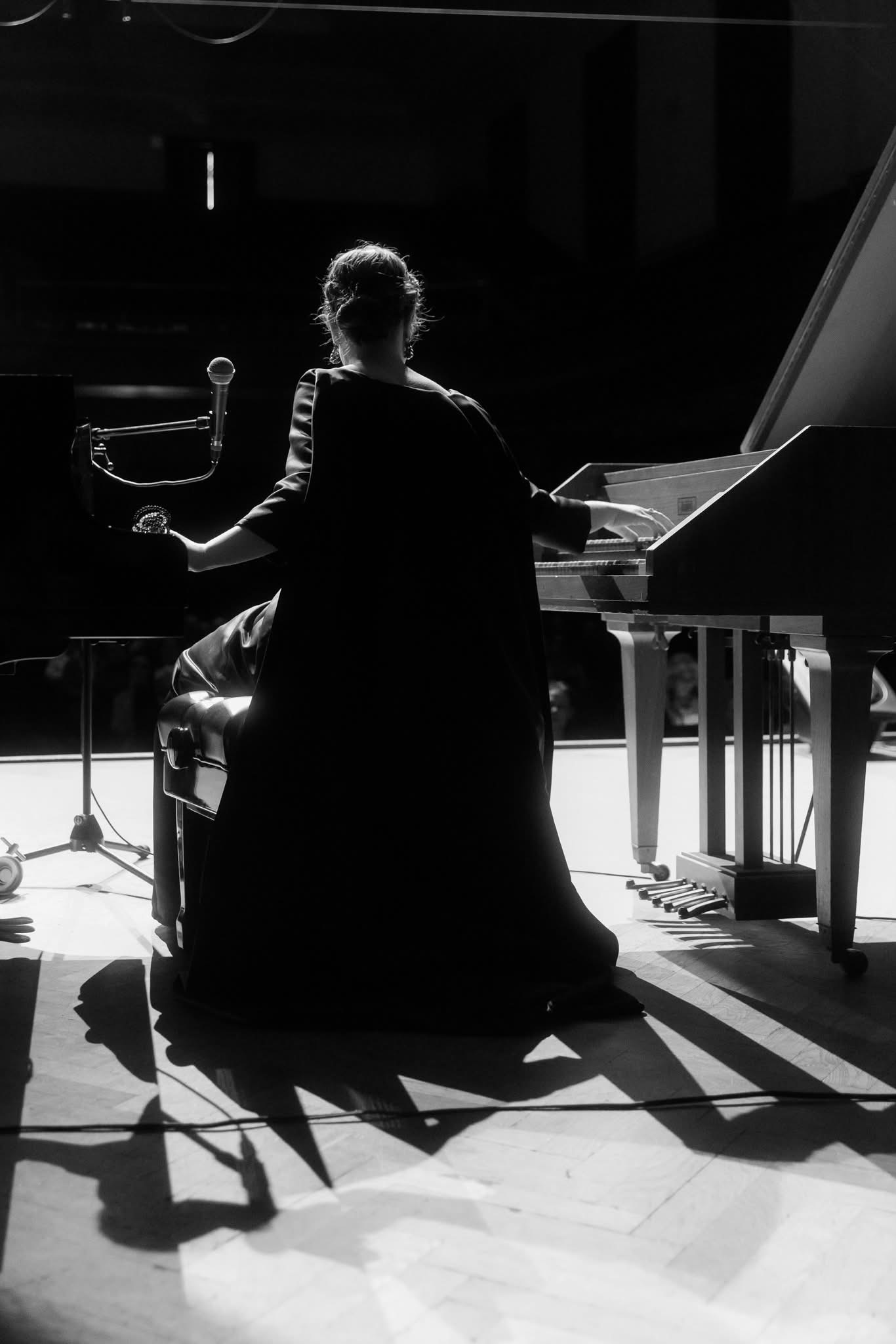
Katarina Rankovic: For me, interdisciplinarity only becomes meaningful when the different elements are not simply standing next to each other, but actually need one another. It is quite easy to put music, video, movement, theatre and visual art into the same room and call it interdisciplinary. But that doesn’t necessarily make it a work. Sometimes it is just a very sophisticated buffet. I think coherence comes from having one underlying question, impulse or tension that all the different languages are responding to. In Amplituda, for example, the biological rhythm was not an accessory to the music or a concept added to the theatre. It was the starting point. The Holter data generated musical material, and that material then informed the theatrical and performative structure. Each element changed the others. That is when interdisciplinarity becomes organic: when removing one language would actually change the meaning of the whole work. I also think the disciplines need to be allowed to contradict each other. I don’t want music to simply illustrate movement, or visuals to explain sound. Sometimes they should disagree. That friction can create something much more alive. For me, the goal is not to show how many artistic languages I can fit into one piece. The goal is to create a new language that couldn’t have existed through any one of them alone. When that happens, the disciplines stop being ingredients — they become one organism.
22. Where do you personally draw the line between experimentation and adding elements together simply for the sake of being different?
Katarina Rankovic: I think the line is drawn by necessity. If an element is there simply because it looks unusual, fashionable or “interdisciplinary,” I usually become suspicious of it. Difference, on its own, is not very interesting. You can put a piano on a roof and it is certainly different, but that doesn’t automatically make it art. For me, experimentation has to come from a genuine question. Why does this sound need an image? Why does this movement need music? Why should a medical device become part of a theatrical work? If I cannot answer that, the element probably doesn’t belong there. With Amplituda, the combination of medicine, Holter recordings, acoustic music and theatre came from the logic of the idea itself. I wasn’t looking for four disciplines to put together; I was following one question, and those different languages became necessary along the way. I also think good experimentation should carry a little risk. It should make you slightly unsure of yourself. If I already know exactly what an element will do before I introduce it, I am probably decorating rather than experimenting. So I try to ask one simple question: does this element reveal something that would otherwise remain invisible? If the answer is yes, I keep it. If the answer is merely “it looks cool,” I probably let it go. Even if it looks very, very cool.
23. How important is failure to your creative process?
Katarina Rankovic: Failure is extremely important to me — although I prefer to call it information. In creative work, something going wrong is often the moment when the work finally becomes honest. If everything behaves exactly as planned, there is a danger that you are simply executing an idea you already had rather than discovering something new. I have had plenty of moments when a musical idea didn’t work, a theatrical gesture felt completely wrong, or an experiment led somewhere I hadn’t intended. And usually, after the initial irritation, I realise that the failure has shown me something the original plan couldn’t. Working across different forms has made me especially comfortable with that uncertainty. When you bring together music, theatre, movement, technology or visual elements, there is no guaranteed formula. You have to allow things to collide a little. Teaching has also taught me this. When a student makes a mistake at the piano, I don’t immediately see it as something negative. Sometimes the mistake tells us more about how they are thinking than a correct note does. You can work with that. So yes, I need failure. Not because I enjoy getting things wrong — I am still a pianist, after all — but because failure keeps me curious. I would actually be more worried about a creative process in which nothing ever fails. That probably means nothing is being risked.
24. Have you ever had an artistic idea that seemed impossible at first but eventually became one of the most valuable experiences of your career?
Katarina Rankovic: Yes — Amplituda is probably the clearest example. The idea of taking something as intimate and unpredictable as a person’s cardiac rhythm, recorded through a Holter, and transforming it into acoustic music and theatre initially felt almost impossible. There was a strange tension in it: medicine deals with the body through measurement and data, while art deals with sensation, ambiguity and things that are much harder to quantify. I wasn’t interested in simply using a heartbeat as a sound effect. I wanted the biological rhythm itself to become part of the compositional thinking, and then to see how that could generate a theatrical language. The further I went, the more complicated it became — and, fortunately, the more interesting. The project forced me to work outside the comfort zone of the pianist and composer I already knew myself to be. I had to think about the body, movement, space, dramaturgy and the audience’s physical experience of the work. What seemed impossible at the beginning eventually became one of the most valuable experiences because it changed the way I understand my own practice. It taught me that an artistic idea doesn’t have to be immediately achievable. Sometimes its impossibility is precisely what makes it worth pursuing. And if an idea makes you think, “This may be a terrible idea, but I absolutely have to find out,” — I usually take that as a very good sign.
25. Do you think artists need to be comfortable with uncertainty? What has uncertainty taught you?
Katarina Rankovic: Absolutely. I think uncertainty is almost part of the job description. If I know exactly what a work will become before I begin, I sometimes wonder whether I am creating or simply executing. The most interesting ideas usually contain a small amount of danger — you don’t quite know where they will take you, or whether they will work. Working between music, theatre, performance and visual language has taught me to become comfortable with that space. There are moments when I don’t know whether an idea is a composition, a scene, a gesture or an image. I used to see that as a problem. Now I see it as the beginning. Amplituda taught me this very clearly. I began with something as concrete as biological data from a Holter, but I couldn’t predict what it would become once it entered music and theatre. I had to allow the material to transform me as much as I was transforming it. Uncertainty has also taught me patience. Not every question needs to be answered immediately. Sometimes an idea needs to remain slightly unresolved before it reveals its real form. I think artists need to be comfortable saying, “I don’t know yet,” without immediately panicking. For me, uncertainty is not the opposite of confidence. It is a different kind of confidence — the confidence to keep walking even when you can’t see the whole path. And, honestly, some of the best things in my work have happened precisely because I had absolutely no idea what I was doing at the beginning.
26. When collaboration is involved, how do you protect your own artistic voice while remaining open to what another artist brings?
Katarina Rankovic: I don’t think protecting your artistic voice means building a wall around it. I think it means knowing what is essential to you, so that you can afford to let everything else move. In collaboration, I try to arrive with a clear inner compass, but not with a finished answer. I want to know what I am curious about and what I am unwilling to compromise on, but I also want to leave enough space for another person to surprise me. Some of the most valuable things in collaboration happen when someone brings an idea that would never have occurred to you. If I immediately defend my original vision, I might protect my ego, but I won’t necessarily protect the work. Working with people from different artistic worlds has taught me that collaboration is a form of controlled vulnerability. You have to expose something that is yours and then allow somebody else to touch it, question it, even occasionally ruin it — hopefully in a productive way. I also don’t believe that every decision has to carry my signature. Sometimes the strongest artistic choice is to recognise that another person’s intuition is better than yours in that particular moment. So I try to protect the question, rather than every detail of the answer. If the central idea remains alive, the work can change shape. In fact, it probably should. And if I come out of a collaboration exactly the same person who walked into it, I probably wasn’t collaborating hard enough.
V. Teaching, Mentorship & The Next Generation
27. You have spent many years teaching young musicians. What is one thing you wish every young pianist understood before becoming technically excellent?
Katarina Rankovic: I wish every young pianist understood that technique is not the destination. It is the passport. We spend so many years learning how to make the fingers behave — which is necessary, of course — but eventually the much more difficult question is: what do you actually have to say? I want my students to understand that a technically perfect performance can still leave a room completely untouched. And, sometimes, a performance with a tiny imperfection can have an extraordinary human presence. I also wish they knew that listening is more important than proving. Don’t play to show that you can play. Play because you have heard something that you need to communicate. And don’t be afraid of having a personality. There is a strange moment in classical music when young musicians become so concerned with doing everything “correctly” that they become almost invisible. I would much rather hear a young pianist with a strong, imperfect voice than a flawless performance that could have belonged to anyone. Technique should give you freedom, not obedience. The fingers are there to serve the imagination. And if the imagination is asleep, the fastest fingers in the world are not going to wake it up.
28. What do students teach their teachers that formal education cannot?
Katarina Rankovic: Students teach you things no curriculum can prepare you for: how different every human being is, and how little one method can ever explain. As a teacher, you can arrive with years of knowledge, technique, experience and a beautifully organised plan — and then a student sits at the piano and completely destroys your theory in the best possible way. Every student listens differently. One understands through sound, another through movement, another needs an image or a story before a phrase suddenly makes sense. Teaching has taught me to become much more observant and much less attached to my own methods. They also remind me that curiosity is more important than certainty. Young musicians ask questions that adults sometimes stop asking because we think we already know the answer. And they teach you humility. You realise that being the teacher doesn’t mean always being the person who knows. Sometimes the student opens a door you didn’t know was there. In that sense, teaching is not a one-way transfer of knowledge. It is a collaboration between experience and discovery. I may teach them how to shape a phrase, but they constantly remind me to hear it as if I were hearing it for the first time. And I think that is one of the greatest gifts a student can give a teacher.
29. How do you help a student develop an individual artistic voice instead of simply becoming very good at reproducing someone else’s music?
Katarina Rankovic: I try to teach students that the goal is not to become a very convincing copy of someone who already exists. Technique is important, repertoire is important, knowledge is important — but at some point I want to ask them a slightly more uncomfortable question: what do you hear that I don’t? I encourage them to question things, to experiment with colour, timing, articulation, even with the emotional assumptions they bring to a piece. I want them to understand the score deeply, but I don’t want the score to become a cage. Sometimes I give them an image rather than an instruction. Instead of saying, “Play this phrase more dramatically,” I might ask, “What is this person trying not to say?” Suddenly the hands start telling a different story. I also try to leave room for their instincts. If a student makes an unexpected choice and I can hear that it comes from genuine listening rather than randomness, I want to explore it with them rather than immediately correct it. Teaching, for me, is partly about giving someone the technical tools to express themselves — and partly about knowing when to stop talking. Because eventually, they have to leave the studio and make decisions without me. The best outcome isn’t a student who plays exactly the way I would play. It’s a student whose playing makes me think, “I would never have done that — but I understand why you did.” That is when I know a voice is beginning to exist.
30. Has teaching changed the way you compose, perform or listen to music?
Katarina Rankovic: Very much. Teaching has made me a much better listener — and, perhaps more importantly, a more patient artist. When you teach, you hear the same piece through many different human beings. You realise that there is never only one way of understanding a phrase, a rhythm or a silence. A student can play something in a way you never imagined, and suddenly you hear the music differently yourself. That has affected my composing as well. I think more about the person who will eventually inhabit the music — not just about the notes themselves. I am more aware of the physicality of playing, of breathing, of where a musician might need space, and of what happens when the body meets the score. It has also made me less interested in showing knowledge and more interested in creating a situation in which something can be discovered. In performance, teaching has made me more attentive to communication. I think less about, “Am I playing this correctly?” and more about, “Is something actually happening between me, the music and the people listening?” So yes, my students have quietly entered my artistic practice. They remind me that music is not a museum object. It is something that becomes alive differently every time a human being touches it. And that is probably the most important thing teaching has given me: the ability to remain a student myself.
31. What do you think young artists today need most — discipline, freedom, patience, courage, community, or something else?
Katarina Rankovic: I would say courage — but not the loud kind. Young artists need the courage to be uncertain, to be bad at something for a while, to change their minds, to make work that doesn’t immediately fit a category, and to resist the pressure to have a perfectly defined artistic identity at twenty-five. Discipline is essential, of course. Freedom is essential too. But without courage, discipline can become obedience and freedom can become simply doing whatever is easiest. I also think they need curiosity. We live in a time when everything is available immediately, which is wonderful and slightly dangerous. You can see everything, hear everything, learn everything — but you can also become overwhelmed by everyone else’s voices before you have had the chance to hear your own. So I would tell young artists: travel, meet people, read outside your field, go to exhibitions, concerts, terrible performances and extraordinary ones. Be interested in things that have nothing to do with your profession. Let the world contaminate your work a little. And be patient with your own voice. You don’t need to arrive fully formed. Art is not an airport. Sometimes you are allowed to miss a few connections.
VI. Art, Society & What Comes Next
32. What responsibility, if any, do you believe an artist has toward society?
Katarina Rankovic: I don’t think an artist has a responsibility to provide answers to society. We already have enough people doing that. But I do think an artist has a responsibility to pay attention. To notice what is changing, what is disappearing, what is uncomfortable, what is beautiful, what people have stopped looking at because they have become too used to it. Art can make the familiar strange again, and sometimes that is a very powerful social act. I also believe an artist has a responsibility to remain honest. Not necessarily politically loud or constantly “relevant,” but awake. To question the language we inherit instead of simply repeating it. For me, especially when working with theatre and the body, I am interested in creating spaces where people can experience something rather than being told what to think. Amplituda, for example, began with something deeply individual — the rhythm of a human heart — but became a way of thinking about something we all share: vulnerability, mortality, and the strange fact of being alive. So perhaps my responsibility is not to society as an institution, but to the human being sitting in front of me. To give them something they didn’t know they needed. A question. A feeling. A moment of silence. Or, ideally, a reason to look at the world slightly differently when they leave.
33. In a world where so much culture is experienced through screens, what can live performance still give an audience that a screen cannot?
Katarina Rankovic: A screen can show you almost anything. What it cannot completely reproduce is the fact that another human being is physically there, breathing in the same room as you. Live performance has risk. Something can go wrong. A performer can hesitate, a breath can be heard, a sound can disappear into the room differently than expected. That imperfection is not a flaw; it is proof of presence. There is also a strange exchange of energy that happens between the performer and the audience. You cannot fully measure it, and you certainly cannot stream it without losing something. The audience changes the performer, and the performer changes the audience. Every night is slightly different because the people in the room are different. A screen gives us access. Live performance gives us proximity. And I think we are increasingly hungry for that. We spend so much time looking at perfectly framed images that there is something almost radical about being in a room where nothing can be edited, paused, filtered or repeated. For me, theatre and music become most powerful in that space of uncertainty. The sound happens once. The body is there once. The silence happens once. You cannot scroll past it. And perhaps that is exactly why we still need it.
34. Do you see technology as a threat to traditional artistic forms, or as another instrument through which artists can expand what is possible?
Katarina Rankovic: I don’t see technology as a threat. I see it as another instrument — although, like every instrument, it becomes interesting only when you have something to say with it. I am much less interested in the question of whether technology will replace traditional art forms than in what happens when the two meet. A piano and a piece of medical technology, for example, seem to belong to completely different worlds. Yet Amplituda grew precisely from that encounter: the Holter became a source of rhythmic material, which then entered acoustic music and theatre. Technology can reveal things that were previously invisible, or allow us to listen to something in a completely new way. But I don’t think we should use it simply because we can. The fact that something is technically possible is not, by itself, an artistic argument. For me, the human being has to remain at the centre. Technology should extend perception, not replace it. And I actually find the contrast quite beautiful: the more sophisticated our technology becomes, the more I appreciate something as primitive as a human hand touching a piano key. One is data. The other is touch. When they meet for the right reason, you can create something neither could have created alone.
35. What do you think audiences are really searching for when they enter a theatre, concert hall or performance space today?
Katarina Rankovic: I think audiences are searching for an experience that feels more real than the world they have just come from. We live in a time of constant information, notifications, opinions, screens and noise. There is very little silence, and even less space to simply exist without having to respond to something. So when people enter a theatre, a concert hall or a performance space, I think they are searching for a kind of temporary disappearance. Not necessarily escapism in the superficial sense, but a pause from the pressure of everyday life. For a couple of hours, nobody is asking you to answer an email, make a decision, have an opinion or perform a version of yourself. You can simply sit in the dark and allow something to happen to you. I also think audiences are searching for presence. They want to feel that something is happening now, between real bodies in the same room — something that cannot be edited, paused or consumed later in exactly the same way. Perhaps that is why live performance has become, in a strange way, almost a luxury. Not because it is inaccessible, but because genuine attention has become rare. We enter a theatre thinking we are going to watch something. Sometimes what we are really looking for is a place where, for a little while, we don’t have to be anything at all.
36. What artistic territory have you not yet entered but feel increasingly drawn toward?
Katarina Rankovic: I am increasingly drawn toward work that sits even further outside the borders I already know — especially where music, the body, visual art, fashion, technology and space can become one language. I am interested in larger-scale performance environments, where the audience is not simply sitting and watching, but somehow becomes part of the architecture of the work. I am also fascinated by the relationship between sound and the physical body — pulse, breath, movement, exhaustion, silence — and by what happens when those things become compositional material. Perhaps I am also moving toward work that is less concerned with the traditional idea of a “piece” and more interested in creating an entire world. I would love to make something where you cannot immediately tell whether you have entered a concert, a theatre, an installation or a performance. Something slightly difficult to classify — but very easy to feel. And I am curious about bringing fashion more consciously into that world. Not as decoration, but as dramaturgy: clothing as movement, identity, architecture, even sound. I don’t have the complete answer yet, which is probably a good thing. The territory I am most interested in is usually the one where I don’t yet know the rules. That is where I tend to become most curious — and, occasionally, most dangerous.
37. When people encounter your work many years from now, what would you hope they understand — not simply about Katarina Rankovic, but about the human experience you were trying to explore through your art?
Katarina Rankovic: I would hope they understand that I was never really trying to make work about myself. I was trying to use myself as a way of asking questions about something much larger: what it means to be human, to be vulnerable, to desire, to disappear, to connect, to keep going. If, many years from now, someone encounters my work, I would like them to feel that it came from a genuine curiosity about life — about the body, time, memory, beauty, uncertainty and our need to connect with one another. Perhaps especially the idea that we are much less separate than we imagine. A heartbeat is deeply personal, but it is also universal. A breath belongs to one body, but everyone in a theatre understands it. A silence can belong to one person and suddenly become shared by hundreds. That is something I keep returning to. I don’t particularly care if they remember my titles or even my name. Of course, I would be delighted if they did — artists are still human, after all. But I would rather they encounter the work and recognise something in themselves. If Amplituda makes someone suddenly aware of their own heartbeat, if a piece of music makes someone remember a person they thought they had forgotten, if a performance makes someone look differently at their own body or at another human being — then the work has continued beyond me. I think that is the most beautiful possibility for an artist: to leave something behind that no longer belongs to you. Not a monument. A trace. Something that keeps quietly moving inside another person long after you have left the room.
HELP KEEP IDEAS ALIVE
Great ideas deserve to be heard, preserved, and passed forward.
Astra Global Ventures exists to bring thoughtful conversations, original perspectives, and meaningful stories into the world—and to preserve them for readers today and generations to come.
If this work has meant something to you, please consider supporting our independent publishing work. Your contribution helps us continue the research, editing, design, and publishing that bring meaningful voices and ideas to life.
Every contribution, whatever its size, helps us keep creating and sharing work that matters.
SUPPORT INDEPENDENT PUBLISHING
For international supporters, you can contribute securely through PayPal:
Scan the QR code or use the PayPal link below to support our independent publishing work.
Support Astra Global Ventures via PayPal
Thank you for helping meaningful ideas live beyond the moment.