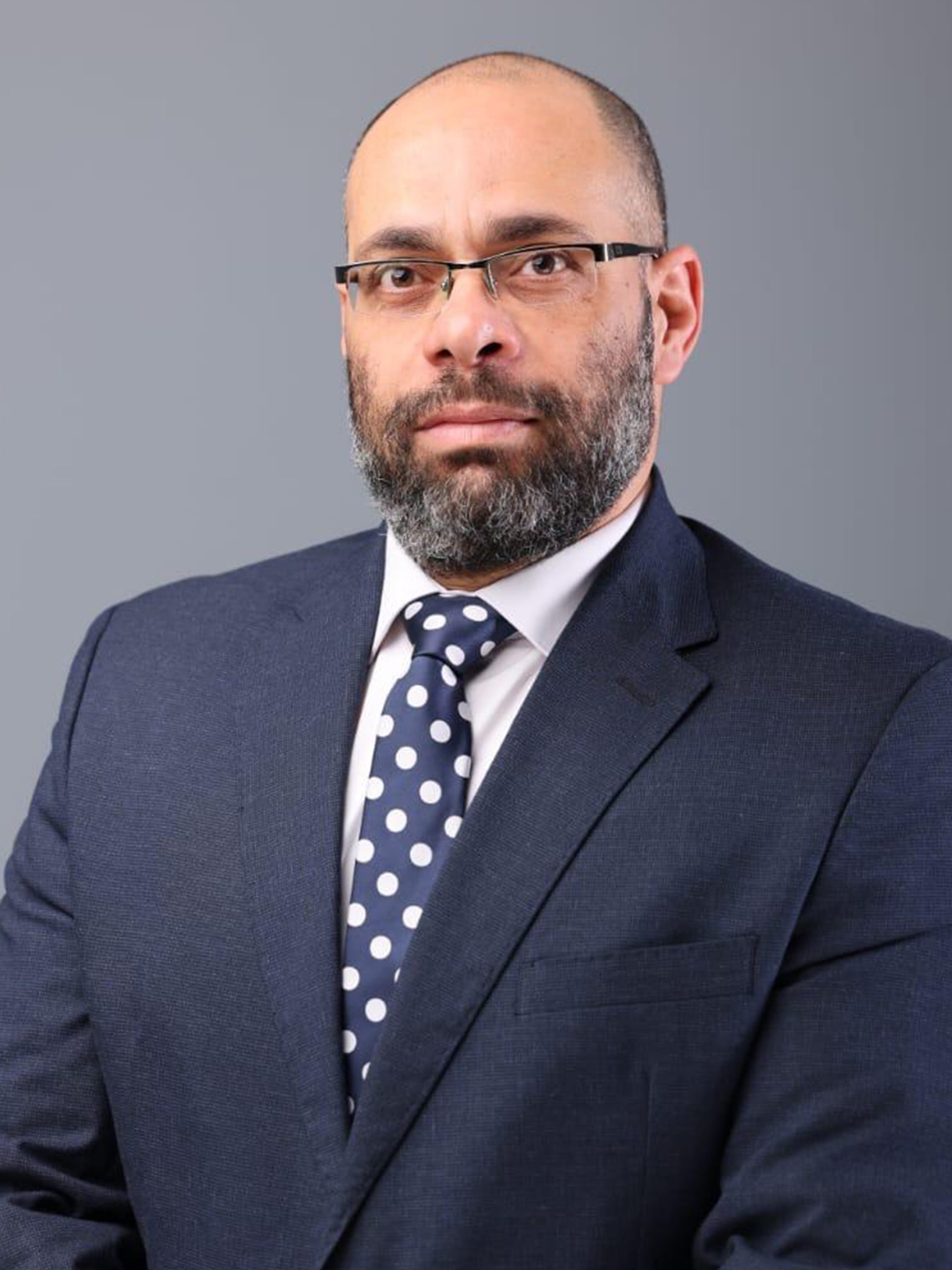
In an era defined by rapid technological disruptions, the intersection of media, storytelling, and artificial intelligence governance has never been more critical. In this exclusive interview with Astra Global Ventures, conducted by Sundram Kumar, we sit down with Associate Prof. Dr. Sherif Badran to explore the profound evolution from traditional visual storytelling to managing algorithmic trust, modern leadership, and the future of global education.
About the Expert
Associate Professor Dr. Sherif Badran is a media scholar, academic leader, researcher, and television production specialist with more than 25 years of experience spanning the media industry, higher education, academic programme development, and quality assurance.
He currently serves as an Associate Professor at the Communication and Media Technologies College at Gulf University, Bahrain, where he previously founded and served as the Dean of the College. He has also held several senior academic leadership positions, including Dean of the College of Administrative and Financial Sciences, Assistant Dean, and Head of the Media and Public Relations Department. In addition, he serves as Chair of the Scientific Research Committee at the Arab Administrative and Development Organization (ARADO).
Dr. Badran began his professional career in the media industry, working in television production, cinematography, lighting, photography, and visual documentation. His professional experience includes work with Egyptian Television, private television channels, production companies, and MBC. This practical background has strongly influenced his teaching philosophy and research approach, combining academic knowledge with industry-based experience.
His academic career has extended across Egypt, Saudi Arabia, Jordan, and Bahrain. He has taught and supervised courses and research in television production, digital media, photography, videography, interactive media, media research methods, social media, and communication. He has also played a significant role in developing and reviewing academic programmes at bachelor’s, master’s, and doctoral levels, with particular expertise in curriculum development, higher education quality assurance, accreditation, and the alignment of academic programmes with national and international standards.
Dr. Badran holds a PhD in Design and Applied Arts from Helwan University, with doctoral research focusing on virtual studio technologies and visual content production. He is also a Fellow of the Higher Education Academy in the United Kingdom and holds a Diploma in Digital Media from the American University in Cairo.
His research interests include digital media, television and virtual production, artificial intelligence in media and content creation, social media, misinformation, digital advertising, audience behaviour, visual communication, and public trust in emerging technologies. His recent research has increasingly focused on the relationship between artificial intelligence, transparency, governance, and public trust in the Arab context.
He is the author of the book Television Production in the Virtual Studio and has published research in international journals and conference proceedings, including studies published by Springer, Frontiers, and other academic outlets. His work reflects a continuing interest in understanding how technological transformation is reshaping media production, communication, education, and society.
Throughout his career, Dr. Badran has been committed to bridging the gap between academia and industry. His work is guided by the belief that technological innovation should serve storytelling, critical thinking, ethical responsibility, and meaningful communication. He continues to contribute to academic development, media research, programme innovation, and the preparation of future media professionals for an increasingly digital and AI-driven environment.
Chapter 01 – The Making of a Media Scholar
Q01: What first drew you to television production and visual communication, and what did your early years in the Egyptian television industry teach you that a classroom could not?
Dr. Sherif Badran: I started as a DOP and Lighting Director in the news sector of Egyptian Television in 2001, and before that I was working as a photographer at the Egyptian Museum. What drew me in was simple: the image. I was fascinated by how light, framing and timing could change the meaning of a scene before a single word was spoken. What the studio floor taught me that no classroom could is discipline under pressure — a live news bulletin does not wait for you to find the right angle, and a small mistake on air cannot be undone in post. That urgency, and the responsibility of getting it right the first time, shaped everything I later brought into teaching.
Q02: You worked in the media industry before building a long academic career. How did real production experience change the way you teach students today?
Dr. Sherif Badran: It means I refuse to teach television production as a purely theoretical subject. I spent eleven years in the industry — as a DOP, lighting director, and image quality consultant, including work with MBC — before I moved fully into academia. When I teach directing, editing or studio production now, I bring in the practical decisions a crew actually has to make — budget limits, deadline pressure, working with a director who changes their mind on set. Students who only learn the theory can describe a shot; students who understand the industry can deliver one under real constraints.
Q03: You have worked in Egypt, Saudi Arabia, Jordan and Bahrain. How has working across these different environments shaped your understanding of media and education?
Dr. Sherif Badran: Each country gave me a different lens. Egypt gave me the production grounding. Saudi Arabia, at Imam Mohamed ibn Saud University, taught me how media education operates within a large, tradition-conscious system. Jordan, at Yarmouk University, sharpened my understanding of Arab media research and quality assurance. Bahrain is where I could finally build something from the ground up — founding an entire media college. Moving across these four systems taught me that Arab media education is not one thing; it is several different ecosystems with different regulatory cultures, and a leader has to be fluent in more than one of them.
Q04: Was there a particular moment in your career when you realised that education could be as powerful a tool for changing media as production itself?
Dr. Sherif Badran: It was gradual rather than a single moment, but the clearest turning point was in 2018, when I moved from being an instructor into administrative leadership as Head of the Media and Public Relations Department at Gulf University. I saw that a single well-made programme could shape the practice of dozens of future producers and journalists at once, in a way that my own camera work never could. By 2022, founding the Communication and Media Technologies College and building five programmes from bachelor’s to PhD level made that conviction permanent — I was no longer just producing content, I was producing the people who would produce it.
Q05: After more than two decades in media and academia, what is one lesson from your early career that you still carry with you?
Dr. Sherif Badran: That technical skill without responsibility is dangerous, and responsibility without technical skill is powerless. On a live broadcast, a lighting director who does not understand the consequences of a decision can ruin a segment; an academic leader who does not understand the practice behind a media programme can approve something that looks good on paper and fails students in the field. I carry the production-floor habit of asking, before any decision: what actually happens when this meets reality?
Chapter 02 – Television, Technology & The Virtual Studio
Q06: Your PhD focused on virtual studio techniques and visual content in television. What question were you trying to answer when you began that research?
Dr. Sherif Badran: My PhD thesis, completed at Helwan University, was actually an experimental study, and I was fortunate in its timing — I was working on it right as virtual studio technology was first being introduced into Egyptian television. Several channels started establishing this technology during that period, and I worked closely with them through the pilot phase, helping set it up in their studios at Egyptian Media City. That gave me a rare position: I wasn’t researching the technology from a distance after the fact; I was inside the rollout as it happened. The underlying question was practical: Arab television channels were adopting virtual studio technology largely by imitation, without a clear set of production standards suited to their content and audiences. I wanted to build a framework — not just describe the technology but define how it should be designed and applied so it actually served the story rather than becoming a technical showcase for its own sake. Being on the studio floor during that pilot phase is what kept the research grounded in what channels could realistically implement, rather than staying purely theoretical.
Q07: You began studying digital and virtual production long before many of these tools became common. What did you see coming that others were not yet paying attention to?
Dr. Sherif Badran: I saw that virtual and digital production would move from being a novelty used by a handful of major channels to a standard tool available to almost any broadcaster, given the falling cost of the technology. What most people in the industry around me were not focused on was the training gap that would follow — the technology would arrive faster than the production standards and the trained personnel needed to use it well. That gap is exactly what I tried to address first in my 2015 book on television production in the virtual studio, and later in my continued publications on digital image and 3D television production.
Q08: Your publications have explored digital images, 3D television and virtual studio production. Which technological change has surprised you the most?
Dr. Sherif Badran: The speed at which generative AI tools moved from novelty to daily production workflow. Virtual studios and 3D television took years to become standard practice and required specialised equipment and crews. AI-based content creation tools reached the same level of production relevance in a fraction of that time, and with far lower barriers to entry — which is part of what pulled my own research toward AI, transparency and public trust in more recent years.
Q09: Has technology made television storytelling better, or has it sometimes made programmes more impressive visually without making the story stronger?
Dr. Sherif Badran: Both are true, and I have seen it from the production side. Technology gives a storyteller more tools, but tools are not judgment. I have watched productions invest heavily in visual sophistication — a virtual set, elaborate graphics — while the actual narrative structure underneath was weak. The technology becomes a form of overcompensation. My own research philosophy has always been that visual technique should serve meaning, not replace it; a virtual studio should make a story clearer, not just more decorated.
Q10: What is the biggest mistake young producers make when they use new technology in television?
Dr. Sherif Badran: They let the tool dictate the story instead of the other way around. A young producer with access to a new visual technique will often build a segment around demonstrating that technique rather than asking what the audience actually needs to understand. I try to correct this early with students: decide what the story requires first, and only then decide which technology — virtual studio, mobile journalism, AI-assisted editing — actually serves that need.
Q11: If you were building a television production studio for the next decade, what technologies or capabilities would you consider essential?
Dr. Sherif Badran: I would prioritise a flexible virtual production environment that can move between traditional broadcast and short-form digital output without rebuilding the workflow each time, strong mobile journalism capability given how much news is now shot and filed from the field, and AI-assisted editing and content tools — but paired with clear editorial governance, so the efficiency AI offers does not come at the cost of accuracy or accountability. As General Director of Gulf University Studios since 2017, this is exactly the balance I have tried to build in practice, not just in theory.
Chapter 03 – Reimagining Media Education
Q12: You have taught photography, television production, digital media, editing, web design and communication. Which basic skill remains important no matter how technology changes?
Dr. Sherif Badran: Visual literacy — the ability to read and construct meaning through an image, a frame, a sequence. I have taught everything from lighting and videography to digital media and interactive media over more than two decades, and the tools have changed completely in that time. What has not changed is that a producer who understands composition, light and narrative rhythm can adapt to any new platform. A producer who only knows the software of the moment is left behind the moment that software changes.
Q13: What should universities teach future media professionals that they cannot learn simply by entering the industry?
Dr. Sherif Badran: Structured critical and research thinking. The industry can teach someone how to use a piece of equipment or follow a newsroom’s house style very quickly. What is much harder to acquire on the job is the discipline of media research methods, ethical reasoning, and the ability to evaluate the credibility of sources and content — skills I teach at both bachelor’s and master’s level. That analytical foundation is what allows a graduate to keep adapting as tools and platforms change around them.
Q14: Your work on project-based learning connects students, faculty and industry. Why is that connection so important for media education?
Dr. Sherif Badran: In our 2020 paper on a dynamic framework for project-based learning, my co-authors and I argued that media education fails when these three groups operate in isolation — students learn theory disconnected from practice, faculty teach without current industry feedback, and industry receives graduates who are unprepared. When students work on real, faculty-supervised projects with industry input, all three groups correct each other in real time. It is the closest a classroom can come to replicating the accountability of an actual production environment.
Q15: What does an industry-ready media graduate look like today?
Dr. Sherif Badran: Someone who is comfortable across the full production chain—capable of shooting, editing, and publishing content themselves—while also understanding the strategic and ethical dimensions of what they are producing. I look for graduates who can move between mobile journalism, television production, and digital platforms without treating them as separate skill sets, because in today’s newsroom or agency, they rarely are, but the labor market needs a one-man crew approach.
Q16: How should universities prepare students for jobs that may not even exist when those students graduate?
Dr. Sherif Badran: By teaching transferable foundations rather than only current tools: research methods, critical thinking, storytelling structure, and ethical judgment. When I led the design of our Bachelor in Content Creation and Social Media Management in 2024, the goal was not to lock the curriculum to today’s platforms, but to build competencies — audience understanding, content strategy, data literacy — that would still apply once the specific platforms had changed.
Q17: Do you think media education needs to move from teaching individual tools toward teaching students how to learn and adapt continuously?
Dr. Sherif Badran: Yes, and I think this shift is already underway in the programmes I have helped design. Teaching a specific editing suite or a specific platform has a shrinking shelf life. What has a permanent shelf life is teaching a student how to evaluate a new tool quickly, understand its underlying logic, and integrate it into their existing skill set. That adaptability is the real curriculum now, and the tools are simply the exercises we use to build it.
Chapter 04 – Building Institutions & Leading Change
Q18: You moved from teaching into senior academic leadership and eventually helped build a Media College from the ground up. What changed most in your thinking when you became an institution builder?
Dr. Sherif Badran: As a teacher, my responsibility was to the students in my own classroom. As Head of Department, then Assistant Dean, then Dean, and finally as founding Dean of the Communication and Media Technologies College in 2022, my responsibility widened to every student, faculty member and future graduate the institution would ever produce. The biggest shift was learning to think in systems and years rather than in semesters — a curriculum decision I made in 2022 would still be shaping graduates a decade later, so the margin for error narrows considerably.
Q19: What is harder about creating a new academic programme than people outside universities usually realise?
Dr. Sherif Badran: The alignment work. Designing engaging course content is the visible part — the part people picture when they imagine building a programme. What is far harder, and almost entirely invisible from the outside, is aligning that content simultaneously with international benchmarks, domain analysis, national qualification frameworks, quality assurance requirements and international accreditation standards, while managing every stakeholder along the way — the ministry, the accrediting bodies, industry partners, faculty, and the students the programme is ultimately for. Long before a syllabus takes shape, there is a feasibility study to prepare, and it has to be built on real evidence: reading labor market reports closely enough to identify genuine gaps, not assumed ones, and making sure the programme is answering a need the market actually has rather than one that simply sounds current. When I led the PhD in Mass Communication and the Bachelor in Content Creation and Social Media Management at Gulf University, that is where most of the real work went — not into writing engaging course content, which came relatively naturally, but into making sure the programme could stand up to every layer of scrutiny and still remain genuinely relevant to a fast-moving industry by the time it reached its first student.
Q20: You have worked with accreditation, programme development and quality assurance. What does genuine academic quality mean beyond simply receiving accreditation?
Dr. Sherif Badran: Accreditation certifies that a programme meets a standard at a point in time. Genuine quality is what happens between accreditation cycles — whether students are actually being challenged, whether faculty are current in their field, whether graduates can perform once they leave. I chaired the University Teaching, Learning and Assessment Committee for six years and led standards in both BQA and HEC institutional reviews, and the lesson from that work is that a certificate on the wall means little if it is not backed by a genuine, ongoing culture of review.
Q21: How can universities maintain strong academic standards while still responding quickly to changes in the media industry?
Dr. Sherif Badran: By separating what should stay stable — research rigor, ethical standards, assessment integrity — from what should stay flexible, which is largely the tools and case studies used to teach. In building our media programmes, I kept the quality assurance backbone fixed while updating course content and equipment far more frequently, so the institution could move at the industry’s pace without ever loosening its academic standards.
Q22: What makes a media programme truly different from a programme that simply carries the word ‘media’ in its name?
Dr. Sherif Badran: Whether the people teaching it have actually worked in media. I built the Communication and Media Technologies College around faculty and course design informed by real production experience, including my own eleven years in the industry, because a media programme taught entirely by people who have never produced content under real deadline and budget pressure tends to produce graduates with the same gap.
Q23: After serving in several leadership roles, how would you describe the leadership principle you rely on most?
Dr. Sherif Badran: Lead the standard, not just the people. In every role — Head of Department, Assistant Dean, Dean — I tried to make sure the quality standard for the college would hold even in my absence, rather than depending on my personal oversight of every decision. That is what the committees, review processes and quality frameworks I built were really for: making excellence a property of the institution, not just of the person leading it that day.
Q24: What have you learned about leading people across different cultures, institutions and professional backgrounds?
Dr. Sherif Badran: That shared standards travel better than shared style. Leading collaborations between Gulf University and institutions such as Macromedia University of Applied Sciences in Germany, Ajman University in the UAE, the Higher Institute of Information and Communication in Rabat, and MGIMO in Moscow, taught me that faculty and administrators across very different cultures can align quickly around a clear, well-defined academic standard, even when their working styles and communication norms differ significantly.
Chapter 05 – AI, Authority & Public Trust
Q25: Your recent research describes artificial intelligence as an ‘unelected authority.’ What does that idea mean to you in simple terms?
Dr. Sherif Badran: In the paper I co-authored with Ahmed Samir Hammad, we found that AI rarely gains authority in the Arab public sectors we studied the way global literature usually describes — through a formal decision to hand a process over to a machine. It gains authority through displacement. A patient arrives at a clinic having already been diagnosed by a symptom-checker; a student arrives having already had their assignment shaped by a chatbot; a citizen arrives at a bank having already received financial advice from an AI tool. By the time the human professional or institution engages, a frame has already been set by a system nobody elected, appointed or formally authorised to set it. That quiet, pre-decision framing is what we mean by an ‘unelected authority.’
Q26: Why can AI become a problem when people trust its decisions without understanding how those decisions were made?
Dr. Sherif Badran: Because in our focus groups across health, education, law and finance in Egypt and Bahrain, the deepest concern professionals raised was not really about the algorithm’s logic — it was that they themselves often did not know who owned the AI tools they used every day, where the data went, or who controlled the underlying infrastructure. If the professionals inside the system cannot answer that, the citizens relying on the output certainly cannot. Trust built on that kind of opacity is fragile, because there is no clear party to hold accountable when something goes wrong.
Q27: Your research examined Egypt and Bahrain. What does the Arab context add to the global conversation about AI governance?
Dr. Sherif Badran: Most AI governance literature is built around US or EU institutions. We ran eight focus groups — one each in health, education, law/governance and finance/administration, in both Egypt and Bahrain — and found that transparency gaps show up everywhere, but their shape depends heavily on context: Egypt’s political stability against Bahrain’s monarchic modernisation drive, Egypt’s scale against Bahrain’s small and affluent economy, and two regulatory systems that are both still emerging, with Bahrain marginally ahead. The conclusion we drew is important for policy: AI governance solutions have to be tailored to these local conditions rather than imported wholesale from elsewhere.
Q28: Why are societies sometimes adopting AI faster than they are creating clear rules to govern it?
Dr. Sherif Badran: Because adoption is driven by visible, immediate efficiency — faster diagnostics, faster document review, faster public services — while governance requires slower, less visible institutional work: rules on data ownership, accountability, and citizens’ right to contest a decision. Our research describes this as a ‘governance gap’ in the MENA region specifically: ambitious national AI strategies moving well ahead of the regulatory and oversight frameworks needed to support them responsibly.
Q29: If an AI-assisted decision causes harm in education, healthcare, finance or public administration, who should be responsible?
Dr. Sherif Badran: Every focus group we ran, across all four sectors and both countries, converged on the same instinct: the professionals themselves insisted that final decisions must remain human, and several groups explicitly called for a formal, protected right to review any AI-influenced outcome. That maps directly onto responsibility — if a human retains the authority to accept, reject or override an AI-assisted recommendation, then that human, and the institution standing behind them, carries the responsibility. The moment that human review is quietly removed, accountability disappears along with it.
Q30: How can governments and institutions build public trust when people cannot easily see how an AI system reached a decision?
Dr. Sherif Badran: Our findings point to what the literature calls multi-layer transparency: clear explanation of how a system works, transparency about the process it follows, and honest communication of the rationale behind a given outcome, combined with real accountability mechanisms. But our focus groups added something the global literature tends to miss — transparency also has to cover ownership: whose company built the tool, where the data physically sits, and who controls that infrastructure. In our sectors, that question of ownership mattered to professionals just as much as the algorithm’s internal logic.
Q31: Do you think efficiency can become dangerous when technology starts replacing human judgement rather than supporting it?
Dr. Sherif Badran: Yes, and our research gave that a name: across every sector, from judges to physicians to teachers, participants used AI as an ‘assistant’ for speed and volume — drafting, summarising, first-pass analysis — while insisting, in their own words, that decisions should always be human. What was striking is that this was not resistance to the technology; several groups were genuinely optimistic about integrating AI further. The line they held was specifically the point where efficiency starts to substitute for judgement rather than feed it.
Q32: What should every communication and media student learn about AI, even if they never become a programmer?
Dr. Sherif Badran: The concern that came through most strongly in our education-sector focus group is the one I most want students to internalise themselves: several educators told us they were watching students shift from being critical, interpreting learners into passive relays of AI-generated content. A communication or media student does not need to write a model, but they do need to understand that using AI well means staying the one doing the thinking — evaluating what a system produces rather than simply forwarding it — because that is exactly the capacity our research found is most at risk of quietly eroding.
Chapter 06 – The Next Era of Media & Higher Education
Q33: What will ‘television’ mean ten years from now as audiences move between traditional broadcasting, streaming and short-form platforms?
Dr. Sherif Badran: I think ‘television’ will stop referring to a screen or a broadcast schedule and will instead refer to a production discipline — the craft of visual storytelling with sound, light and edit — that gets delivered wherever the audience happens to be. Our research on VOD consumption habits among Gulf youth already shows audiences moving fluidly between formats; the underlying craft of television production is what will persist, not the delivery method.
Q34: Will the future media professional need to be a specialist, or a combination of producer, journalist, technologist, strategist and storyteller?
Dr. Sherif Badran: A combination, but not an unfocused one. The most capable graduates I have seen are those who have one genuine area of depth — editing, reporting, strategy — built on top of a broad working fluency in the others. The danger is producing generalists who are shallow everywhere; the goal in our programme design has been depth in one area with real competence across the rest.
Q35: What role should Arab universities play in shaping the region’s digital future rather than simply reacting to technological change?
Dr. Sherif Badran: Arab universities need to move from adopting technology to producing original research and frameworks around it, the way we tried to do with our AI governance and public trust research. Reacting means importing tools and standards built elsewhere; shaping means generating the research, talent and institutional models that address the region’s own conditions — its languages, media systems and regulatory environments — directly.
Q36: Where do you see the greatest untapped potential in Arab higher education?
Dr. Sherif Badran: In cross-border academic collaboration. The partnerships I led between Gulf University and institutions in Germany, the UAE, Morocco and Russia showed me how much stronger programmes become when they are benchmarked against multiple international systems rather than developed in isolation. Very few Arab media programmes are doing this systematically yet, and it is one of the fastest ways to raise quality and relevance at the same time.
Q37: What is one common belief about the future of media that you think we should stop believing?
Dr. Sherif Badran: That more technology in a production automatically means a better story. I have spent much of my research career, from virtual studio production to AI, pushing back on that assumption. Technology expands what is possible; it does not replace the judgment required to decide what is worth making.
Q38: Looking across your work in television, technology, teaching, research and academic leadership, what do you think the next generation must understand about the relationship between media and society?
Dr. Sherif Badran: That media does not simply reflect society — it actively shapes what a society believes is true, important and possible, which is why the standards behind it matter so much. Whether I was studying visual meaning in Arab documentary film, fake news during COVID-19, or, most recently, how AI quietly frames decisions before citizens ever reach a doctor, teacher, judge or bank officer, the same thread runs through the work: the systems that shape public understanding carry real responsibility, and that responsibility does not diminish just because the system is now algorithmic rather than editorial.
Q39: After everything you have learned over your career, what do you now believe about education and communication that you did not believe when you began?
Dr. Sherif Badran: When I began as a young cameraman in 2001, I believed technical excellence was the main thing that mattered. Twenty-five years, a PhD, and several institution-building roles later, I believe technical excellence is necessary but not sufficient — it has to be paired with structural thinking about standards, ethics and accountability, or it produces impressive work that ultimately serves the wrong ends. That shift is really the story of my own career, from the camera to the dean’s office to AI governance research.
Q40: If you could leave one idea with the next generation of media professionals, educators and leaders — what one idea you believe will still matter when today’s technologies have changed completely — would it be, and why?
Dr. Sherif Badran: Master the fundamentals of storytelling and judgment and treat every new technology as a tool in service of those fundamentals, never as a replacement for them. I have watched the industry move from film to digital, from studio sets to virtual ones, and now toward AI-assisted production and governance. In every transition, the professionals who stayed relevant were not the ones who chased each new tool the fastest, but the ones who understood light, narrative, ethics and audience well enough to make any new tool serve a genuine purpose. Technology will keep changing. That discipline will not.
HELP KEEP IDEAS ALIVE
Great ideas deserve to be heard, preserved, and passed forward.
Astra Global Ventures exists to bring thoughtful conversations, original perspectives, and meaningful stories into the world—and to preserve them for readers today and generations to come.
If this work has meant something to you, please consider supporting our independent publishing work. Your contribution helps us continue the research, editing, design, and publishing that bring meaningful voices and ideas to life.
Every contribution, whatever its size, helps us keep creating and sharing work that matters.
SUPPORT INDEPENDENT PUBLISHING
For international supporters, you can contribute securely through PayPal:
Scan the QR code or use the PayPal link below to support our independent publishing work.
Support Astra Global Ventures via PayPal
Thank you for helping meaningful ideas live beyond the moment.