Writing, Truth & Lifelong Learning
On writing, research, lifelong learning, intellectual honesty, and the pursuit of truth.
Exclusive Interview conducted and published by Sundram Kumar (Founder & Editor, Astra Global Ventures) with Sultan Akhtar Patel.
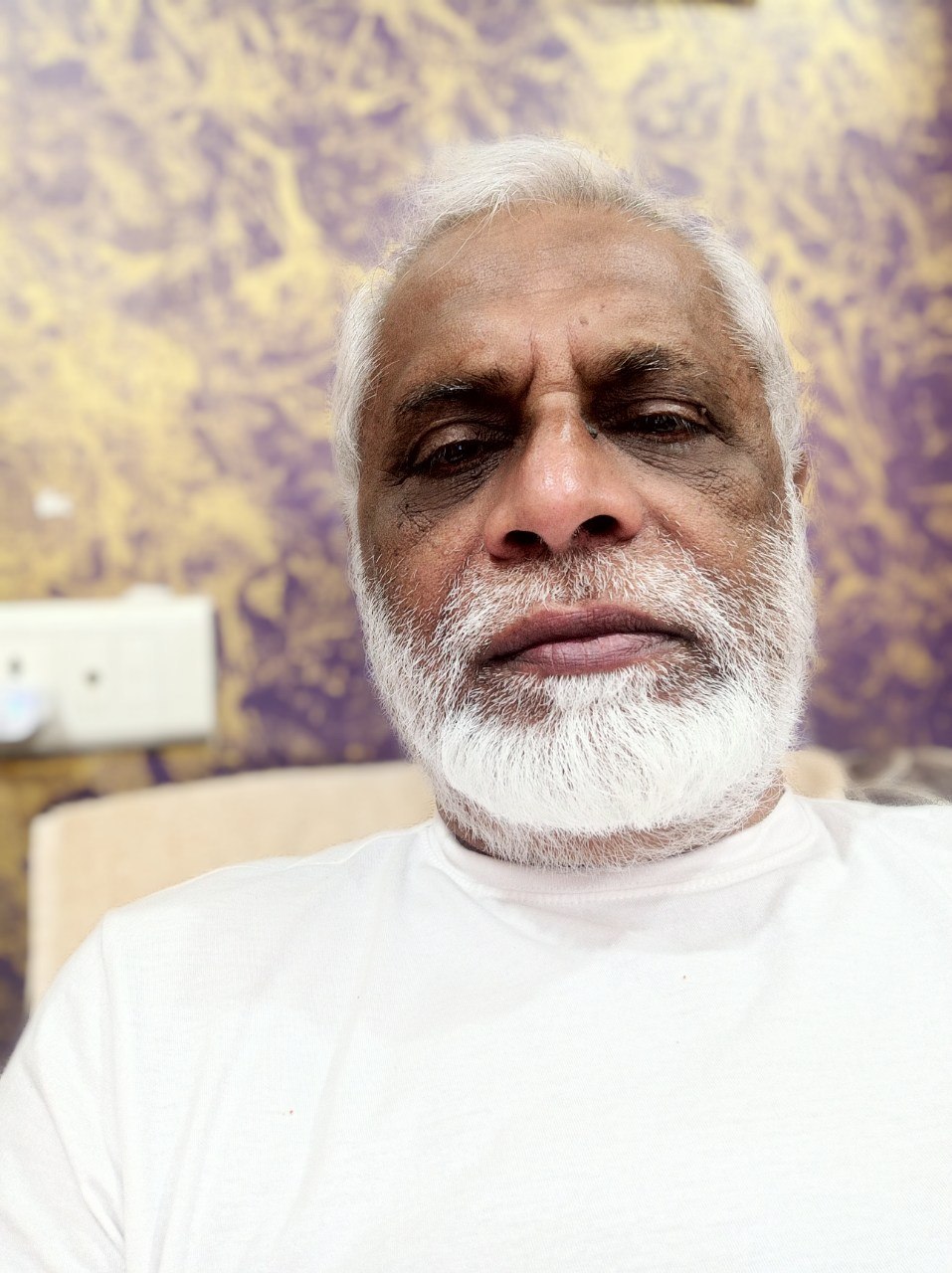
Sultan Akhtar Patel
Professional Biography in Brief
Known as Sultan Akhtar Patel, digitally and physically. There is no other name that I hold. Fond of reading and writing in English. I first write in English and try to Google-translate my narratives to feel convinced that they are hitting the head. My reading habit took me to writing and gradually I evolved as a self-taught without attending any Masterclass or course or training. I write from the heart as I understand language is first understood by heart that gives vocabulary to weave thoughts into narrative as well articulated as possible.
My professional career started with Stenographer then on to Gulf stint as an Executive Assistant for 25 years (until retirement). However, love for Journalism was never lost. I am holding three Masters degrees in Public Administration, English Literature and Journalism from IGNOU. I wrote my exams by reaching out to exam centre every time by planning my vacation.
Published 5 research papers, wrote one Novel ‘Pale Shadow-Pales into Insignificance’, i.e. Compendium of my Social Media Posts as ‘My Points Solid’ and a ‘Thesis Booster’. All self-published from Norton Publishers. These materials available on Amazon and Flipkart. Writing regularly on the wall of LinkedIn.
Section I: Beginnings & Early Influences
1. Looking back on your childhood, what first awakened your curiosity about books, ideas, and writing?
There was nothing at the back of mind in terms of writing a book particularly, as writing skills evolve by empirical observations, voracious reading and writing on the subject of your like, from time to time. I would write Letter to the Editor in English Dailies. On professional front, I have had a chance of writing for Company’s House Journal then onward to editing the copy. All these put together helped me writing in English. Writing a book came very late when I felt I have enough of material stuffed in my mind. I finished the job after my retirement.
2. Which people, books, or life experiences have had the greatest influence on your intellectual journey?
There has been no particular personality and his work that I derived inspiration from. Being one’s own helps a lot as in any matter in life as in literary pursuit and achieving the same.
3. Before becoming a writer, how would you describe yourself as a learner and observer of the world?
I just moved on for the sake of fun. Reading of magazines of variety plus newspapers are the source that I was fond of and their regular reading has led me to evolve as a writer though I am still learning the art of writing.
4. What ultimately inspired you to begin writing seriously?
I am like a self-taught person and self-inspired too! Basically, reading, writing and even thinking in English has been my passion. So, inspiration of writing came from this mindset. Initially, love for Magazines reading could be the cause of inspiration resonated into writing.
Section II: The Writer’s Journey
5. You once mentioned that writing came into your life “like love.” What does that expression truly mean to you?
When I started writing in school going days, the initial thrust on good handwriting. Thereafter, I increased my zest for fountain pens. Pitman’s shorthand writing too, has a role. During professional career as a Stenographer, business writing was the first step and so on. However, all were natural instincts evolved into writing.
6. At what point did writing become a necessity rather than simply an interest?
Professional needs I must say. But other than that I have no any specific idea that I could recall for developing an interest into writing. Writing has been a journey without any sense of hard-core achievement.
7. Looking back today, what has writing taught you about yourself?
Self confidence that is the important element I could pick up while writing. At any given opportunity, I take out my pen of choice and start writing. However, on computer keyboard, thoughts come easy and fast while staring the lines emerged from punching buttons on board.
8. How has your understanding of success evolved throughout your literary journey?
Again, no special episode that might have motivated me into a sense of success through literary journey. But writing is a journey one has to keep on without thinking of success. And more so, self-satisfaction could be a gift comes as a success out of writing.
Section III: Lifelong Learning
9. Even after a successful professional career, you continued learning through higher education and independent study. What continues to motivate your pursuit of knowledge?
Love for education led me into attaining three Masters. I assume at a later stage if education is undertaken, you would bring a marked change in human behavior and thinking.
10. What lessons has lifelong learning taught you that formal education alone could never provide?
In a better position to understand subject matter. As such, education knows no age. Life is an eternally learning experience. Education teaches self-awareness through which one can understand the true value of things and activities around together with their values stuff. Education lets us develop our own perspective and value judgement. There is nothing formal or informal education. Education has to be taken as such.
11. If you had the opportunity to redesign education for future generations, what would you preserve and what would you change?
I am not an expert or educationist by profession. But yes, education has to be having an important aspect or a mandatory push for creativity that student can develop. During cursory going over recent textbooks I can say, it’s a good initiative. But then the type of teachers I think we are in dearth of who can steer student like a sapling that grows into a promising tree.
Section IV: Research & Independent Thought
12. Why do you believe research-based writing is becoming increasingly important in today’s world?
Naturally, research-based writing has to be the criteria to increase interest and inquisitiveness. Writing whets spirit of enquiry. And therefore, writing just for literary blah blah is worthless. Almost every book I read in recent times, has a bibliography at the end. But then independent opinion I presume doesn’t need any support. Unlike olden golden days, writer was an established expert in his own right and perspective. Of course, research needs references though specially in scientific areas. However, Social areas need a special touch of an exclusive shedding light by looking into things with your own glasses to form unique optics. This specialization is filling the research gap and the need of the day.
13. How do you personally distinguish facts from opinions while studying complex subjects?
Vetting facts from opinion becomes effortless only when you have choiceless awareness. The moment you fall for a particular choice, you are subservient to that choice, per se! It is, thus blocking you to see things as they are.
14. In your view, what qualities define genuine intellectual honesty?
Genuine intellectual property stems from intellectual honesty. The habit of hollistic view of things can inspire for intellectual honesty. This sort of is an increasing responsibility in the advent of AI and its misuse. Writing has no short cut. The borrowed ideas never advance you into what you are actually trying to go for. You will be trapped from the beginning. Ideas in a begging bowl are immediately noticed.
15. What responsibilities should independent writers and researchers carry in the digital age?
In digital age, the attempt should be to have the original ideas to come forth. AI could be used for furthering your journey into thicket of thoughts. But again, you must tally those leads with your thinking caliber to be taken in a face value. As the small child cannot lift heavy weight, genuine intellectual properties are easily noticed by an enquiring individual across observed out of your confidence and rhetorical devices.
Section V: Literature, Society & Democracy
16. Can literature truly influence society, or does society ultimately shape literature?
It’s a two way traffic of give and take. Literature does shape human society and in turn that society emits literature. It is a very dynamic process. But again the initiative in this process is the writer who is like a driving force keeping that torch unburnt out and alive. Society is reproducing writers in this sense.
17. What are the greatest challenges facing contemporary Indian writers today?
It is the nicer values any writer imbibes leverages him for writing of both value and values. In a democratic environment writer has good amount of level playing field with issues and problems. Ours is a theatre of controversies. Out of that, an honest writer is like bellwether leading society in right direction by consistent flow of wise words. The true value of your writing is the rich ideas. But sorry to say, current writers are trying to weigh in ideas with material value. The term godi media has come out of such syndrome.
18. How can writers preserve intellectual independence in an increasingly polarized world?
Speaking truth by rising to the occasion. Polarized world is a testing time for writer. Writer of repute finds unfavorable scenario as a good cannon fodder to create a true picture to follow by the rest. Candid writing inhibits canard, to say the least! It is writer behind his true product can be known as an ironsmith hammering the minds veering away from truth and social values. Literature could be add-on exercise in the archives of time. If writer tries to reverse the clock, he will be easily exposed in his superficiality.
19. What role should literature play during times of social and political uncertainty?
Speaking truth by rising to the occasion, acting as a guiding force through candid writing and reflection.
Section VI: Journalism & Public Discourse
20. As someone interested in citizen journalism, how do you define responsible public communication?
As a student of Public Administration PA is in dire need of creating organized cities and boroughs. Citizen Journalism is the pressing need. Our cities speak of our administrative glitch and lack of planning. Citizen journalism reinforces the responsibility and accountability by amplifying the issues and problems of our urban life.
21. Has the digital age strengthened meaningful dialogue or weakened thoughtful discussion?
Technology has no doubt, provided an impetus and therefore, dialogues and discussions and debates have proliferated multifold. However, quality content could be traced among thick and thin of these activities. In other words, technology helps initiate as a prime mover, however content of consciousness entirely depends on unbiased and quality thinking where human values step in and technology sneaks out.
22. What advice would you give readers trying to separate reliable information from misinformation?
Reader is mature enough to draw this distinction. Advice in this area is redundant rather unwanted. The immaturity stalls the process and reader or writer gets stuck miserably.
Section VII: Creativity & Discipline
23. What does your writing process look like from the first idea to the final manuscript?
The idea is straightforward and unchanged. Properly worded narratives wired into credible ideas are the imperative.
24. How do you overcome periods when inspiration seems absent?
Creativity knows no boredom. If any! Dull moments creep in, it is because of the loss of creativity somewhere. Self awareness brings that lost value back.
25. Which matters more over the long term-talent, discipline, patience, or perseverance?
These all are required ingredients in order and at once. It is never be that one is left out for something special. They are all essential and know no replacement or change in the order.
26. If you were beginning your writing career today, what would you do differently?
For a creative artist there is no beginning and no end. The inner urge should be for right positing of things where talent matters most. This is the beginning and this is the end.
Section VIII: Life & Philosophy
27. Which personal values have remained constant throughout your life’s journey?
Originality and simplicity in attitude, I can say are the keys whereby you are judged. Artificiality exposes the individual. It doesn’t carry through!
28. What failure ultimately became one of your greatest teachers?
Failure follows in the absence of win. But when you are competing with you, yourself, there shouldn’t be any fear or phobia of failure. The idea of win, if worked upon, brings failure first. It is learning by failure, win comes. This is generally speaking. In the book of philosophy there is no failure and no win! It is taking things as they come!
29. Has there ever been a moment when you completely questioned your own beliefs? What did that experience teach you?
Belief is like a settled science. There is no after-check. Belief is firm. There are presuppositions and they might be proved wrong and therefore need to recheck, revamp and reinforce.
30. If wisdom could be expressed in a single sentence, how would you define it?
To live in present is wisdom.
Section IX: Legacy
31. What legacy do you hope your writing and research will leave for future generations?
I don’t go after legacy. I am an imperfect, incomplete human being. Legacy comes out of total action. Do we have any device to measure our action in totality?
32. If readers discover your work fifty years from now, what do you hope they understand about you?
If you think you are writing for others, you are grossly mistaken. Write as you understand and say what you mean. That’s it! Time is constant and future is unseen. Don’t be in vagaries of following and fandom.
33. Looking back on your life’s journey, what has been your most meaningful lesson?
I don’t remember such lesson even if any! I don’t look backward. Forward is life where present exists. Past is dead!
34. What advice would you offer young writers who wish to build a meaningful life through literature, research, and independent thinking?
Understand real meaning of journalism. Follow on-ground journalism and find finer things in that. It is the nuances of follies and fine shall take you forward.
35. Finally, is there a question you wish interviewers asked more often-but rarely do? If so, what would that question be, and how would you answer it?
How to be honest with oneself. Personal integrity around the subject is often waived. If I had asked, ‘Honesty is the best policy, please explain’ would have been my asking!
— Answers by Sultan Akhtar Patel
Exclusive Interview
Conducted & Published by Sundram Kumar
Founder & Editor, Astra Global Ventures