Astra Global Ventures • Global Conversations
A Timeless Conversation on Art, History, Memory & Independent Scholarship
Interview Conducted by Sundram Kumar, Founder of Astra Global Ventures
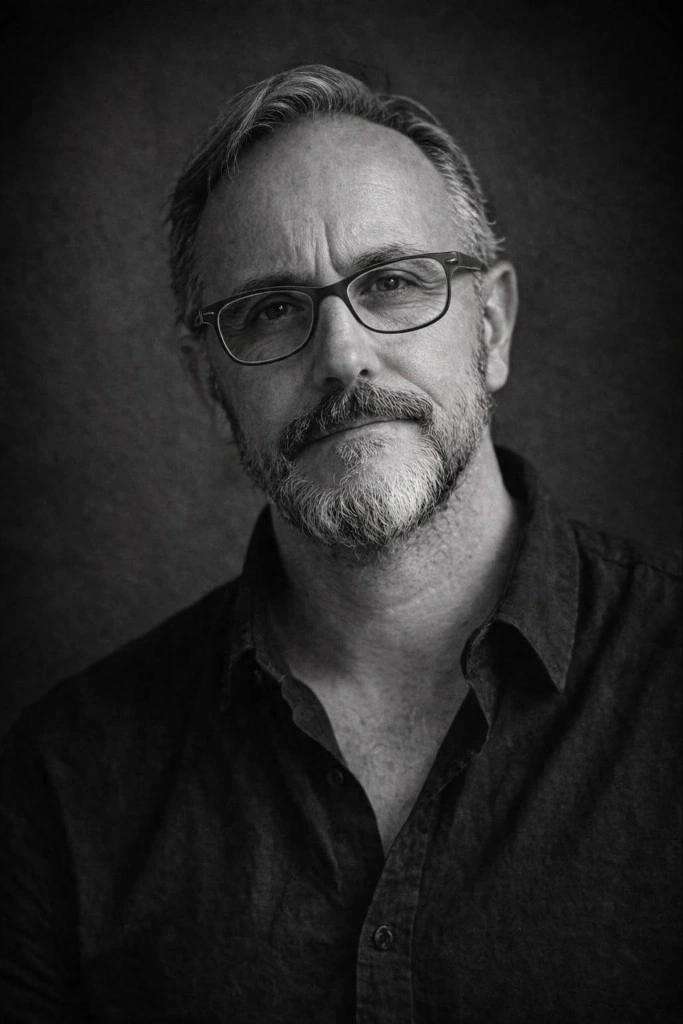
Antonio Pedro (A.P.G.) Gutiérrez González
Founder & Director, A.P.G. Historical Research | Creator of the AETERNUM Curatorial Method™ | Founder of AETERNUM LECTURES
Antonio Pedro Gutiérrez (born in Torrelavega, Cantabria, Spain, in 1971) is a Spanish writer, independent researcher, and cultural thinker. He has dedicated much of his life to the study of history, cultural heritage, and literature.
He is the author of several poetry collections as well as numerous historical and cultural research projects. As the creator of the AETERNUM Curatorial Method™, he leads international initiatives combining art, history, memory, music, and innovation to foster new ways of understanding culture across disciplines.
Connect on LinkedInCore Frameworks & Initiatives
- AETERNUM Curatorial Method™: A framework interpreting contemporary artworks through visual analysis, symbolic depth, and cultural resonance.
- Atlas of Lost Art: Research restoring vanished historical masterpieces to collective cultural memory.
- AETERNUM Art-Sound Lectures™: Exploring the sonic resonance, rhythm, and inner music of visual creation.
- Core Principle: Mens · Energia · Ordo (Mind · Energy · Order).
1. Every meaningful journey begins with a question. Looking back, what question first inspired your lifelong interest in art, history, and research?
Looking back, I believe everything began with a simple yet profoundly human question: “What remains when time has passed?”
From an early age, I was deeply fascinated by ancient places, forgotten objects, and works of art that had survived the passage of centuries. I often wondered why certain creations continued to move people long after their creators had disappeared. I wanted to understand what allowed a painting, a sculpture, or a historical document to retain its power to speak across generations.
Over time, I came to realize that history is far more than a sequence of events, and that art is much more than an expression of beauty. Both are forms of memory. They preserve the ideas, emotions, beliefs, and aspirations of those who came before us. Every work of art is a silent conversation between the past and the present.
This conviction eventually led me to develop the AETERNUM Curatorial Method™. My intention was never to replace traditional art history, but to offer a broader way of understanding works of art—one that considers not only their artistic quality, but also their cultural, historical, symbolic, and human resonance.
Today, I am still guided by that same question. Every new research project begins with curiosity rather than certainty. I have learned that knowledge is not measured by the number of answers we possess, but by the depth of the questions we continue to ask. In the end, every great journey of discovery begins with a sense of wonder, and every truly great work of art invites us to keep asking who we were, who we are, and who we may yet become.
2. If someone with no background in art or history asked you, “Where should I begin?” what would you tell them? How can an ordinary person learn to truly see a work of art instead of simply looking at it?
I would give them a very simple answer: begin with curiosity, not with knowledge.
Many people believe they need to study art history before they can appreciate a work of art. I believe the opposite is true. Before we learn, we must observe. Before we interpret, we must pause.
We live in a world where we look at thousands of images every day, yet we rarely take the time to truly see them. Looking is a biological act; seeing is an intellectual and, very often, an emotional one. A work of art cannot be understood in a few seconds. It asks for silence, time, and thoughtful questions.
I always encourage people to begin with the simplest questions: What do I see? What do I feel? What is the artist trying to communicate? Why has this work survived through the centuries? More often than not, the most meaningful discoveries begin with the simplest questions.
Learning to truly see a work of art is not about finding the one “correct” interpretation. It is about developing the ability to observe with patience, openness, and humility. Great works of art contain many layers of meaning. Some speak of the time in which they were created; others speak of the human condition. The greatest works do both.
Art and history are inseparable because every work of art is a witness to its own time. It preserves the ideas, values, fears, hopes, and aspirations of the people who created it. Once we understand that context, we no longer see only an object—we begin to hear a voice that has travelled across centuries.
This is one of the guiding principles of the AETERNUM Curatorial Method™. Before we analyse a work of art, we must first learn to listen to it. A great work of art does not ask to be admired; it invites us into a conversation. The more time we spend with it, the more it reveals.
Perhaps that is the most important lesson of all. Learning to see a work of art is ultimately about learning to see the world more deeply. Art does not simply tell us who created it—it helps us understand who we are.
3. Your work often explores meaning, memory, and truth. What first made you believe that a work of art can reveal something much deeper than its colours, shapes, or technique?
I believe that conviction took root long before I had the words to express it.
I still remember the feeling of standing before an old painting, a medieval church, or an object that had survived for centuries. I felt I was in the presence of something that had witnessed the passing of generations and was still waiting for someone willing to listen. That feeling moved me deeply.
Over time, I came to understand that a work of art is never just what we see. It is the trace of a human life. Behind every brushstroke is a hand; behind that hand is a person; and behind that person is a story waiting to be understood.
There came a moment when I stopped asking only who had created a work of art or when it had been made. Instead, I found myself asking a far more personal question: “What was this person trying to preserve for those who would come after them?”
That question changed the way I look at art forever.
From then on, every work of art became, for me, a profoundly human encounter. I no longer saw only a painting, a sculpture, or a building. I saw someone’s desire to leave behind a fragment of their existence—their beliefs, their fears, their hopes, and ultimately, their way of understanding the world.
Perhaps that is why I have never felt that I was studying only the past. Whenever a work of art can still move us centuries after it was created, it reminds us that something profoundly human continues to live within it. In those moments, time seems to disappear. What remains is a silent conversation between the person who created the work and the person standing before it.
That is why I continue to dedicate my life to research. I am not driven simply by the desire to uncover new facts or solve historical mysteries. I am driven by the hope of better understanding the people who came before us, because I believe that the more deeply we understand their world, the more deeply we understand our own.
In the end, that is the enduring power of art. It reminds us that although centuries pass and civilizations change, the deepest questions of the human heart remain the same. And as long as those questions endure, great works of art will never cease to speak to us.
4. For readers discovering your work for the first time, how would you explain the AETERNUM Curatorial Method™ in the simplest possible way? What inspired you to create it?
The simplest way to explain it is this: the AETERNUM Curatorial Method™ is a way of learning to listen to what a work of art has to say.
It was never created with the intention of introducing a new methodology. It grew naturally from a question that stayed with me for many years: Why do some works of art continue to move us centuries after they were created?
After visiting museums, studying historical documents, and spending countless hours in front of paintings, sculptures, and historic buildings, I realised that we often analyse a work of art through essential criteria such as authorship, technique, style, chronology, or historical context. All of these are indispensable. Yet I felt there was something more—something that could not always be found in books.
I gradually came to understand that a work of art is neither merely a beautiful object nor simply a historical document. It is the trace of a human life. It preserves the memories, emotions, beliefs, and vision of the world of those who created it. In a sense, every great work of art continues a conversation with anyone willing to pause and truly listen.
That is how the AETERNUM Curatorial Method™ came into being. It does not seek to replace traditional art history; rather, it seeks to complement it with a broader and more integrated perspective. Its purpose is to understand a work of art in its fullest dimension: its historical context, its symbolic meaning, its cultural resonance, and above all, its enduring ability to speak to the human experience across time and cultures.
Beyond any methodology, however, there is one conviction that has guided my entire journey: great works of art are never silent. Each possesses its own voice and its own unique resonance.
That belief has inspired the next chapter of my work: AETERNUM Art-Sound Lectures™. Over the years, I have come to believe that every great work of art expresses its own music. I do not mean music in the literal sense, but an invisible harmony born from its history, its symbolism, its emotional depth, and the dialogue it creates with those who encounter it. Some works seem to whisper; others move us with the power of a great symphony; still others communicate through silence, which is often just as meaningful.
Through this project, my hope is to help people discover that hidden dimension of art. I want them not only to look at a painting or a sculpture, but to sense its inner rhythm and recognise that every great human creation carries its own emotional frequency.
Because, in the end, understanding a work of art is not simply about seeing it. It is about learning to hear the music that lives within it. And when that music resonates within us, the past ceases to be a distant memory and becomes a deeply human experience once again.
5. Through your work on the Atlas of Lost Art, you have helped bring forgotten masterpieces back into public conversation. What inspired this project, and what have these lost works taught you about history, memory, and the importance of cultural heritage?
The Atlas of Lost Art was born from a simple but deeply moving realization: when a work of art disappears, humanity loses far more than an object. It loses part of its memory.
Throughout history, countless masterpieces have been destroyed by war, natural disasters, iconoclasm, theft, neglect, or simply the passage of time. Yet even when the physical work is gone, its story often survives—in old photographs, written descriptions, archival records, or in the memories of those who once saw it. I became fascinated by the idea that, in some way, these works could continue to exist through research.
The purpose of the Atlas of Lost Art has never been simply to catalogue what has vanished. My goal has been to restore these works to our cultural consciousness—to remind us that every lost painting, sculpture, manuscript, or monument was once part of humanity’s shared story.
Working on this project has taught me something both humbling and hopeful. Cultural heritage is far more fragile than we often imagine, yet memory can be remarkably resilient. Even when an artwork no longer exists physically, knowledge, documentation, and careful research can preserve its significance and ensure that it is not forgotten.
It has also reinforced my belief that historians and researchers are not merely guardians of facts. We are, in a sense, guardians of memory. Our responsibility is not only to document what survives, but also to remember what has been lost and to explain why it mattered.
Perhaps the greatest lesson the Atlas of Lost Art has taught me is that preservation begins long before restoration. We protect the future by valuing the past. Every work of art we save, study, or simply choose to remember becomes part of a bridge between generations.
In the end, I believe that cultural heritage does not belong to one nation or one period of history. It belongs to humanity. And every time we recover the story of a forgotten masterpiece, we recover a small part of ourselves.
6. Your work is guided by the principles of Mens · Energia · Ordo (Mind · Energy · Order). What do these three ideas mean to you personally, and how do they influence the way you study and understand works of art?
Over the years, I have come to realise that every meaningful piece of research—and perhaps every meaningful life—rests on three essential pillars: a mind that never stops asking questions, an inner energy that refuses to give up in the face of difficulty, and an order that transforms curiosity into knowledge. For me, those principles are captured in three Latin words: Mens · Energia · Ordo.
Mens represents curiosity. It is the desire to understand before judging, to listen before concluding, and to recognise that every answer has the potential to lead to a deeper question. I have never regarded research as a search for absolute certainty, but as a lifelong commitment to learning.
Energia is the inner force that sustains that journey. Research requires patience, perseverance, and the willingness to spend countless hours pursuing a question without knowing whether an answer will ever emerge. More often than not, the most meaningful discoveries begin with the smallest details. That perseverance is not driven by obligation, but by passion.
Ordo represents intellectual discipline. Curiosity and enthusiasm alone are not enough. Ideas require method, rigour, and respect for evidence if they are to become genuine knowledge. Order does not limit creativity; it gives creativity a foundation on which it can flourish.
In time, I realised that these three principles shaped far more than my work as a researcher. They gradually became a way of living. They remind me that knowledge demands humility, that passion requires perseverance, and that truth can only be pursued with intellectual honesty.
Whenever I stand before a work of art, I try to carry these principles with me. First, I approach it with an open mind, free from preconceptions. Then I allow it to move me emotionally, because art is understood not only through reason but also through sensitivity. Finally, I seek to bring together observation, emotion, and historical evidence with the rigour that every serious investigation deserves.
In the end, Mens · Energia · Ordo is far more than a motto. It is a philosophy of life. It reminds me every day that the privilege of thinking carries the responsibility of seeking the truth with integrity, that passion gives purpose to knowledge, and that the true legacy of a researcher is measured not by the number of answers they provide, but by the honesty, discipline, and curiosity with which they pursue them.
If I were ever asked to summarise my life’s work in a single sentence, it would be this: Never stop asking questions. Never lose your passion for discovery. And never sacrifice rigour in the pursuit of truth. To me, that is the true meaning of Mens · Energia · Ordo.
7. History is often told through books. Do you think works of art can tell us things that books sometimes cannot? If so, how?
Without any doubt. But not because art is superior to books. Rather, they speak different languages, and together they allow us to understand the past more completely.
Books help us understand events, dates, ideas, and the complex processes that have shaped history. They provide context, analysis, and explanation. They are indispensable to any serious understanding of the past.
Works of art, however, have the unique ability to communicate something that words alone often cannot: the experience of being human. A painting, a sculpture, or a building can express fear, hope, faith, grief, or joy with an immediacy that reaches us across centuries.
When we stand before a great work of art, we are not simply looking at something created by an artist. We are encountering the thoughts, emotions, and worldview of another human being. For a brief moment, time seems to disappear, and we realise that although history changes, the human heart changes very little.
That is why I believe art possesses an extraordinary power to create empathy. It allows us not only to learn about history, but to feel it. We can read about an ancient civilisation, but a work of art allows us, if only for a moment, to see the world through the eyes of those who lived it.
As a researcher, I have never seen books and works of art as competitors. They complement one another. Books help us understand what happened. Art helps us understand what it meant to those who lived through it. Only when both perspectives come together do we begin to appreciate the full richness of our shared history.
Perhaps that is why I continue to believe that a great work of art is one of the most enduring legacies any civilisation can leave behind. Books tell us what happened. Art reminds us what it felt like. And sometimes, that makes all the difference.
8. After spending so many years studying art and history, what have you learned about human nature that has surprised you the most?
If I had to summarise it in a single thought, I would say this: despite all our differences, human beings have changed far less than we like to believe.
Civilisations rise and fall. Languages evolve, borders shift, technologies transform the way we live, and societies reinvent themselves. Yet whenever I stand before a painting created five hundred years ago or an object crafted two thousand years ago, I am struck by one simple truth: the people who created them were asking, at heart, the very same questions we ask today.
They loved and they feared. They hoped for a better future for their children. They searched for beauty, justice, meaning, and hope. They experienced uncertainty, loss, joy, and the desire to be remembered.
Perhaps that has been my greatest discovery. History is not merely a sequence of dates or extraordinary events. It is the story of countless human lives which, although separated by centuries, were united by the same fundamental emotions.
Art has taught me this more powerfully than anything else. Behind every great work lies a person who wished to leave something of themselves behind. They were not simply creating something beautiful. They were saying, in their own way: “I was here. This is what I saw. This is what I felt. This is what I hoped those who came after me might understand.”
Once you realise that, your entire perspective changes. You no longer study only artists, rulers, or historical events. You begin to encounter people—individuals who, like us, were trying to understand the world and find their place within it.
Perhaps that is the greatest lesson my years of research have taught me: history shows us what separates us, but art reminds us of what unites us.
And I find that deeply hopeful. As long as we can recognise ourselves in the works created by those who lived centuries before us, we will never lose the thread that connects us to our past—or our responsibility to those who will come after us.
9. In today’s fast-moving world, many people rarely stop to observe deeply. Do you think we are losing the ability to truly see? How can art help us slow down and understand ourselves better?
I do not believe we have lost the ability to see. What we have largely lost is the habit of slowing down.
We live surrounded by images. Every day we scroll through thousands of photographs, videos, and messages on our screens. Never before in history have we looked at so much, and yet, paradoxically, we have spent so little time truly observing.
The problem is not the number of images we see, but the speed at which we move from one to the next. Genuine observation requires time, silence, and attention—three things that have become increasingly rare in our modern lives.
Art reminds us of something essential: everything that truly matters takes time. A great work of art does not reveal itself in a few seconds. It invites us to return again and again. Each encounter offers a new detail, a different emotion, or a question we had never thought to ask before.
That is why I believe art has become an act of quiet resistance in an age of constant acceleration. It asks us to slow down, to look more deeply, and to accept that not everything meaningful can be understood instantly.
But art does something even more important. When we truly contemplate a work of art, we do not discover only the artist or the period in which it was created—we discover something about ourselves. Art becomes a silent mirror. Each of us finds something different within it because we bring our own memories, emotions, experiences, and questions.
Perhaps that is why art remains indispensable. In a world that constantly urges us to look outward, great works of art gently invite us to look inward.
And perhaps that is the deepest meaning of learning to see. Every great work of art reveals two realities at once: the world that gave birth to it, and the inner world of the person standing before it. It is in the meeting of those two worlds that art reveals its greatest power.
10. As an independent researcher, what freedoms has this path given you, and what challenges have you had to overcome along the way?
Choosing the path of an independent researcher has probably been one of the most demanding decisions of my life, but also one of the most rewarding.
The greatest freedom it has given me is the freedom to follow questions wherever they lead, without feeling compelled to shape them around a particular school of thought, a single academic discipline, or institutional expectations. Curiosity has always been my most trusted guide.
That freedom has allowed me to explore the profound connections between art, history, memory, symbolism, and cultural heritage in ways that I might never have discovered otherwise. Some of the most meaningful insights emerge where different fields of knowledge meet and begin to converse with one another.
Yet independence also comes with a price.
It means accepting full responsibility for every decision, working for long periods without certainty, often funding one’s own research, and understanding that recognition may arrive long after the work itself. It also demands self-discipline, because when no one defines the path for you, you must learn to set your own standards every single day.
Over the years, however, I have come to see these challenges not as obstacles, but as an essential part of the journey. They have taught me patience, resilience, intellectual humility, and the importance of placing rigour above urgency. Most importantly, they have taught me to remain faithful to my principles while always being willing to question my own assumptions whenever the evidence requires it.
With time, I have realised that true independence is not about working alone. It is about preserving the freedom to think honestly, to change your mind when the evidence demands it, and to ensure that the search for truth always takes precedence over the desire to be right.
If there is one lesson this journey has taught me, it is that independence is not a destination—it is a responsibility. And perhaps that is the greatest freedom any researcher can possess: the freedom to keep learning, to keep questioning, and to keep growing throughout a lifetime.
11. When you begin a new research project, what matters more to you: finding answers or asking the right questions? Why?
If I had to choose, I would say asking the right questions.
Answers are, of course, essential. They are the visible outcome of every research project. But throughout my career, I have learned that the quality of any discovery almost always depends on the quality of the question that made it possible.
A truly good question does something extraordinary. It does not simply seek information; it changes the way we see. It challenges our assumptions, encourages us to reconsider what we think we know, and invites us to explore familiar subjects from entirely new perspectives.
In my experience, research rarely reaches a dead end because of a lack of evidence. More often, it stalls because we continue asking the same questions. The moment the question changes, the possibilities for discovery often change with it.
That does not diminish the importance of answers. On the contrary, they are how knowledge is built. But I have never believed that an answer should mark the end of an investigation. Every meaningful answer opens the door to new questions, and that continuous dialogue between discovery and curiosity is, to me, the very essence of research.
Perhaps that is why I have never viewed research as the pursuit of absolute certainty. I see it as an ongoing conversation between curiosity, evidence, and critical reflection. The more we learn, the more aware we become of how much remains to be understood.
Art and history have taught me one lesson above all others: intellectual humility is not measured by how many answers we possess, but by our willingness to keep asking better questions.
In the end, I believe a researcher is defined not by the number of answers they accumulate, but by the quality of the questions they dare to ask. Because it is questions—not answers—that open paths no one has walked before.
12. When reconstructing or studying lost works of art, how do you balance historical evidence with informed interpretation? Where do you personally draw the line between research and imagination?
For me, that line is very clear: research must always be guided by evidence; imagination may help us formulate hypotheses, but it must never replace facts.
When studying or reconstructing lost works of art, we inevitably encounter gaps. Documents may be missing, images may have disappeared, and historical testimony is often incomplete. It is precisely in those moments of uncertainty that a researcher must exercise the greatest discipline.
I believe that intellectual honesty requires us to distinguish carefully between what we know, what we can reasonably infer, and what we simply do not know. Confusing those three categories does more than weaken research—it risks distorting our understanding of history itself.
This does not mean that interpretation is unimportant. On the contrary, interpretation is an essential part of scholarship. Every meaningful investigation requires critical thinking, reflection, and the ability to connect evidence from different sources. But every interpretation must remain firmly anchored in verifiable evidence and sound reasoning.
I have always regarded imagination as a valuable companion in research because it encourages us to ask new questions and to explore possibilities that others may not have considered. Yet imagination must always know its place. The moment it presents speculation as fact, it ceases to serve history and begins to create fiction.
For that reason, I try to follow a very simple principle. When something is supported by evidence, I present it as fact. When it is an interpretation, I identify it as such. And when the evidence is insufficient, I am prepared to say, “We do not know.” To me, those three words are not a sign of failure—they are a sign of intellectual integrity and respect for the truth.
Ultimately, I believe that true rigour does not lie in filling every gap in the historical record. It lies in recognising the limits of our knowledge while continuing to search with honesty, patience, and humility. The purpose of research is not to create perfect narratives, but to move, as faithfully as possible, towards a deeper understanding of the people and cultures that came before us.
13. Has there ever been a question you could not answer? If so, what did that experience teach you about curiosity, humility, and the search for knowledge?
Yes. Far more often than I imagined when I first began my journey.
In fact, the more I have learned, the more aware I have become of everything I still do not know. That has been one of the greatest lessons art and history have taught me.
When I was younger, I believed that research was about finding answers. Over time, I came to understand that it is also about accepting that some questions may remain unanswered for years, perhaps even forever.
Rather than discouraging me, that realisation has given me a profound respect for knowledge. History is filled with silences—with lost documents, vanished works of art, incomplete evidence, and lives that can only be glimpsed through scattered fragments. To fill those gaps with certainty where none exists would be a betrayal of intellectual honesty.
I have learned that saying “I don’t know” does not weaken a researcher—it strengthens them. It means recognising the limits of the available evidence while remaining open to the possibility that tomorrow may bring new discoveries.
It has also taught me something deeply human: curiosity does not begin with answers; it begins with the willingness to accept that there will always be more to understand. That awareness keeps our sense of wonder alive and protects us from one of the greatest dangers any researcher can face—the illusion of believing that we already know enough.
Whenever I encounter a question I cannot yet answer, I no longer see it as a failure. I see it as an invitation to continue learning. More often than not, the most difficult questions become the ones that lead us to the most meaningful discoveries.
In the end, I believe that intellectual humility is not about knowing less than others. It is about having the honesty to recognise the limits of our knowledge, and the courage to keep searching beyond them.
Perhaps that is the greatest lesson research has given me: knowledge has its limits, but curiosity, fortunately, does not.
14. Artificial intelligence is transforming many fields, including education, research, and the arts. What aspects of creativity and human understanding do you believe will always remain uniquely human?
I believe artificial intelligence is one of the most remarkable tools our generation has ever developed. It has the capacity to analyse vast amounts of information, uncover unexpected connections, accelerate research, and expand the possibilities of human creativity in ways that were unimaginable only a few years ago.
Yet, no matter how powerful a tool may become, it cannot replace the experience of being human.
Creativity is not simply the ability to produce something new. It is shaped by memory, emotion, love, loss, hope, failure, and every experience that leaves a lasting mark on our lives. Behind every great work of art lies not only skill, but also a life lived—a unique way of seeing the world that cannot be separated from the person who created it.
The same is true of understanding. We can explain the meaning of a work of art, but truly understanding it requires something more. It requires empathy, reflection, imagination, and the ability to connect what we see with our own experiences. That deeply personal encounter cannot be reduced to information alone.
For that reason, I do not see artificial intelligence as a replacement for human creativity, but as a powerful companion. It can broaden our horizons, help us discover patterns, and support us in ways that enrich both research and artistic practice. But the fundamental questions—Why do we create? What moves us? What gives meaning to our lives?—remain profoundly human.
As a researcher, I use artificial intelligence as a tool to support my work, never as a substitute for critical thinking. Technology may help us reach answers more quickly, but it is still our responsibility to decide which questions are worth asking, how evidence should be interpreted, and what conclusions can honestly be drawn.
I believe the most promising future is not one in which artificial intelligence competes with humanity, but one in which both work together, each contributing what it does best. Artificial intelligence offers extraordinary speed, analytical power, and access to knowledge. Human beings contribute judgement, ethical responsibility, imagination, compassion, and the ability to find meaning.
In the end, information can be processed, but meaning must be discovered. And I believe that search for meaning will always remain one of the most profoundly human journeys of all.
15. Your AETERNUM Art Score™ considers ideas such as resonance, rarity, and historical potential. How do you evaluate something as complex and deeply human as an artwork’s historical potential?
The first thing I would say is that no work of art can ever be fully reduced to a number. The AETERNUM Art Score™ was never created to simplify art or to replace human judgement. It was developed as a structured framework to encourage deeper observation, more thoughtful reflection, and a broader understanding of an artwork.
When I speak of historical potential, I am not claiming to predict the future or to decide which works will still be admired a hundred years from now. No one can make that judgement with certainty.
What we can do, however, is examine the qualities that history has consistently shown to be present in works of art that continue to resonate across generations.
I look at elements such as originality, symbolic depth, cultural significance, historical context, technical achievement, and, above all, an artwork’s ability to generate new interpretations over time. The greatest works of art never exhaust their meaning. Every generation discovers something different within them because they continue to engage us in new conversations.
For me, that enduring capacity for dialogue is one of the strongest indicators of historical potential. A work of art that continues to inspire curiosity, reflection, and emotional response long after its creation possesses a quality that transcends its own time.
That is why the AETERNUM Art Score™ should never be understood as a final verdict. It is a tool for organising observation, encouraging critical thinking, and supporting a more comprehensive evaluation of an artwork. It does not replace the sensitivity of the viewer, the expertise of the art historian, or the insights of the curator. Instead, it seeks to complement them.
Ultimately, every evaluation should remain an invitation to dialogue rather than a declaration of certainty. Art does not require universal agreement about its value. What it asks of us is that we continue to observe, to question, and to think.
Perhaps that is the most meaningful measure of an artwork’s historical potential. Its true significance lies not only in the moment it was created, but in its enduring ability to inspire curiosity, emotion, and reflection long after its creator is gone. That, to me, is the true measure of lasting artistic legacy.
16. What is one common misunderstanding people have about art, history, or research that you wish more people would rethink?
If I could change just one misconception, it would be the belief that art and history belong only to experts.
Over the years, I have met many people who, upon entering a museum, have said to me, “I don’t understand art.” My answer is always the same: you do not need to be an expert to be moved by a work of art. Emotion often comes before knowledge.
Knowledge helps us understand an artwork more deeply—its context, its symbolism, and its place in history. But the ability to be curious, to pause, to observe, and to be moved requires no academic qualification. It is a profoundly human capacity.
I also believe there is another misunderstanding. Many people think history is only about the past. In reality, history is equally about the present, because we are the result of everything that came before us. To understand the past is not to live in it; it is to understand more clearly the world we inhabit today.
The same is true of research. It is often imagined as something confined to universities, libraries, or archives. Yet every meaningful investigation begins with something much simpler: the courage to ask a question and the intellectual honesty to follow the evidence, even when it challenges our own assumptions.
At their heart, art, history, and research share the same purpose: to deepen our understanding of the human experience.
That is why I hope more people will stop thinking of art as a luxury or as knowledge reserved for a privileged few. Art is a universal language. It belongs to all of us because it speaks about all of us.
Perhaps that is the greatest misunderstanding of all: believing that a work of art must first be explained before it can be felt. I have always believed the opposite. We feel first; then we begin to understand. And very often, it is that first emotional response that inspires us to keep learning.
17. If you could spend an entire day studying just one work of art, with no distractions, which artwork would you choose, and why?
I would probably choose Las Meninas by Diego Velázquez.
Not because I believe it is the greatest painting in the history of art, but because it is one of the very few works that compels me to ask new questions every time I return to it.
After centuries of scholarship, we are still discussing who truly occupies the centre of the scene, what role the viewer plays, what the mirror really signifies, and to what extent Velázquez was reflecting on painting itself, on power, and on the nature of reality.
That is precisely what I admire most about great works of art. They never allow themselves to be fully conquered. They always preserve an element of mystery, and that mystery is not a weakness—it is one of the reasons they remain alive.
If I had an entire day in front of that painting, I would not try to solve all of its mysteries. I would simply observe it patiently, allowing each passing hour to reveal another detail, another idea, another question. I am convinced that a truly great work of art changes as the person contemplating it changes.
Over the years, I have come to realise that we are never the same person each time we return to an artwork. Our experiences, our losses, our joys, and our questions continue to evolve. That is why a masterpiece never offers exactly the same answer twice.
Perhaps that is the greatest achievement of Las Meninas, and indeed of every truly universal work of art. They do not merely reflect the world in which they were created; they also become mirrors in which every generation eventually recognises itself.
And if I were to leave that gallery at the end of the day with only one certainty, it would be this: masterpieces are not great because they answer all our questions; they are great because they continue to ask questions that no generation has ever been able to answer completely.
18. Is there one work of art that continues to reveal something new every time you return to it? What makes truly great art continue to speak across generations?
Yes. There are many, but if I had to choose one, I would mention The Arnolfini Portrait by Jan van Eyck.
Every time I stand before it, I notice something I had overlooked before: a reflection in the mirror, the symbolism of an everyday object, the direction of the light, the expression of a face, or the extraordinary precision with which every detail was conceived.
What fascinates me is not simply its technical brilliance, but its remarkable ability to sustain an ongoing dialogue with the viewer. The painting never seems to exhaust its meaning. Instead, it invites us to return, to observe more carefully, and to ask better questions.
I believe that this is one of the defining characteristics of truly great art. It does not remain unchanged while we change. Rather, it grows with us. As our experiences, knowledge, and perspective evolve, the artwork seems to reveal new dimensions that were always there, waiting to be discovered.
In that sense, a masterpiece is never static. It is a living conversation across time. Each generation approaches it with different questions, and each generation receives different answers.
Perhaps that is why great works of art never become obsolete. They continue to illuminate something essential about the human condition—something that transcends historical periods, cultural differences, and changing fashions.
For me, that is the true miracle of art. A painting created centuries ago can still challenge our assumptions, awaken our curiosity, and move us emotionally today.
And perhaps that is the greatest definition of a masterpiece: it never stops revealing more than we were capable of seeing the last time we stood before it.
19. What advice would you give to young people who are curious about art, history, and research but don’t know where to begin?
I would tell them not to wait until they feel ready. Curiosity always comes before knowledge, and that is precisely what makes learning possible.
We live in an extraordinary age. Never before have we had such open access to museums, libraries, archives, books, and sources of knowledge from around the world. But all of that has value only if we preserve our ability to ask questions.
My first piece of advice would be very simple: learn to observe. Do not rush to find answers. Stand in front of a work of art, a historical document, or even a landscape, and ask yourself: What am I looking at? Why does it exist? What story lies behind it?
My second piece of advice would be this: do not be afraid of being wrong. Every meaningful investigation is filled with uncertainty, unanswered questions, and ideas that eventually prove to be mistaken. That is not failure; it is an essential part of learning.
I would also encourage them never to stop reading—but not to learn only from books. Travel whenever you can. Visit museums. Walk through historic cities. Listen to older generations. Pay attention to architecture, to nature, and to the small stories that often go unnoticed. For a curious mind, the entire world becomes a classroom.
Above all, I would ask them to value intellectual honesty. Never conduct research simply to prove that you are right. Pursue knowledge with the willingness to change your mind whenever the evidence leads you in a different direction.
If, after all these years, I could leave just one message to those beginning this journey, it would be this: never allow anyone to convince you that curiosity is a weakness. Curiosity has always been the starting point of humanity’s greatest discoveries.
Because the true researcher is not the one who believes they already know everything. It is the one who, even after a lifetime of learning, still has the capacity to be amazed by a simple question—and the courage to pursue it with humility, passion, and rigour.
20. Looking back on your journey, is there one moment that completely changed the way you see art, history, or the world?
Yes, although it was not a single moment. It was a quiet transformation that unfolded over many years of study, observation, and reflection.
At the beginning of my journey, I was searching for answers. I wanted to know who had created a work of art, when it had been made, and what historical events surrounded it. I believed that if I could gather enough information, I would truly understand it.
Over time, I realised that the most important answers were not found in facts alone, but in the people behind them.
I came to understand that every work of art, every historical document, and every surviving fragment of the past is the expression of a human life. Behind every creation is someone who loved, struggled, doubted, hoped, and sought to leave a trace of their existence. From that moment on, I was no longer studying only the past—I was entering into a dialogue with it.
That realisation completely transformed the way I approached research. I stopped seeing history as a sequence of events and began to understand it as humanity’s shared memory. I also stopped looking at works of art merely as objects to be analysed and began to see them as living testimonies to the human experience.
Perhaps that was the true turning point: discovering that research is not simply about collecting knowledge. It is about developing the ability to listen to what the past still has to say.
Since then, every project has become much more than an investigation. It has been an opportunity to encounter other lives, other cultures, and other ways of understanding the world. And, quite unexpectedly, that journey has also helped me to understand myself more deeply.
Looking back, I believe that has been the most profound transformation of all. I discovered that art and history do not simply answer our questions—they change us while we are searching for the answers. Perhaps that is the greatest gift they can offer us.
21. Throughout history, many great works of art have survived wars, disasters, and the passage of time. What do you believe gives art the power to endure across generations and remain meaningful?
I believe that art endures because it is born from what never ceases to be human.
Civilisations rise and fall. Empires disappear. Borders are redrawn, and societies continue to evolve. Yet the essential questions remain unchanged. Who are we? What does it mean to love? How do we face loss? What do we hope for? What trace of ourselves will remain when we are gone?
Great works of art do not survive simply because they are old or because they are preserved in museums. They endure because they continue to speak to us. Every generation discovers new questions within them, new emotions, and new meanings that previous generations may never have perceived.
To me, this is one of art’s most extraordinary qualities: the work itself remains the same, yet the conversation is never the same. We change with time, and that is why great masterpieces seem to change with us. In truth, it is not the artwork that changes—it is the way it invites us to see ourselves from a different perspective.
As a researcher, I have often been struck by the thought that some of the works we admire today have survived wars, fires, looting, and centuries of uncertainty. They have reached us because countless individuals, across different generations, understood that they were worth protecting. That quiet chain of guardianship is, perhaps, one of humanity’s greatest expressions of respect for culture and for our shared memory.
Ultimately, I believe that the true power of art lies not only in preserving the past, but in giving meaning to the present. A great work of art never stops asking questions, and as long as there is someone willing to pause, to observe, and to listen, it will remain alive.
Because time may erode stone, fade pigments, and even erase the names of those who created them, but it can rarely erase what a true work of art awakens within us: the profound recognition of ourselves in the experience of another human being.
22. In your view, what is the responsibility of a historian or researcher? Is it simply to present the facts, or also to help people understand why those facts matter?
I believe the responsibility of a historian or researcher begins long before any conclusions are written. It begins with the way we choose to ask our questions.
Every investigation should start with humility. We do not conduct research to prove that we are right; we conduct research to discover whether our ideas can withstand the evidence. That requires a constant willingness to change our minds whenever the facts lead us in a different direction.
Rigour, of course, is non-negotiable. Respecting primary sources, clearly distinguishing between facts, interpretations, and hypotheses, acknowledging the limits of our knowledge, and having the honesty to admit what we do not yet know are not merely methodological principles—they are ethical responsibilities.
But I believe our responsibility goes even further.
Presenting the facts is essential, yet it is not enough. Facts acquire their deepest meaning only when we understand the human context from which they emerged. Behind every historical document, every work of art, and every significant event are individuals who made choices, faced uncertainty, and lived lives profoundly different from our own. Helping others recognise that human dimension is, I believe, one of the most important responsibilities of any researcher.
We also have a duty to make knowledge accessible without diminishing its complexity. To explain clearly is not to oversimplify; it is to respect the reader and trust in their ability to think critically and draw their own conclusions.
Over the years, I have come to a very simple conviction: history does not need us to defend it; it needs us to listen to it with honesty. The past is not there to confirm our beliefs, but to challenge them whenever the evidence demands it.
Ultimately, I do not believe the greatest responsibility of a researcher is to leave behind definitive answers. It is to pass on to the next generation the same respect for truth with which we inherited the questions of those who came before us. Because the most valuable knowledge is not that which brings a conversation to an end, but that which inspires others to continue it—with the same rigour, the same curiosity, and the same integrity.
23. After so many years of research, if you could leave just one message for those who may read this interview ten, twenty, or even one hundred years from now, what would you want it to be?
I would not wish to be remembered for my name. It would be enough if one conviction were to endure: that curiosity is one of the deepest expressions of respect for the human condition.
We exist for only a brief moment within a history that began long before us and will continue long after we are gone. Each generation receives a legacy that does not truly belong to it. We are its custodians for a time, entrusted with the responsibility of preserving it, enriching it whenever possible, and passing it on to those who will follow.
Over the years, I have come to understand that research has never been simply about finding answers. Above all, it is about learning to ask better questions, accepting that knowledge will always remain incomplete, and having the humility to allow evidence to reshape our own convictions.
For that reason, I hope that those who read these words in the future never lose the ability to pause. To stand before a work of art without haste. To listen to what an ancient document still has to say. To look at the past not as a distant place, but as a living part of the human experience that continues to speak to us.
If I could leave only one message, it would be a simple one: safeguard the truth with honesty, safeguard culture with responsibility, and above all, safeguard your curiosity. For it is curiosity that inspires us to learn, to understand, and to recognise our own humanity in the lives of those who came before us.
In the end, we all disappear. What truly endures is what we awaken in others: an idea, an emotion, a question, or the desire to understand the world a little more deeply.
If, one day, many years from now, these words encourage even one person to look more carefully at a work of art, to read a historical document with greater respect, or simply to ask a question they had never considered before, then I will feel that this journey has been worthwhile.
24. Finally, how would you like your contribution to art, history, and research to be remembered?
If my work is remembered at all, I hope it will not be for a particular methodology, a specific project, or a single conclusion. I would simply like it to be remembered as the work of someone who sought to understand the past with honesty and to share that understanding with the same respect with which it was inherited.
I have never regarded research as a pursuit of personal recognition. To me, it has always been a conversation across generations. Each of us inherits questions that others began asking long before we were born, and we are privileged to contribute, for a brief moment, our own small part to that conversation before passing it on to those who will continue it.
If my work has any lasting value, I hope it lies in encouraging others to look at a work of art with greater attention, to read a historical document with greater patience, or to recognise that culture is not a luxury, but one of the deepest ways of understanding who we are.
I do not aspire to leave behind immutable certainties. I aspire only to have contributed, however modestly, to keeping curiosity alive, to fostering respect for evidence, and to encouraging the desire to continue learning.
In the end, no piece of research ever belongs entirely to the person who carries it out. All knowledge is the result of the efforts of countless individuals who, generation after generation, have observed, questioned, preserved, and shared what they believed was worth passing on.
If my name were eventually to fade, as almost all names inevitably do, I would not consider that a failure. It would be enough to know that an idea, a question, or perhaps a different way of looking at art and history continued to live on in others.
I believe that is the most meaningful legacy any researcher could ever hope to leave behind.
25. Finally, if this interview were to be read fifty years from now, what is the one idea, belief, or message you would hope people would still remember?
I hope they would remember one simple idea: knowledge has true value only when it makes us more human.
Throughout history, humanity has accumulated an extraordinary wealth of knowledge. Yet real progress has never depended solely on what we know, but on how we use that knowledge to understand one another with greater wisdom, empathy, and respect.
Art, history, and research serve a purpose far greater than preserving objects, dates, or documents. They remind us that we are part of a shared human story. They teach us that although eras change, cultures evolve, and societies transform, the questions that define us remain remarkably constant. We continue to seek meaning, to hope, to grieve, to create, and to search for our place in the world.
For that reason, I hope future generations never mistake knowledge for absolute certainty. The more we learn, the more aware we become of all that we have yet to understand. That awareness should never discourage us; it should make us more humble, more open to dialogue, and more willing to keep learning.
If I were to distil an entire lifetime of research into a single conviction, it would be this: never stop asking questions, but always ask them with honesty, with respect for evidence, and with a sincere desire to understand rather than simply to be right.
Perhaps the greatest legacy one generation can leave to the next is not a collection of definitive answers, but the example of a curiosity that never ceased to pursue truth with humility.
If that one idea were still alive fifty years from now, I would feel that these words had continued to serve a purpose long after they were written.
Featured Works by Antonio Pedro Gutiérrez
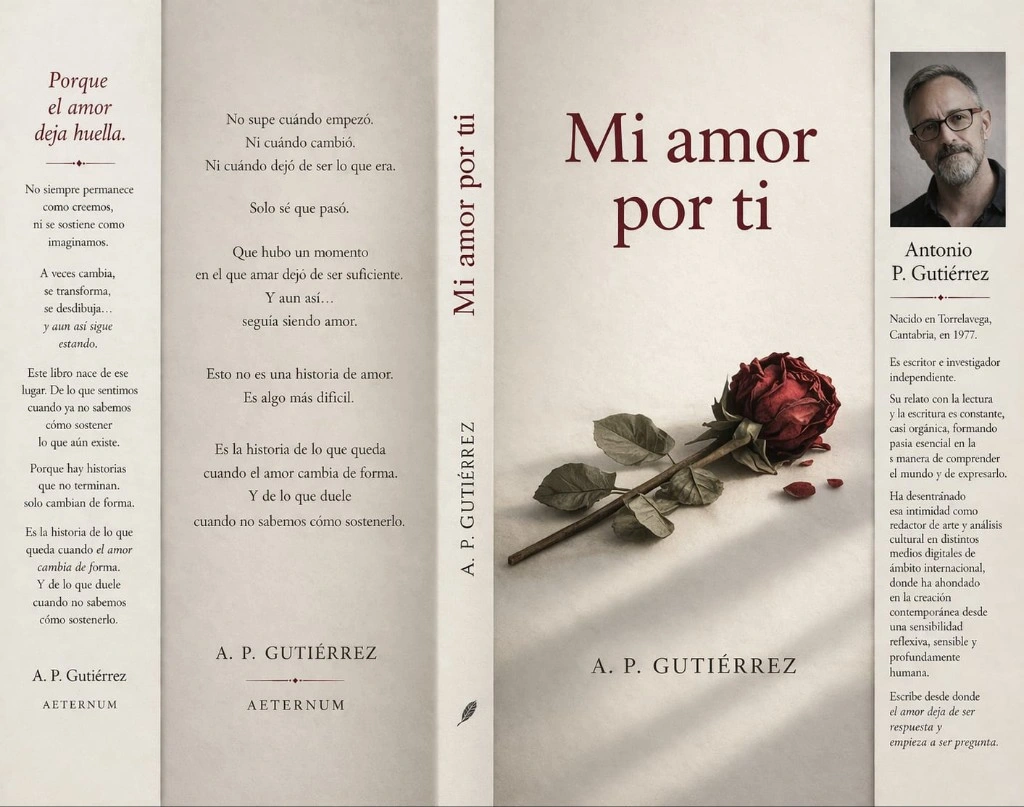
Mi amor por ti
AETERNUM / A.P.G. Editorial
Special Acknowledgement
A Personal Note from Antonio Pedro Gutiérrez González to Astra Global Ventures
“Before concluding, I would like to express my sincere gratitude to Astra Global Ventures and, in particular, to Sundram Kumar, for the generosity, thoughtfulness, and care with which he has guided this conversation. We live in a time when life seems to move at an ever-increasing pace, and genuine opportunities to pause and reflect on what truly defines us as human beings have become increasingly rare. That is why I especially value conversations like this one—not because they seek definitive answers, but because they encourage dialogue, thoughtful reflection, and the open exchange of ideas.”
— Antonio Pedro Gutiérrez González